
Joe Davis Biography Quotes 3 Report mistakes
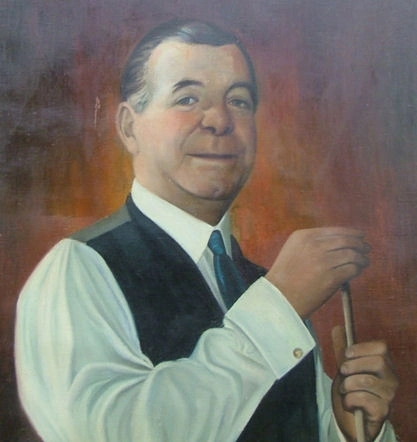
| 3 Quotes | |
| Occup. | Celebrity |
| From | USA |
| Born | April 15, 1901 |
| Died | July 10, 1978 |
| Aged | 77 years |
| Cite | |
Citation Formats
APA Style (7th ed.)
Joe davis biography, facts and quotes. (2026, February 11). FixQuotes. https://fixquotes.com/authors/joe-davis/
Chicago Style
"Joe Davis biography, facts and quotes." FixQuotes. February 11, 2026. https://fixquotes.com/authors/joe-davis/.
MLA Style (9th ed.)
"Joe Davis biography, facts and quotes." FixQuotes, 11 Feb. 2026, https://fixquotes.com/authors/joe-davis/. Accessed 12 Feb. 2026.
Early Life and Background
Joe Davis was born on April 15, 1901, in the United States, at the hinge of two Americas: the rural, cash-poor nation still shaped by Reconstruction-era arrangements and the rapidly mechanizing country that would soon be remade by automobiles, radio, and mass celebrity. His public label as a "celebrity" sits uneasily against what his own recollections suggest - a boyhood of hard edges, where schooling could be bought month-to-month and children improvised with what they had. That tension between modest beginnings and later visibility became the through-line of his life: a person formed in scarcity, later asked to perform identity for an audience.He came of age as the culture of fame was changing from local renown to something industrial. In the 1910s and 1920s, newspapers and vaudeville circuits, then radio and film, converted personality into a commodity; by the time he reached adulthood, public life could be staged, packaged, and sold. Davis's story belongs to that era's paradox - aspiration without security - and his private memories, preserved in a plainspoken register, indicate a man who never forgot how close dignity could sit to deprivation.
Education and Formative Influences
Davis's earliest education was informal, pragmatic, and marked by the social arrangements of rural schooling in the early 20th century: he described attending a log schoolhouse with a white teacher whose name he could not recall, his father paying a dollar a month, and children sitting on hewn logs, writing on slates rather than at desks. In that memory is more than nostalgia; it reveals an ethic of improvisation and endurance that would later shape how he navigated public attention - the ability to adapt without romanticizing hardship, and to treat learning as something extracted from circumstances rather than granted by institutions.Career, Major Works, and Turning Points
Specific, reliably documented milestones in Davis's celebrity career are difficult to pin down without conflating him with better-archived figures of the same name, but his life span placed his adult prime in the Great Depression, World War II, and the postwar boom - the decades when American celebrity shifted from regional performance to nationally syndicated persona. The turning point for many in his cohort was not a single debut but the cumulative effect of mass media: reputations made through radio voices, newsprint profiles, touring exhibitions, and later television appearances that blurred the line between private person and public character. Davis's enduring interest, as his surviving remarks imply, was less self-mythology than the craft of staying upright amid forces that could throw a person - economically, socially, and physically.Philosophy, Style, and Themes
Davis spoke in the grammar of lived experience: concrete images, instructional moralizing, and a calm refusal to sentimentalize. When he recalled, "I went to school at this log school house. A white woman was my teacher, I do not remember her name. My father had to pay her one dollar a month for me. Us kids that went to school did not have desks, we used slates and set on the hued down logs for seats". , he was not offering quaint color so much as mapping the origins of his self-concept. The anonymity of the teacher, the transaction of the dollar, and the bodily memory of the seat all suggest an early lesson: institutions can be impersonal, but attention to detail is how you keep your footing. That habit - noticing the material world as it is - reads like the psychological foundation of a person who later had to manage being looked at.A second theme in his remarks is anticipatory discipline, a mindset that treats danger as something you read in advance rather than heroically endure. "One thing I learned about riding is to look for trouble before it happens". Whether literally about horses or metaphorically about public life, the line implies a temperament shaped by vigilance: a celebrity who understood that a fall is often prepared by small ignored signals. Yet this caution was paired with a moral counterweight against vanity, the kind of admonition that can come from someone who has seen status fluctuate: "Study the best and highest things that are; but of yourself humble thoughts retain". In that pairing - watchfulness and humility - Davis's inner life comes into view as an effort to balance aspiration with self-restraint, to keep success from turning into self-deception.
Legacy and Influence
Joe Davis died on July 10, 1978, after witnessing the full arc of American celebrity's transformation into a permanent industry. His legacy is less a catalog of universally known titles than a portrait of character under changing historical conditions: a man who carried the memory of improvised education into a world that increasingly rewarded image over substance. For a quotes-and-biography audience, his value lies in the clarity of his self-instruction - vigilance, humility, and attention to the real - a set of principles that still read as corrective in an age where fame is easy to broadcast and hard to live with.Our collection contains 3 quotes written by Joe, under the main topics: Wisdom - Student - Humility.
Source / external links