
Joe DiMaggio Biography Quotes 19 Report mistakes
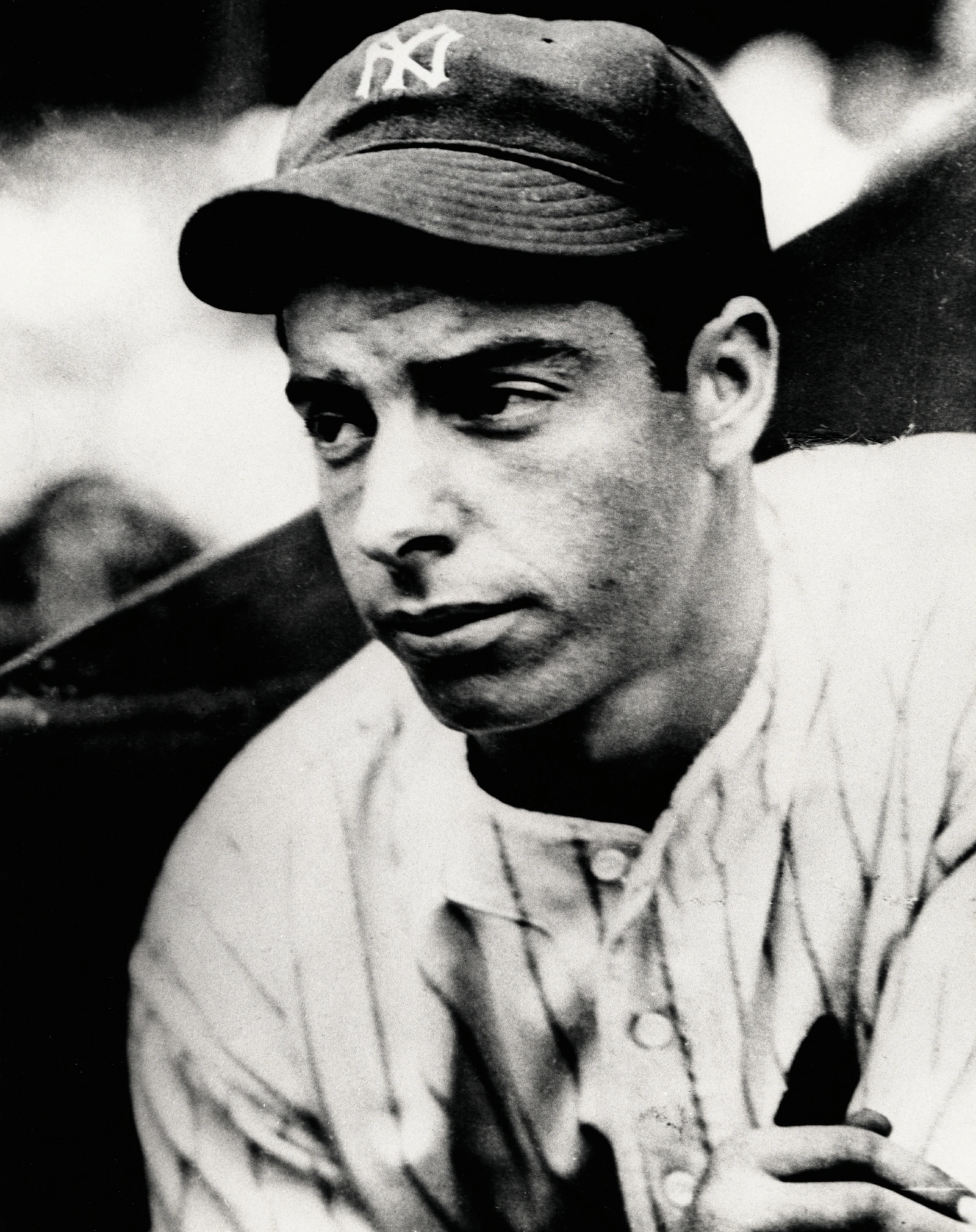
| 19 Quotes | |
| Born as | Giuseppe Paulo DiMaggio |
| Occup. | Athlete |
| From | USA |
| Born | November 25, 1914 Martinez, California |
| Died | March 8, 1999 Hollywood, Florida |
| Aged | 84 years |
| Cite | |
Citation Formats
APA Style (7th ed.)
Joe dimaggio biography, facts and quotes. (2026, February 11). FixQuotes. https://fixquotes.com/authors/joe-dimaggio/
Chicago Style
"Joe DiMaggio biography, facts and quotes." FixQuotes. February 11, 2026. https://fixquotes.com/authors/joe-dimaggio/.
MLA Style (9th ed.)
"Joe DiMaggio biography, facts and quotes." FixQuotes, 11 Feb. 2026, https://fixquotes.com/authors/joe-dimaggio/. Accessed 27 Mar. 2026.
Early Life and Background
Giuseppe Paulo DiMaggio was born November 25, 1914, in Martinez, California, and raised in San Francisco in the North Beach area, the eighth of nine children of Sicilian immigrants Giuseppe and Rosalia DiMaggio. His father was a fisherman who expected his sons to work the boats, and the family lived close to the waterfront rhythms of Italian-American labor life - early mornings, salt air, and the hard arithmetic of bringing in a catch during the lean years after World War I.
DiMaggio resisted the nets and the smell of fish, drifting instead toward sandlots and the sudden clean order of baseball, where effort could look like grace. The Great Depression sharpened the stakes of talent: sport was not pastime but possible exit. In that pressure cooker, his reticence became a kind of discipline - a young man learning to speak with results, not talk, and to protect pride by making excellence appear effortless.
Education and Formative Influences
He left school early and was formed less by classrooms than by the apprenticeship culture of West Coast baseball and by his own family model - older brothers Vince and Dominic playing professionally, scouts appearing, and the Pacific Coast League offering a near-major stage. With the San Francisco Seals, he absorbed fundamentals, timing, and the professionalism of daily play, while the immigrant household taught him to equate work with dignity and to fear the humiliation of letting others down.
Career, Major Works, and Turning Points
Signed by the New York Yankees, DiMaggio debuted in 1936 and quickly became the franchise's center of balance - a right-handed hitter with uncommon economy of motion, a center fielder who covered ground without theatrics, and a star who made winning look like proper behavior. He won three American League MVP awards (1939, 1941, 1947), helped the Yankees to nine World Series titles, and in 1941 created his signature monument: a 56-game hitting streak that became a national metronome in a tense prewar summer. World War II interrupted his prime with military service (1943-45), and afterward knee and heel trouble steadily taxed his range, yet he remained an anchor through 1951, leaving on his own terms. Retirement did not end the public story: his 1954 marriage to Marilyn Monroe fused baseball royalty with Hollywood myth, and their brief, tumultuous union fed decades of legend-making around his privacy, possessiveness, and old-fashioned code.
Philosophy, Style, and Themes
DiMaggio's inner life was built around control: control of the strike zone, of his body, and especially of his image. He carried himself like a man convinced that dignity was a form of obligation, not decoration, and that the job required a constant, almost moral attentiveness. “There is always some kid who may be seeing me for the first time. I owe him my best”. That sentence reads like a performance credo, but it also reveals anxiety - the fear of being caught ordinary, of failing the anonymous witness, of letting the myth sag. His elegance, often praised as natural, was also a strategy: minimize waste, conceal effort, and make excellence repeatable.
His baseball intelligence ran counter to romance; he trusted anticipation and positioning over drama. “The phrase 'off with the crack of the bat', while romantic, is really meaningless, since the outfielder should be in motion long before he hears the sound of the ball meeting the bat”. Even his joy was disciplined, tied to purpose and standards rather than spontaneity. “I'm just a ballplayer with one ambition, and that is to give all I've got to help my ball club win. I've never played any other way”. The themes that follow are consistent: self-command, loyalty to the group, and a belief that fame must be paid for daily. In an era that rewarded swagger, he cultivated restraint - the quiet man who let the scoreboard talk, then went home and closed the door.
Legacy and Influence
DiMaggio endures as a symbol of American mid-century excellence - the Depression-era immigrant son who became the Yankees' patrician hero, the wartime serviceman, the postwar celebrity who struggled to reconcile privacy with fame. The 56-game streak remains baseball's most untouchable record, not only statistically but psychologically, a monument to concentration under pressure. His style - smooth, efficient, team-first - became an archetype for center field play and for the idea of the star who never embarrasses the uniform. Beyond numbers, his influence lives in the expectation he set: that greatness is not a mood but a standard kept for strangers in the stands, day after day, even when the body aches and the world insists on myth.
Our collection contains 19 quotes written by Joe, under the main topics: Witty One-Liners - Leadership - Sports - Work Ethic - Training & Practice.
Other people related to Joe: Yogi Berra (Athlete), Lou Gehrig (Athlete), Red Smith (Journalist), Bill Terry (Athlete), Mel Ott (Athlete), Jerry Coleman (Athlete), Robin Roberts (Athlete), Phil Rizzuto (Celebrity), Cal Hubbard (Athlete)
Source / external links