
Joe Sacco Biography Quotes 22 Report mistakes
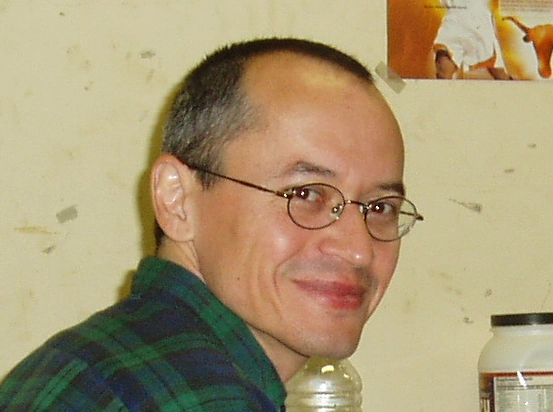
Attr: TexianPolitico, CC BY-SA 3.0
| 22 Quotes | |
| Occup. | Journalist |
| From | Malta |
| Born | October 2, 1960 Kirkop, Malta |
| Age | 65 years |
| Cite | |
Citation Formats
APA Style (7th ed.)
Joe sacco biography, facts and quotes. (2026, February 23). FixQuotes. https://fixquotes.com/authors/joe-sacco/
Chicago Style
"Joe Sacco biography, facts and quotes." FixQuotes. February 23, 2026. https://fixquotes.com/authors/joe-sacco/.
MLA Style (9th ed.)
"Joe Sacco biography, facts and quotes." FixQuotes, 23 Feb. 2026, https://fixquotes.com/authors/joe-sacco/. Accessed 24 Mar. 2026.
Early Life and Background
Joe Sacco was born on October 2, 1960, in Malta, an island still negotiating the aftershocks of empire and the approach of independence (achieved in 1964). His family soon left the Mediterranean for Australia, part of a broader postwar current of migration that made identity and belonging practical questions rather than slogans. Growing up between places gave him an early feel for how politics lands in ordinary lives - in accents, work, and the small humiliations and solidarities of being new.
He later moved again, settling in the United States as a young man, where the contrast between the superpower center and the peripheries he remembered sharpened his sensibility. From the start, Sacco was less drawn to abstract argument than to how people explain themselves under pressure: in bars, kitchens, on street corners, and in the pauses when testimony turns into memory. That instinct - to treat the marginalized not as symbols but as narrators - became the emotional engine of his journalism.
Education and Formative Influences
Sacco studied journalism at the University of Oregon, learning the conventions of reporting just as American media was being reshaped by late Cold War politics, the rise of television spectacle, and a growing suspicion that "objectivity" could hide as much as it revealed. He absorbed the discipline of verification while drifting toward underground and alternative comics, where autobiographical candor and visual exaggeration made room for moral complexity. The combination set up his lifelong wager: that drawn reporting could be both rigorous and intimate, a form capable of carrying footnote-level detail without losing the grain of lived experience.
Career, Major Works, and Turning Points
After early work in comics and alternative press circles, Sacco turned decisively toward comics journalism in the 1990s, traveling repeatedly to the occupied Palestinian territories and shaping those reporting trips into Palestine (serialized 1993-1995; collected 2001), a landmark that fused interviews, on-the-ground observation, and a self-implicating narrator who admits confusion, fatigue, and bias rather than pretending neutrality. He expanded his method with Safe Area Gorazde (2000), based on extended reporting in Bosnia during and after the Bosnian War, followed by The Fixer (2003), which anatomized postwar Sarajevo through one compelling, compromised guide. Later projects widened in scale and form: Footnotes in Gaza (2009) reconstructed two largely forgotten 1956 massacres through painstaking oral history and archival work; Journalism (2012) gathered shorter reportage; Paying the Land (2020) traced Dene lives in Canadas Northwest Territories amid resource extraction and the legacy of residential schools. Across these turning points, Sacco became the most influential practitioner of long-form, illustrated reportage, insisting that comics could do the slow work of history.
Philosophy, Style, and Themes
Sacco thinks like a reporter and composes like a documentarian: he interviews obsessively, triangulates accounts, and then stages the page so the reader feels the crush of a room, the angle of a street, the wary glance before a confession. His pages are dense with faces, signage, and clutter - the material culture of conflict - because for him context is not background but evidence. He is openly skeptical of the heroic correspondent myth, often drawing himself as an anxious interloper, a tactic that turns authorship into an ethical problem: how to look without consuming, how to narrate without turning suffering into scenery. The method also admits the limits of reconstruction while still attempting it, a balance that gives his work its credibility and its unease.
His stated beliefs map directly onto his craft. “With comics you can put interesting and solid information in a format that's pretty palatable”. That is not a plea for simplification; it is an argument for access - a way to smuggle complexity past the defenses readers raise against distant wars. He also frames his artistic duty as a chronicle of the present: “Robert Crumb is an influence on how I draw, but not on the subject matter I take or my approach. One thing I do like about Crumb is that he's chronicled his age, his times, and I think that is what artists should do”. The line doubles as self-diagnosis: Sacco is compelled to be a witness of his era, but he chooses eras defined by asymmetry, where testimony is contested and history is written by those least likely to be believed. And his reporting temperament is expansive rather than plot-driven, pulled toward side doors and secondary characters: “I think any journalist who spends time in a place realizes that there are lots of stories around beyond their primary story. You meet so many interesting people and have all kinds of experiences”. In Sacco, that openness becomes a theme - the moral cost of reducing a place to one storyline, and the political necessity of letting a crowd speak.
Legacy and Influence
Sacco helped legitimize comics journalism as a serious literary and journalistic form, influencing graphic memoirists, war reporters, and illustrators who now treat the drawn line as a tool of investigation rather than decoration. His books are used in classrooms alongside traditional reportage because they model how to combine immersion, skepticism, and empathy without laundering the authors role; they also remind readers that the archive is not only paper but people, and that history is often stored in bodies before it is stored in institutions. In an age of accelerated news cycles and image saturation, Sacco endures as proof that attention itself can be an ethical stance - and that a careful page can slow time long enough for the unheard to be heard.
Our collection contains 22 quotes written by Joe, under the main topics: Art - Writing - Knowledge - War - Work.
Other people related to Joe: Art Spiegelman (Artist), Chris Hedges (Journalist)
Joe Sacco Famous Works
- 2012 Days of Destruction, Days of Revolt (Graphic Novel)
- 2009 Footnotes in Gaza (Graphic Novel)
- 2003 The Fixer: A Story from Sarajevo (Graphic Novel)
- 2000 Safe Area Goražde (Graphic Novel)
- 1993 Palestine (Graphic Novel)
Source / external links