
Joey Skaggs Biography Quotes 17 Report mistakes
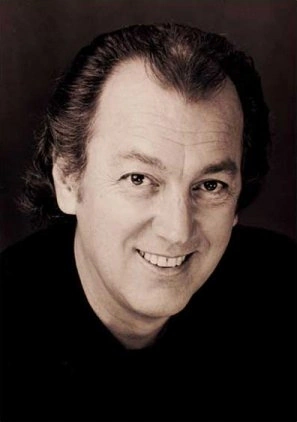
| 17 Quotes | |
| Occup. | Celebrity |
| From | USA |
| Born | 1945 |
| Cite | |
Citation Formats
APA Style (7th ed.)
Joey skaggs biography, facts and quotes. (2026, February 11). FixQuotes. https://fixquotes.com/authors/joey-skaggs/
Chicago Style
"Joey Skaggs biography, facts and quotes." FixQuotes. February 11, 2026. https://fixquotes.com/authors/joey-skaggs/.
MLA Style (9th ed.)
"Joey Skaggs biography, facts and quotes." FixQuotes, 11 Feb. 2026, https://fixquotes.com/authors/joey-skaggs/. Accessed 12 Feb. 2026.
Early Life and Background
Joey Skaggs was born around 1945 in the United States, coming of age in a postwar culture that increasingly ran on advertising, television, and the authority of "the news". His later fame as a celebrity prankster and media critic would be inseparable from that era: the rise of mass broadcast, the professionalization of public relations, and the growing sense that public life could be packaged, sold, and believed if it looked official enough.Skaggs' inner life, by his own account across decades of interviews, revolved around an early, stubborn refusal to accept premises simply because they were repeated. He developed a wary relationship with institutions that claimed objectivity - especially journalism - and learned to see attention as both currency and weapon. That suspicion did not push him toward withdrawal; it pushed him toward performance, a public testing of credulity in which the audience was often not the bystander but the target.
Education and Formative Influences
Details of Skaggs' formal education are less consistently documented than his public work, but his formative influences are clear in the cultural material he remixed: the 1960s-1970s tradition of street theater, counterculture satire, and conceptual art that treated the media environment as the true stage. In a time when activist groups used spectacle to force coverage, Skaggs studied how a camera changes behavior and how a press release can become "fact" by repetition. He absorbed the methods of advertising and public relations not to serve them, but to reverse-engineer them.Career, Major Works, and Turning Points
Skaggs built his career by manufacturing hoaxes that exposed journalistic shortcuts and public appetite for sensationalism, repeatedly demonstrating how easily official-looking narratives travel through newsrooms. Working as a self-styled performance artist and social satirist, he staged elaborate sting operations in which he played the role of spokesman, entrepreneur, or expert, then revealed the setup to show where verification failed. Over the years he became a cult figure in media criticism - not merely for tricking outlets, but for documenting the process, archiving the clips, and turning each episode into a case study in how stories are sourced, edited, and laundered into legitimacy. Turning points came when major outlets aired his fabrications and then, faced with embarrassment, tried to frame him as the villain rather than confront their own procedures - a pattern that reinforced his conviction that institutions protect their authority first and their accuracy second.Philosophy, Style, and Themes
Skaggs' work is built on a paradox: he lies in order to tell the truth about how truth is manufactured. The signature Skaggs hoax is not random; it is engineered with bureaucratic realism, plausible documentation, and a hook tailored to the news cycle. He has explained the method with almost clinical clarity: "Most important to any fake story is a plausible, realistic edge with a satirical twist that is topical". The psychology behind this is less cynicism than restless vigilance - a belief that in an attention economy, the only way to make people notice their own manipulation is to let them feel it.Beneath the comedy sits an ethic of skepticism and a demand for journalistic duty. Skaggs insists he is not primarily attacking reporters as individuals, but the incentives that reward speed, novelty, and copy-and-paste sourcing. His most disarming claim is also his challenge: "Any journalist worth his or her salt wouldn't trust me". That sentence captures the essence of his self-casting as a stress test for institutions, and it reveals a personal compulsion that is as much temperamental as political: "It would make life much easier if I could have total faith and not question everything all the time, but I can't do it and I won't do it". In Skaggs' universe, doubt is not a mood; it is a moral stance, and his pranks are rehearsals for public discernment.
Legacy and Influence
Skaggs' legacy is visible in the way media literacy is now discussed in an era of viral misinformation: he anticipated the mechanics of believability, the authority of packaging, and the fragility of verification long before social platforms made those failures constant. Though controversial - and sometimes criticized for blurring lines rather than clarifying them - his body of hoaxes and subsequent deconstructions helped normalize the idea that journalism must show its work. He endures as a peculiar kind of celebrity: not famous for a stable persona, but for repeatedly proving that modern credibility can be staged, and that the audience has responsibilities as well as rights.Our collection contains 17 quotes written by Joey, under the main topics: Wisdom - Truth - Art - Justice - Sarcastic.
Source / external links