
Johan Huizinga Biography Quotes 26 Report mistakes
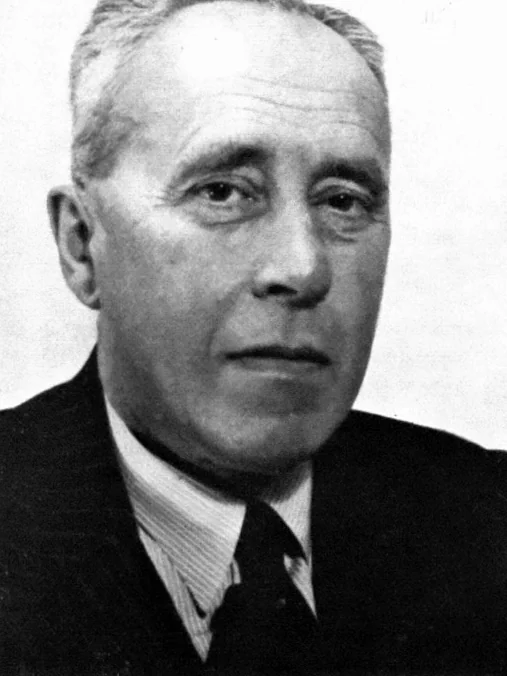
| 26 Quotes | |
| Occup. | Historian |
| From | Netherland |
| Born | December 7, 1872 Groningen, Netherlands |
| Died | February 1, 1945 De Steeg, Netherlands |
| Aged | 72 years |
| Cite | |
Citation Formats
APA Style (7th ed.)
Johan huizinga biography, facts and quotes. (2026, February 11). FixQuotes. https://fixquotes.com/authors/johan-huizinga/
Chicago Style
"Johan Huizinga biography, facts and quotes." FixQuotes. February 11, 2026. https://fixquotes.com/authors/johan-huizinga/.
MLA Style (9th ed.)
"Johan Huizinga biography, facts and quotes." FixQuotes, 11 Feb. 2026, https://fixquotes.com/authors/johan-huizinga/. Accessed 5 Mar. 2026.
Early Life and Background
Johan Huizinga was born on December 7, 1872, in Groningen in the northern Netherlands, a city of merchants, university learning, and Calvinist restraint. His father, Dirk Huizinga, was a physician and professor of physiology whose laboratory habits and civic seriousness gave the household an air of disciplined inquiry. The Netherlands of Huizinga's youth was politically stable yet culturally anxious: modern industry, expanding mass literacy, and a pillarized society of Protestants, Catholics, and socialists pulled public life into separate moral worlds. This early proximity to both scholarship and social compartmentalization would later sharpen his sensitivity to how cultures organize meaning.Huizinga grew up with a strong literary appetite and a feeling for atmosphere - the textures of words, rituals, and symbols - that sat beside his interest in history. He was never merely a chronicler of events; even as a young man he gravitated toward the mental climates of epochs, the ways a society dreams itself into institutions. That temperament helps explain why, when Europe entered the age of mechanized war and mass politics, he read the crisis less as a failure of policy than as a failure of cultural form.
Education and Formative Influences
He studied at the University of Groningen, initially oriented toward philology and linguistics, and trained in the exacting methods of comparative language study that were then the pride of European scholarship. Early work in Sanskrit and Indian literature brought him into contact with the symbolic logic of myth, festival, and sacred narrative - a formative encounter that later fed his interest in ritualized behavior and the autonomy of play. He completed doctoral work in 1897 and entered academic life with a philologist's respect for texts, but also with an emerging conviction that the historian must grasp tone, gesture, and imagination as much as archives.Career, Major Works, and Turning Points
After teaching in secondary education, Huizinga became professor of history at the University of Groningen in 1905, and in 1915 moved to Leiden University, the Netherlands' most prestigious scholarly setting, where he would produce the books that made him internationally famous. His breakthrough came with "Herfsttij der Middeleeuwen" (1919), translated as "The Waning of the Middle Ages", a study of late medieval Burgundian and French culture that treated the 14th and 15th centuries not as a simple prelude to Renaissance progress but as a richly self-contained world of symbols, ceremonial politics, and emotional intensities. In 1935 he published "In de schaduwen van morgen" ("In the Shadow of Tomorrow"), a dark diagnosis of Europe's spiritual disorientation amid propaganda and ideological mass movements. His culminating theoretical work, "Homo Ludens" (1938), argued that culture arises in and through play, not merely as ornament but as a generative human mode. During the German occupation of the Netherlands in World War II, Huizinga criticized the degradation of intellectual and civic norms; he was arrested in 1942 and kept in confinement and then internal exile. He died on February 1, 1945, in De Steeg, only months before liberation.Philosophy, Style, and Themes
Huizinga's historical mind was anti-reductionist: he distrusted explanations that flattened lived experience into economics, institutions, or single-cause narratives. He treated history as an art of intelligibility, arranging the past so that the present can recognize itself without pretending to total objectivity. This stance appears in his insistence that “History is the interpretation of the significance that the past has for us”. The sentence is less relativism than a moral warning: interpretation is unavoidable, so the historian must be self-aware about the values that guide selection, emphasis, and judgment. His prose - famously lucid, sensuous, and unhurried - sought to restore the thickness of mental worlds: the fear of death and desire for spectacle in late medieval piety, the way heraldry, tournaments, processions, and devotional images trained emotions into shared forms.Across his work runs a psychological concern with self-mastery and cultural discipline in the face of mass suggestion. He doubted that modernity's technical control could compensate for a weakening of inner control, insisting that “Domination of human nature can only mean the domination of every man by himself”. In "Homo Ludens" he gave that insight a surprising ground: play, he argued, is not frivolity but a formative zone where rules are freely accepted, roles tested, and meanings stabilized. “Play is a uniquely adaptive act, not subordinate to some other adaptive act, but with a special function of its own in human experience”. Read together, these ideas reveal an inner life preoccupied with the fragile boundary between freedom and coercion: cultures thrive when they can bind themselves by chosen forms - law, ritual, fair competition, scholarly standards - and collapse when those forms are hollowed out into mere technique or enforced belief.
Legacy and Influence
Huizinga reshaped cultural history by legitimizing mood, symbolism, and collective imagination as serious historical evidence, influencing later historians of mentalities, ritual, and everyday life as well as theorists of games and media. "The Waning of the Middle Ages" remains a model for writing that is at once erudite and atmospheric, while "Homo Ludens" continues to echo in anthropology, sociology, and game studies, especially in debates about whether modern entertainment, sport, and digital worlds renew culture or commodify it. His late writings, forged in the shadow of totalitarianism and war, left a durable reminder that the historian is also a guardian of standards of judgment - and that when a society loses its capacity for meaningful form, it risks losing its capacity for humane freedom.Our collection contains 26 quotes written by Johan, under the main topics: Witty One-Liners - Ethics & Morality - Wisdom - Truth - Art.