
Johann Gottfried von Herder Biography Quotes 1 Report mistakes
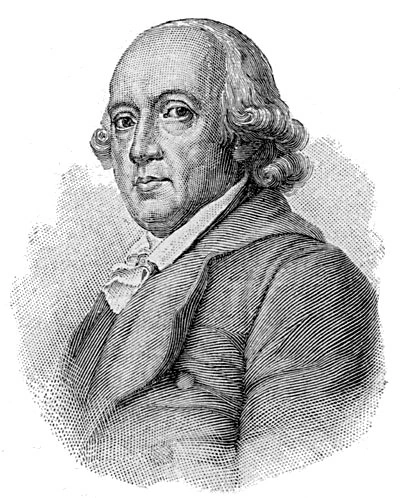
| 1 Quotes | |
| Occup. | Philosopher |
| From | Germany |
| Born | August 25, 1744 |
| Died | December 18, 1803 |
| Aged | 59 years |
| Cite | |
Citation Formats
APA Style (7th ed.)
Johann gottfried von herder biography, facts and quotes. (2026, February 11). FixQuotes. https://fixquotes.com/authors/johann-gottfried-von-herder/
Chicago Style
"Johann Gottfried von Herder biography, facts and quotes." FixQuotes. February 11, 2026. https://fixquotes.com/authors/johann-gottfried-von-herder/.
MLA Style (9th ed.)
"Johann Gottfried von Herder biography, facts and quotes." FixQuotes, 11 Feb. 2026, https://fixquotes.com/authors/johann-gottfried-von-herder/. Accessed 25 Mar. 2026.
Early Life and Education
Johann Gottfried von Herder was born in 1744 in Mohrungen, in Royal Prussia under the Kingdom of Prussia, a region now in Poland but then part of the German-speaking cultural world. The son of a modest schoolmaster and church singer, he grew up within the rhythms of Lutheran worship and village schooling. As a teenager he briefly apprenticed with a surgeon, but in 1762 he went to Konigsberg and turned decisively toward theology, philosophy, and philology. There he attended lectures by Immanuel Kant and formed a lifelong friendship with the older, enigmatic thinker Johann Georg Hamann. Kant offered him discipline in analysis; Hamann opened his imagination to language, faith, and the depths of culture. This dual influence marked Herder's synthesis for the rest of his life: empirical curiosity joined to an intuitive feel for history and poetry.Riga and First Publications
In 1764 Herder moved to Riga, where he taught and preached. The Baltic port, with its Lutheran institutions and cosmopolitan trade, gave him a broad view of European letters. He wrote essays that would become Uber die neuere deutsche Literatur and Kritische Walder, arguing for a living national literature and the study of classical and modern works through the medium of their original languages. He championed Shakespeare against rigid neoclassical taste and began to sketch a historical poetics in which each age and people expresses a characteristic spirit in language and art.Travel, Encounter with Goethe, and Sturm und Drang
Leaving Riga in 1769, Herder undertook a sea voyage and a long overland journey recorded in his travel diary. He passed through French and German intellectual centers before arriving in Strassburg, where in 1770 he met the young Johann Wolfgang von Goethe. Their conversations were decisive for the emerging Sturm und Drang movement. Herder urged Goethe to attend to folk poetry, to the Bible's poetic power, and to the living force of language. At the same time, he remained in close contact with Hamann, whose criticism of abstract rationalism strengthened Herder's misgivings about system-building detached from historical experience.Bueckeburg Years and Marriage
In 1771 Herder accepted a post as court preacher and superintendent in Bueckeburg under Count Wilhelm of Schaumburg-Lippe. Two years later he married Maria Karoline Flachsland, known as Caroline, who became an indispensable partner, editor, and confidante. The Bueckeburg years were intellectually fertile. Herder wrote Abhandlung uber den Ursprung der Sprache (1772), a prize essay that argued that language arises from human social life and sensibility rather than from a priori ideas. He followed with Auch eine Philosophie der Geschichte zur Bildung der Menschheit (1774), a manifesto for understanding history as the education of humankind, and early studies in biblical hermeneutics that foreshadowed his later Vom Geist der ebraischen Poesie.Weimar: Office, Collaboration, and Tension
In 1776 Goethe helped bring Herder to Weimar, where Duke Karl August appointed him General Superintendent and chief court preacher for Saxe-Weimar-Eisenach. In the circle around Goethe and Christoph Martin Wieland, Herder became a leading voice in literary and educational reform. He oversaw church and school affairs while pursuing scholarship that linked theology, philology, and aesthetics. He published Volkslieder (1778, 1779), a pioneering collection of songs that elevated folk poetry to the status of national art, and Plastik (1778), reflecting on form and embodiment in the arts. His studies of Hebrew poetry (1782, 1783) advanced a historically sensitive reading of scripture, presenting the Psalms and prophetic books as poetry shaped by a distinct Near Eastern milieu.Ideas on Language, Culture, and History
Herder's central conviction was that language, thought, and culture are inseparable. Each community, he argued, develops a characteristic way of seeing the world through its language; to understand a people one must enter its idiom, customs, and poetry. In Ideen zur Philosophie der Geschichte der Menschheit (1784, 1791) he offered a sweeping narrative of human development shaped by climate, geography, tradition, and exchange. He resisted ranking civilizations on a single scale of progress, preferring to speak of the plurality of cultures and their distinctive contributions to Humanitat, the humane capacities common to all. He criticized colonial arrogance and urged respect for non-European cultures. These positions influenced younger scholars such as Wilhelm von Humboldt, who would formulate a more technical philosophy of language partly under Herder's inspiration.Religion, Aesthetics, and Critique of Abstraction
Herder's religious thought treated faith as embedded in the life of a people. In Gott. Einige Gesprache (1787) he defended a theistic, dialogical view of the divine that harmonized with his poetics of scripture. He increasingly opposed what he saw as the abstractions of high Enlightenment philosophy. While he had learned much from Kant, he rejected the Critiques' transcendental method in works such as Metakritik zur Kritik der reinen Vernunft (1799) and Kalligone (1800), the latter a reply to Kant's aesthetics. He also differed with Friedrich Schiller, whose program of classical form and moral-aesthetic education did not fit Herder's historically plural, organic vision. These disagreements contributed to tensions within the Weimar circle, even as mutual respect persisted.Late Writings, Public Voice, and Family
During the 1790s Herder became a prominent public moralist. His Briefe zur Beforderung der Humanitat (1793, 1797) advocated civic virtue, education, and international understanding amid the upheavals of the French Revolution. He continued to refine his theory of interpretation, history, and poetics, and Caroline remained central to his work, assisting with manuscripts and, after his death, helping secure the publication and reissue of his writings. Herder's concern for schools and clergy in Weimar never ceased; he treated office and scholarship as complementary duties.Ennoblement, Final Years, and Death
Herder was ennobled in 1802, adding the "von" that later readers take for granted in his name. His health declined in his last years, but he worked steadily to the end. He died in Weimar in 1803. By then his influence was visible across German letters: Goethe had long since absorbed and transformed Herder's counsel; Wieland valued his criticism even when they differed; Schiller contested him but engaged seriously with his ideas. Beyond Weimar, his reflections on language and folklore prepared the way for Romantic-era collections and for later figures who explored the "spirit" of peoples in literature and law. Without building a closed system, Herder shaped a distinctive path between Enlightenment universalism and Romantic particularism, grounded in the history, poetry, and languages of humankind.Our collection contains 1 quotes written by Johann, under the main topics: Motivational.
Johann Gottfried von Herder Famous Works
- 1793 Letters for the Advancement of Humanity (Book)
- 1784 Reflections on the Philosophy of the History of Mankind (Book)
- 1774 This Too a Philosophy of History for the Formation of Humanity (Book)
- 1773 Shakespeare (Book)
- 1772 On the Origin of Language (Book)