
Johann Heinrich Lambert Biography Quotes 4 Report mistakes
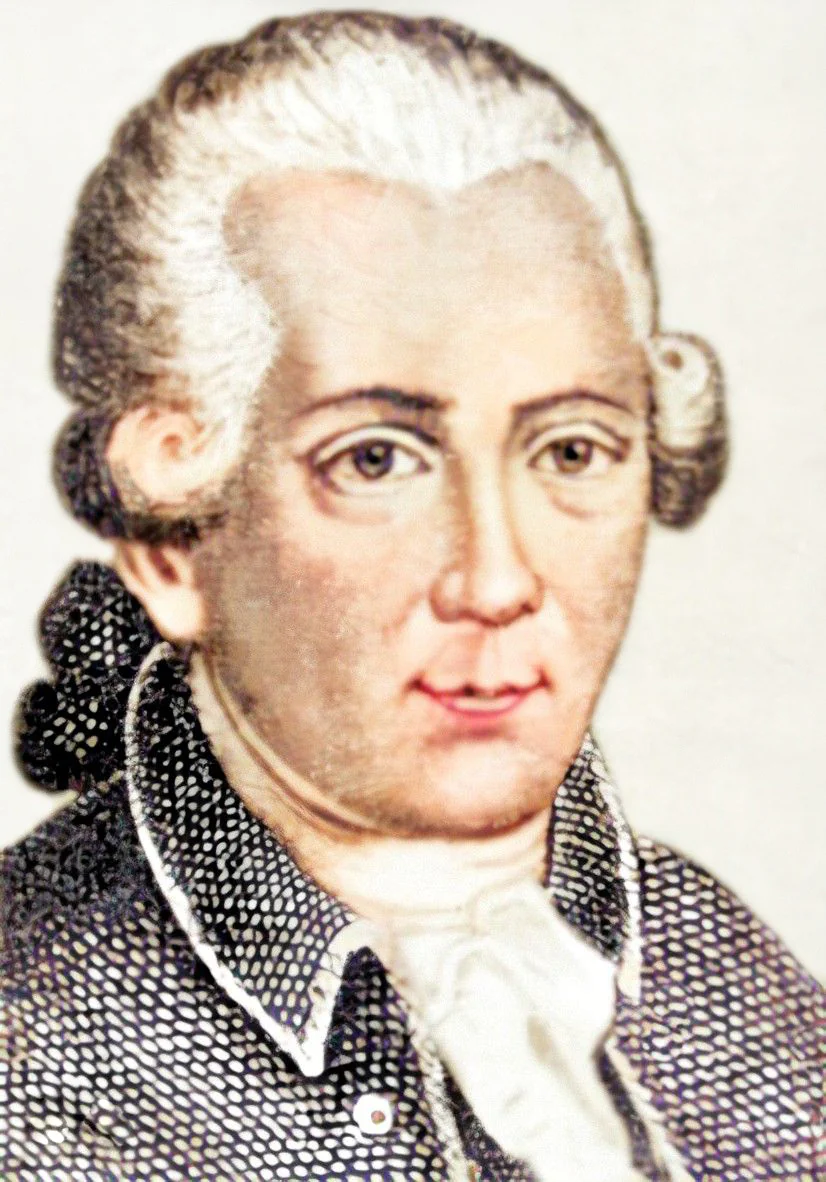
| 4 Quotes | |
| Occup. | Mathematician |
| From | Germany |
| Born | August 26, 1728 Alsace, Switzerland |
| Died | September 25, 1777 Berlin, Germany |
| Aged | 49 years |
| Cite | |
Citation Formats
APA Style (7th ed.)
Johann heinrich lambert biography, facts and quotes. (2026, February 11). FixQuotes. https://fixquotes.com/authors/johann-heinrich-lambert/
Chicago Style
"Johann Heinrich Lambert biography, facts and quotes." FixQuotes. February 11, 2026. https://fixquotes.com/authors/johann-heinrich-lambert/.
MLA Style (9th ed.)
"Johann Heinrich Lambert biography, facts and quotes." FixQuotes, 11 Feb. 2026, https://fixquotes.com/authors/johann-heinrich-lambert/. Accessed 25 Mar. 2026.
Early Life and Background
Johann Heinrich Lambert was born on August 26, 1728, in Mulhouse (then a small, semi-independent Protestant republic allied with Switzerland, later absorbed into France). The city sat on a border of languages, confessions, and trading routes, and Lambert grew up amid the disciplined piety and practical numeracy of a textile town that measured life in accounts, inventories, and the steady pressure of making do. His family background was modest, and his path was not that of the university-bred savant but of a self-propelled provincial talent who learned by hunger as much as by instruction.Eighteenth-century Central Europe was a landscape of academies, court patronage, and a widening public sphere for science. Lambert came of age when Newtonian mechanics and Leibnizian-Wolffian rationalism were competing frameworks, and when precise measurement - in astronomy, surveying, optics - promised both truth and utility. He never escaped the sense that knowledge had to pay its way: in improved instruments, clearer reasoning, or proofs that could withstand the skepticism of the learned world and the indifference of patrons.
Education and Formative Influences
Lambert received an early education that was respectable but limited by circumstance, and he quickly turned himself into his own teacher, working as a clerk and later as a tutor while building a private curriculum in mathematics, philosophy, and the natural sciences. He traveled in the German-speaking world as a household tutor, gaining access to libraries and the salons of educated elites, and he absorbed the era's appetite for system: Wolff's methodical metaphysics, Newtonian astronomy, and the emerging ideal of an exact, mathematized science of nature. This mixture of necessity and ambition formed his characteristic stance - intellectually audacious, method-obsessed, and impatient with merely rhetorical learning.Career, Major Works, and Turning Points
Lambert's reputation consolidated in the 1760s through a run of works that moved easily between pure mathematics, applied measurement, and philosophical foundations. He became a member of the Berlin Academy of Sciences and, from 1765, worked in Berlin in the orbit of Frederick the Great's learned institutions, in contact with figures such as Euler and, increasingly, Kant's Königsberg circle at a distance. His major books include Photometria (1760), a foundational treatise that quantified light and laid out laws for illumination and measurement; Theorie der Parallellinien (1766), where he advanced the study of the parallel postulate and uncovered results that pointed toward non-Euclidean geometry; and Neues Organon (1764), an ambitious logic and theory of scientific method. In mathematics he supplied the first proof of the irrationality of pi and clarified the hyperbolic functions (introducing what is now called the Lambert W function in embryonic form through transcendental equations), while in astronomy and cosmology he argued for structured stellar systems and attempted to bring the heavens under the same regime of law and measurement as the laboratory.Philosophy, Style, and Themes
Lambert's inner life reads as a disciplined ascent: he treated self-improvement as an epistemic project, as if moral progress required the same insistence on definitions, axioms, and checks that he demanded of a proof. “The first object of my endeavours was the means to become perfect and happy”. That sentence is not sentimental; it is programmatic. For Lambert, happiness was not luck but an engineered outcome of clarity, order, and justified belief - a stance that helps explain his lifelong drive to formalize reasoning in Neues Organon and to police the boundary between knowledge and conjecture.His style is exacting and systematic, but not narrow. The same mind that reduced light to measurable quantities in Photometria also contemplated the scale of the cosmos with a mixture of boldness and restraint: “I am undecided whether or not the Milky Way is but one of countless others all of which form an entire system. Perhaps the light from these infinitely distant galaxies is so faint that we cannot see them”. The psychology here is revealing: he permits speculation only when it is tethered to an observational limit (faintness, distance, instruments), turning wonder into a hypothesis about measurement. Even his ethics is epistemology: “I understood that the will could not be improved before the mind had been enlightened”. In Lambert's world, ignorance is not merely a defect in information but a defect in character, because it leaves the will unsteered by reasons.
Legacy and Influence
Lambert died in Berlin on September 25, 1777, before the full arc of his influence could be recognized, but his work became a junction point for several later revolutions. In optics and photometry, his methods helped define how modern science ties quantities to instruments; in geometry, his investigations of parallels helped clear the ground on which Bolyai and Lobachevsky would later build; in analysis, his transcendental equations and the constant bearing his name persisted as tools for later mathematical physics; and in philosophy of science, his demand for method and clarity fed directly into the late-Enlightenment ideal of rigor that Kant both admired and transformed. Lambert's enduring significance is that he made exactness a moral and intellectual posture: to measure was to think correctly, and to think correctly was, in his view, the first step toward living well.Our collection contains 4 quotes written by Johann, under the main topics: Wisdom - Learning - Science - Self-Improvement.
Johann Heinrich Lambert Famous Works
- 1779 Pyrometrie (Book)
- 1764 Neues Organon (Book)
- 1761 Cosmologische Briefe über die Einrichtung des Weltbaues (Book)
- 1760 Photometria (Book)
Source / external links