
Johann Wolfgang Von Goethe Biography Quotes 156 Report mistakes
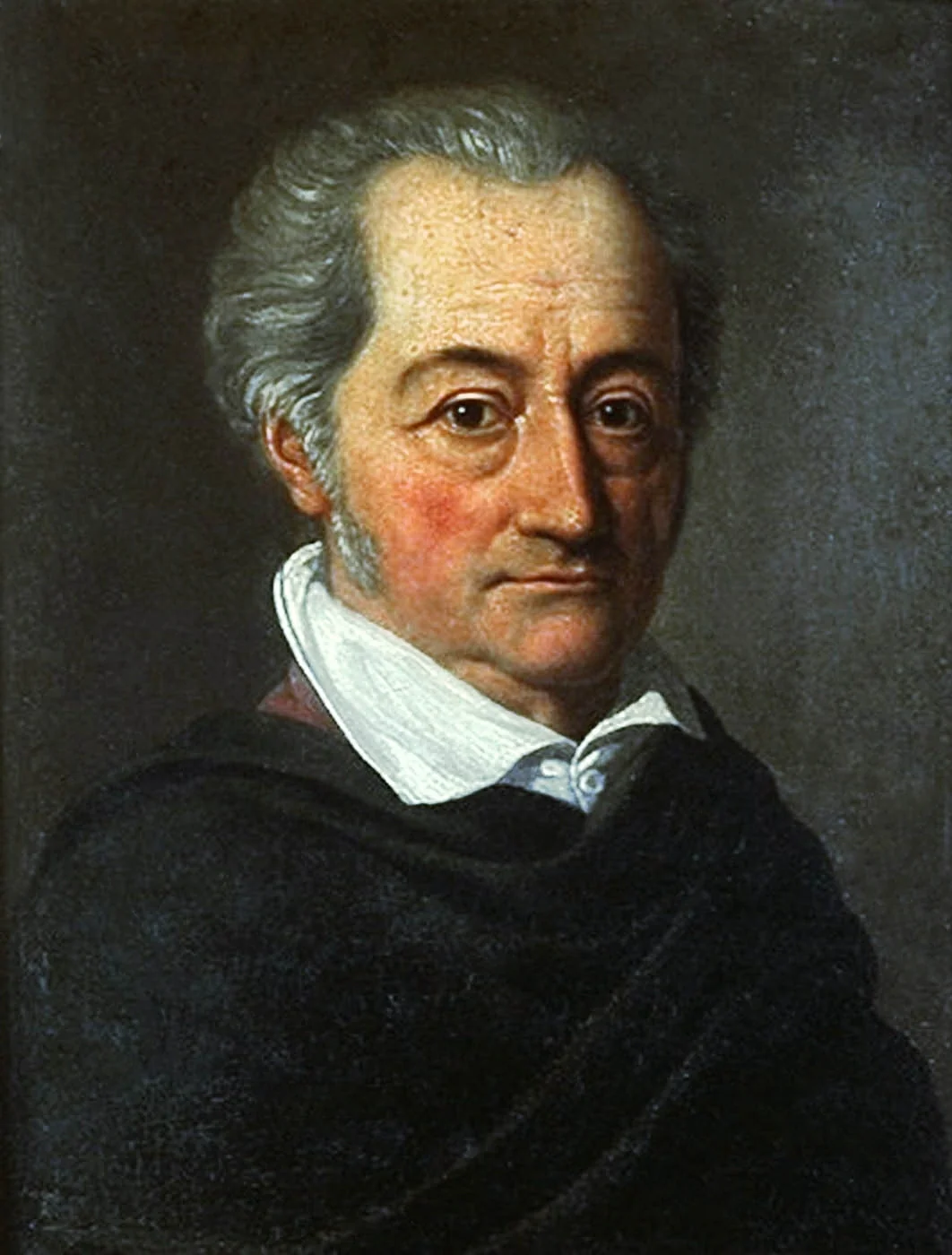
| 156 Quotes | |
| Occup. | Writer |
| From | Germany |
| Born | August 28, 1749 Frankfurt, Germany |
| Died | March 22, 1832 Weimar, Germany |
| Cause | Natural Causes |
| Aged | 82 years |
| Cite | |
Citation Formats
APA Style (7th ed.)
Johann wolfgang von goethe biography, facts and quotes. (2026, February 1). FixQuotes. https://fixquotes.com/authors/johann-wolfgang-von-goethe/
Chicago Style
"Johann Wolfgang Von Goethe biography, facts and quotes." FixQuotes. February 1, 2026. https://fixquotes.com/authors/johann-wolfgang-von-goethe/.
MLA Style (9th ed.)
"Johann Wolfgang Von Goethe biography, facts and quotes." FixQuotes, 1 Feb. 2026, https://fixquotes.com/authors/johann-wolfgang-von-goethe/. Accessed 26 Mar. 2026.
Early Life and Background
Johann Wolfgang von Goethe was born on August 28, 1749, in the Free Imperial City of Frankfurt am Main, a commercially confident enclave within the Holy Roman Empire. His father, Johann Caspar Goethe, was a disciplined, status-conscious jurist with the means to build a private world of books, art, and travel memories; his mother, Catharina Elisabeth Textor, was vivid, socially agile, and a gifted storyteller. From that tension - paternal order versus maternal spontaneity - Goethe absorbed an early lesson he would spend a lifetime refining: the self is not a single voice but a managed chorus.The Seven Years' War brushed his childhood indirectly, while the shockwaves of Enlightenment critique and rising German cultural ambition formed the background noise of his adolescence. He grew up amid French influence, Protestant civic habits, and the highly stratified etiquette of a city that rewarded polish but distrusted excess. Early theatrical experiments, voracious reading, and the young writer's instinct to turn experience into form already suggested his defining trait - a readiness to treat his own life as raw material, not for confession, but for transformation.
Education and Formative Influences
Goethe studied law at Leipzig (1765-1768), where he encountered the city's lighter literary culture and began publishing early poems, then continued at Strasbourg (1770-1771), where a more bracing intellectual climate and the Gothic intensity of Strasbourg Cathedral widened his sense of German possibility. In Strasbourg he met Johann Gottfried Herder, whose ideas about folk song, organic art, and historical rootedness helped ignite the Sturm und Drang impulse in Goethe - a turn toward emotion, nature, and a rebellious authenticity. Personal passions also became formative texts: his attachment to Friederike Brion at Sessenheim fed a lyric directness that would outlast the youthful movement itself.Career, Major Works, and Turning Points
After returning to Frankfurt, Goethe catapulted to European fame with the epistolary novel "The Sorrows of Young Werther" (1774), which crystallized modern emotional subjectivity and provoked both imitation and alarm. He followed with the drama "Gots von Berlichingen" (1773) and, in 1775, accepted an invitation to Weimar, entering the service of Duke Carl August; there he became an administrator, adviser, and cultural builder as much as a writer. A decisive turning point came with his Italian journey (1786-1788), which reoriented him toward classical form, visual art, and scientific observation; in its wake he produced works such as "Iphigenie auf Tauris", "Torquato Tasso", the novel of education "Wilhelm Meisters Lehrjahre", and lifelong scientific writings, including his controversial "Theory of Colours". His greatest work, "Faust", was composed across decades - Part One appearing in 1808, Part Two published posthumously - as Europe moved from Enlightenment confidence through revolution, Napoleonic realignment, and Restoration.Philosophy, Style, and Themes
Goethe's inner life was neither purely Romantic nor serenely Classical; it was a disciplined effort to convert appetite into insight. He distrusted systems that severed thought from lived complexity, insisting that experience, not abstraction, must be the judge: “All theory, dear friend, is gray, but the golden tree of life springs ever green”. That sentence is not anti-intellectualism but self-protection - a reminder that he used ideas as tools, not as shelters, and that he demanded from himself an experimental honesty, whether in love, politics, art, or science.His style moves from volcanic confession to measured architecture, yet its constant is an ethic of development: Bildung as a lifelong practice of shaping the self without falsifying it. The psychological key is his belief that reality is harder to imagine than fantasy - “Few people have the imagination for reality”. - a paradox that explains both the observational precision of his nature writing and the metaphysical ambition of "Faust". He also prized restraint as mastery, a stance that can read like stoicism but is really an artist's concentration: “It is in self-limitation that a master first shows himself”. Across genres he returns to the same problem: how to live intensely without being consumed, how to choose form without killing freedom, how to accept time - aging, loss, death - while still affirming the world's radiance.
Legacy and Influence
Goethe died in Weimar on March 22, 1832, having become, in effect, Germany's first modern cultural institution - a poet-statesman whose authority rested on range as much as genius. He shaped European letters through the template of the modern self in "Werther", the apprenticeship narrative in "Wilhelm Meister", and the open-ended, world-devouring striving of "Faust", while his conversations, autobiographical writings, and scientific pursuits modeled a life spent testing perception. Later writers and thinkers - from the German Romantics and Realists to Nietzsche, Thomas Mann, and beyond - argued with him as with a living standard: proof that literature could hold eros and ethics, imagination and measurement, national culture and cosmopolitan reach, all within one relentlessly developing mind.Our collection contains 156 quotes written by Johann, under the main topics: Witty One-Liners - Motivational - Ethics & Morality - Truth - Wisdom.
Frequently Asked Questions
- Johann Wolfgang Von Goethe Romanticism: He is considered a precursor and influential figure of Romanticism in literature.
- Goethe philosophy: He developed a holistic view of nature and was involved with Sturm und Drang and Weimar Classicism.
- Why is Goethe important: He is a key figure in German literature and influenced the Romantic movement.
- Johann Wolfgang Von Goethe works: Faust, The Sorrows of Young Werther, Elective Affinities, Wilhelm Meister's Apprenticeship.
- Johann Wolfgang Von Goethe died: 1832.
- Johann Wolfgang Von Goethe pronunciation: Yoh-hahn Volf-gahng Fon Geh-teh.
- Johann Wolfgang Von Goethe famous works: Faust, The Sorrows of Young Werther, Wilhelm Meister's Apprenticeship.
- How old was Johann Wolfgang Von Goethe? He became 82 years old
Johann Wolfgang Von Goethe Famous Works
- 1816 Italian Journey (Travel Diaries)
- 1809 Elective Affinities (Novel)
- 1808 Faust (Play)
- 1795 Wilhelm Meister's Apprenticeship (Novel)
- 1774 The Sorrows of Young Werther (Novel)
Source / external links