
John Adams Biography Quotes 36 Report mistakes
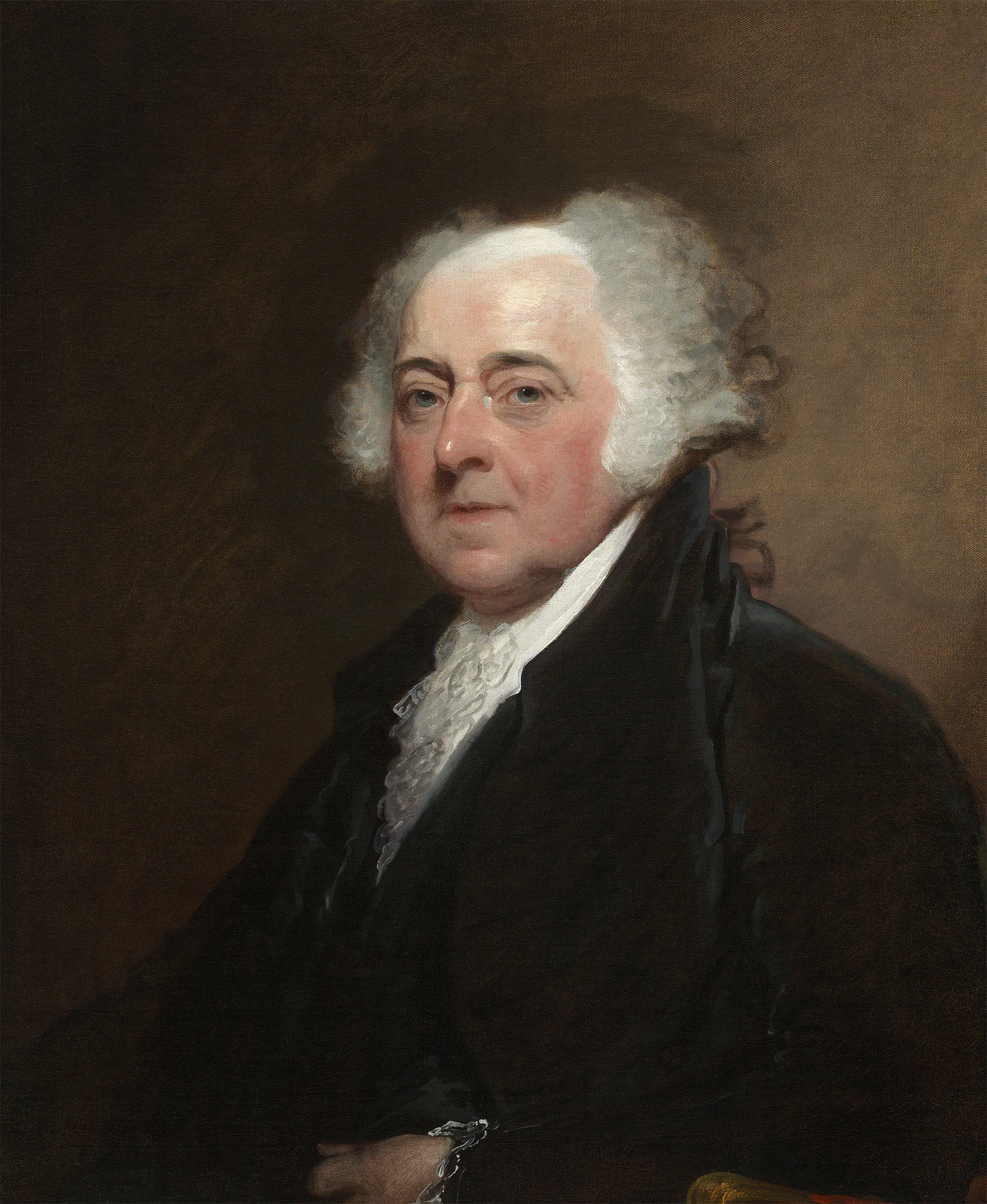
| 36 Quotes | |
| Occup. | President |
| From | USA |
| Born | October 30, 1735 |
| Died | July 4, 1826 |
| Aged | 90 years |
| Cite | |
Citation Formats
APA Style (7th ed.)
John adams biography, facts and quotes. (2026, February 2). FixQuotes. https://fixquotes.com/authors/john-adams/
Chicago Style
"John Adams biography, facts and quotes." FixQuotes. February 2, 2026. https://fixquotes.com/authors/john-adams/.
MLA Style (9th ed.)
"John Adams biography, facts and quotes." FixQuotes, 2 Feb. 2026, https://fixquotes.com/authors/john-adams/. Accessed 24 Mar. 2026.
Early Life and Background
John Adams was born on 1735-10-30 in Braintree, Massachusetts Bay, into a tight, literate world of New England Congregationalism and town-meeting politics. His father, also John Adams, was a farmer, shoemaker, and local officer; his mother, Susanna Boylston, came from a family that valued learning and moral seriousness. That blend of modest property, public duty, and Puritan self-scrutiny formed the emotional grain of Adams's character: ambitious, easily stung by slight, yet trained to translate private feeling into civic labor.The era of his youth was one of imperial confidence shading into anxiety: Britain expanding after mid-century wars, colonies growing in wealth and population, and local elites learning to speak the language of rights. Adams absorbed the rhythms of provincial life - militia musters, Sabbath discipline, court days - and also its ceilings, which could make a talented young man feel both chosen and trapped. The tension between his hunger for distinction and his fear of moral failure would never leave him, and it helps explain his lifelong habit of introspective letter-writing as a kind of self-government.
Education and Formative Influences
Adams entered Harvard College and graduated in 1755, reading the classics, logic, and moral philosophy in a curriculum that treated character as a public instrument. He briefly taught school in Worcester, then turned decisively to law, apprenticing in the offices and courtrooms that revealed how power actually worked in a society that claimed to be orderly and godly. The law trained his mind to argue from evidence and precedent, while the political literature he devoured - histories of republics, English constitutional struggles, and ancient examples of virtue and faction - fed a belief that liberty depended less on slogans than on institutional design and disciplined citizens.Career, Major Works, and Turning Points
Adams rose as a Boston lawyer and became a figure of consequence during the imperial crisis, most famously defending the British soldiers after the Boston Massacre in 1770 - an act of professional principle that also announced his devotion to legal legitimacy over crowd passion. Elected to the Continental Congress, he emerged as a relentless committee worker and advocate of independence, helping nominate George Washington to command and serving as a diplomatic envoy in Europe. In 1780 he drafted the Massachusetts Constitution, a durable template for American constitutionalism, and later represented the United States in the Netherlands and at the 1783 Treaty of Paris. As Washington's vice president and then the second president (1797-1801), he governed amid undeclared naval war with France and vicious party formation; the Alien and Sedition Acts darkened his administration even as he steered the nation away from full-scale war through diplomacy. Defeated by Thomas Jefferson, he returned to Quincy to a long retirement of reading, farming, and correspondence - including the famed reconciliation letters with Jefferson - dying on 1826-07-04, the fiftieth anniversary of independence.Philosophy, Style, and Themes
Adams's inner life was a contest between passionate sensitivity and a stern belief that reason must referee human appetite. He distrusted all political romance, especially the idea that virtue would arise spontaneously from the people's will; his experiences with mobs, factions, and foreign intrigue convinced him that liberty survived only when fenced by law and balanced powers. His ideal was captured in the maxim “A government of laws, and not of men”. The sentence is not mere civics; it is autobiography. Adams knew how much his own moods - pride, resentment, yearning for regard - could distort judgment, and he projected that knowledge onto public life, insisting on institutions that would restrain the personal element in every ruler, including himself.His prose, in diaries, legal arguments, and letters to Abigail Adams, is urgent and self-revealing: he confesses vanity, catalogs fears, then drafts a remedy in principle. He could be pugnacious in controversy yet disciplined in method, anchored by an almost judicial faith in proof: “Facts are stubborn things; and whatever may be our wishes, our inclinations, or the dictates of our passions, they cannot alter the state of facts and evidence”. That insistence on evidence hardened into suspicion of demagogic feeling and the volatility of popular rule, expressed in his bleak warning that "Democracy... while it lasts is more bloody than either aristocracy or monarchy. Remember, democracy never lasts long. It soon wastes, exhausts, and murders itself. There is never
Our collection contains 36 quotes written by John, under the main topics: Ethics & Morality - Truth - Wisdom - Justice - Writing.
Other people related to John: Henry B. Adams (Historian), John Quincy Adams (President), Henry Adams (Historian), Henry Brooks Adams (Historian), John Witherspoon (Politician), David Morse (Actor), Paul Giamatti (Actor), John Trumbull (Artist), John Hancock (Politician), Benjamin Hawkins (Diplomat)
John Adams Famous Works
- 1850 The Works of John Adams (Collection)
- 1776 Thoughts on Government (Essay)
- 1774 Novanglus (Essay)
- 1765 A Dissertation on the Canon and Feudal Law (Essay)
Source / external links