
John B. S. Haldane Biography Quotes 18 Report mistakes
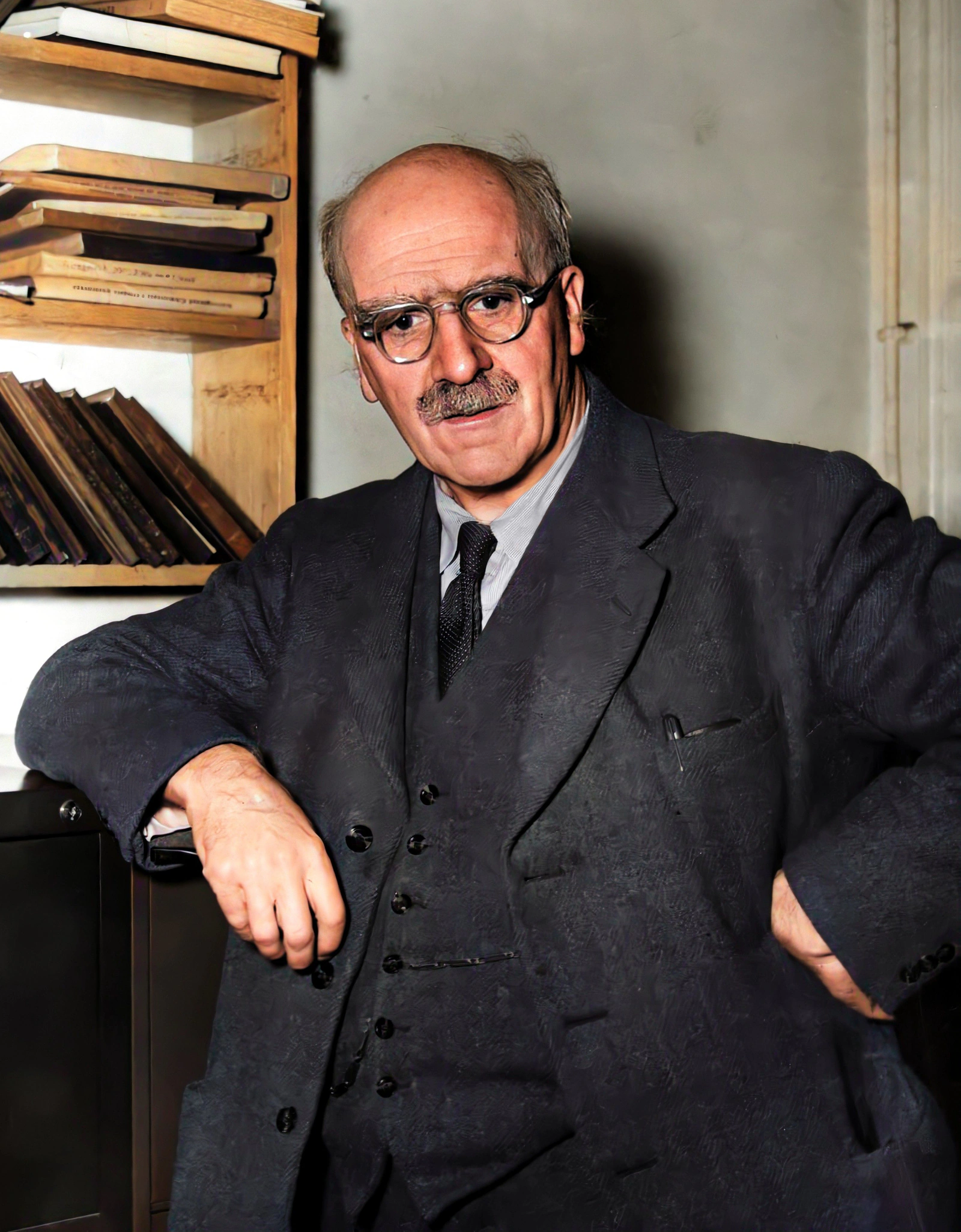
| 18 Quotes | |
| Born as | John Burdon Sanderson Haldane |
| Known as | J. B. S. Haldane |
| Occup. | Scientist |
| From | United Kingdom |
| Spouses | Charlotte Franken (1926-1945) Helen Spurway (1945) |
| Born | November 5, 1892 Oxford, England, United Kingdom |
| Died | December 1, 1964 Bhubaneswar, Orissa, India |
| Cause | Natural Causes |
| Aged | 72 years |
| Cite | |
Citation Formats
APA Style (7th ed.)
John b. s. haldane biography, facts and quotes. (2026, February 11). FixQuotes. https://fixquotes.com/authors/john-b-s-haldane/
Chicago Style
"John B. S. Haldane biography, facts and quotes." FixQuotes. February 11, 2026. https://fixquotes.com/authors/john-b-s-haldane/.
MLA Style (9th ed.)
"John B. S. Haldane biography, facts and quotes." FixQuotes, 11 Feb. 2026, https://fixquotes.com/authors/john-b-s-haldane/. Accessed 5 Mar. 2026.
Early Life and Background
John Burdon Sanderson Haldane was born on 5 November 1892 in Oxford, England, into a household where argument, measurement, and intellectual fearlessness were daily habits. His father, the physiologist John Scott Haldane, was famous for experiments on respiration and for practical work on mine safety; his mother, Louisa Kathleen Trotter, came from a cultivated Scottish family and gave the home its literary and moral texture. From childhood, Haldane absorbed two impulses that never left him - an engineer's instinct for testable claims and a polemicist's appetite for public consequence.The early 20th-century Britain that formed him was an imperial power with a self-confident elite, yet one increasingly shaken by labor unrest, scientific upheaval, and the approach of mechanized war. Haldane grew up watching science move from gentlemanly curiosity to state-backed instrument, and he learned early to treat knowledge as something that could save lives or waste them depending on who wielded it. That background helps explain why he later fused mathematical genetics with political judgment, and why his prose so often reads like a laboratory report written by a pamphleteer.
Education and Formative Influences
Educated at Eton and then at New College, Oxford, Haldane was precociously fluent in classics and mathematics, and he learned to shift between exact calculation and argumentative rhetoric with unusual ease. Early immersion in his father's physiological work made the body a quantitative system to him, while the intellectual shockwaves from Darwinism, Mendelian genetics, and the new physics pushed him toward an image of nature governed by law yet endlessly surprising in outcome. World War I interrupted any notion of an ivory-tower vocation: as an officer on the Western Front he experienced industrial slaughter firsthand, an encounter that hardened his materialism, radicalized his politics, and left him suspicious of pieties that asked for sacrifice without analysis.Career, Major Works, and Turning Points
After the war Haldane built a career spanning physiology, genetics, popular science, and political writing, holding posts at Cambridge and later at University College London, and becoming one of the architects of population genetics. His landmark series "A Mathematical Theory of Natural and Artificial Selection" (1924-1934) and his book "The Causes of Evolution" (1932) helped synthesize Mendelian inheritance with Darwinian natural selection, showing how gene frequencies change under selection, mutation, and migration; in parallel, his work on enzyme kinetics and human physiology showed the same taste for quantitative explanation. A prolific essayist and broadcaster, he made himself a public intellectual of science between the wars, then took a dramatic turn in the 1950s: disillusioned by the Soviet Union after years as a Communist Party member and alarmed by nuclear politics and aspects of British public life, he left the United Kingdom for India in 1957, joining the Indian Statistical Institute in Calcutta and later working in Bhubaneswar, where he spent his final years until his death on 1 December 1964.Philosophy, Style, and Themes
Haldane's inner life combined an almost playful relish for paradox with a stern belief that ideas must earn their keep in the world. His imagination delighted in the limits of human intuition, and he liked to unsettle complacency with the blunt claim, “It is my supposition that the Universe in not only queerer than we imagine, is queerer than we can imagine”. That was not mystical rhetoric but methodological discipline: if nature is stranger than our mental habits, then humility and mathematics become moral virtues, and the job of theory is to stretch the mind without surrendering to vagueness.Equally characteristic was his refusal to treat ethics as mere sentiment. He could compress a whole theory of altruism, kinship, and calculated sacrifice into a sentence that reads like a provocation and functions like a model: “Would I lay down my life to save my brother? No, but I would to save two brothers or eight cousins”. The line exposes how he thought - coolly, structurally, unembarrassed by arithmetic in the realm of feeling - and it foreshadows later evolutionary accounts of inclusive fitness even as it scandalized readers who wanted morality to remain uncounted. His politics, too, leaned toward engineering: “We do not know, in most cases, how far social failure and success are due to heredity, and how far to environment. But environment is the easier of the two to improve”. In his best moments this became a humane pragmatism, insisting that biological realism need not harden into fatalism; in his worst moments it could tilt toward overconfidence in planned solutions, a hazard he partly recognized as he watched ideologies demand martyrs for abstractions.
Legacy and Influence
Haldane endures as one of the founding figures of the modern evolutionary synthesis, a scientist who gave natural selection a rigorous quantitative language and helped make genetics a predictive population science rather than a cabinet of curiosities. His influence runs through evolutionary theory, theoretical biology, and science communication: he modeled a style in which equations and metaphors, laboratory facts and public arguments, were permitted to coexist without apology. In Britain he helped shape the idea of the scientist as a public critic; in India he became a conspicuous example of intellectual migration driven by conscience and curiosity, lending prestige to postcolonial scientific ambition while continuing to write with caustic clarity. What remains most distinctive is the unity of his temperament: a mind that treated the universe as experimentally accessible, society as improvable, and human motives as analyzable - even when analysis made readers uncomfortable.Our collection contains 18 quotes written by John, under the main topics: Wisdom - Dark Humor - Freedom - Deep - Learning.
Other people related to John: Julian Huxley (Scientist), Ernst Mayr (Scientist), John Desmond Bernal (Scientist)
John B. S. Haldane Famous Works
- 1951 Everything Has a History (Book)
- 1947 Science Advances (Book)
- 1947 What is Life? (Book)
- 1941 New Paths in Genetics (Book)
- 1940 Adventures of a Biologist (Book)
- 1932 The Causes of Evolution (Book)
- 1923 Daedalus or Science and the Future (Book)
Source / external links