
John Barton Biography Quotes 30 Report mistakes
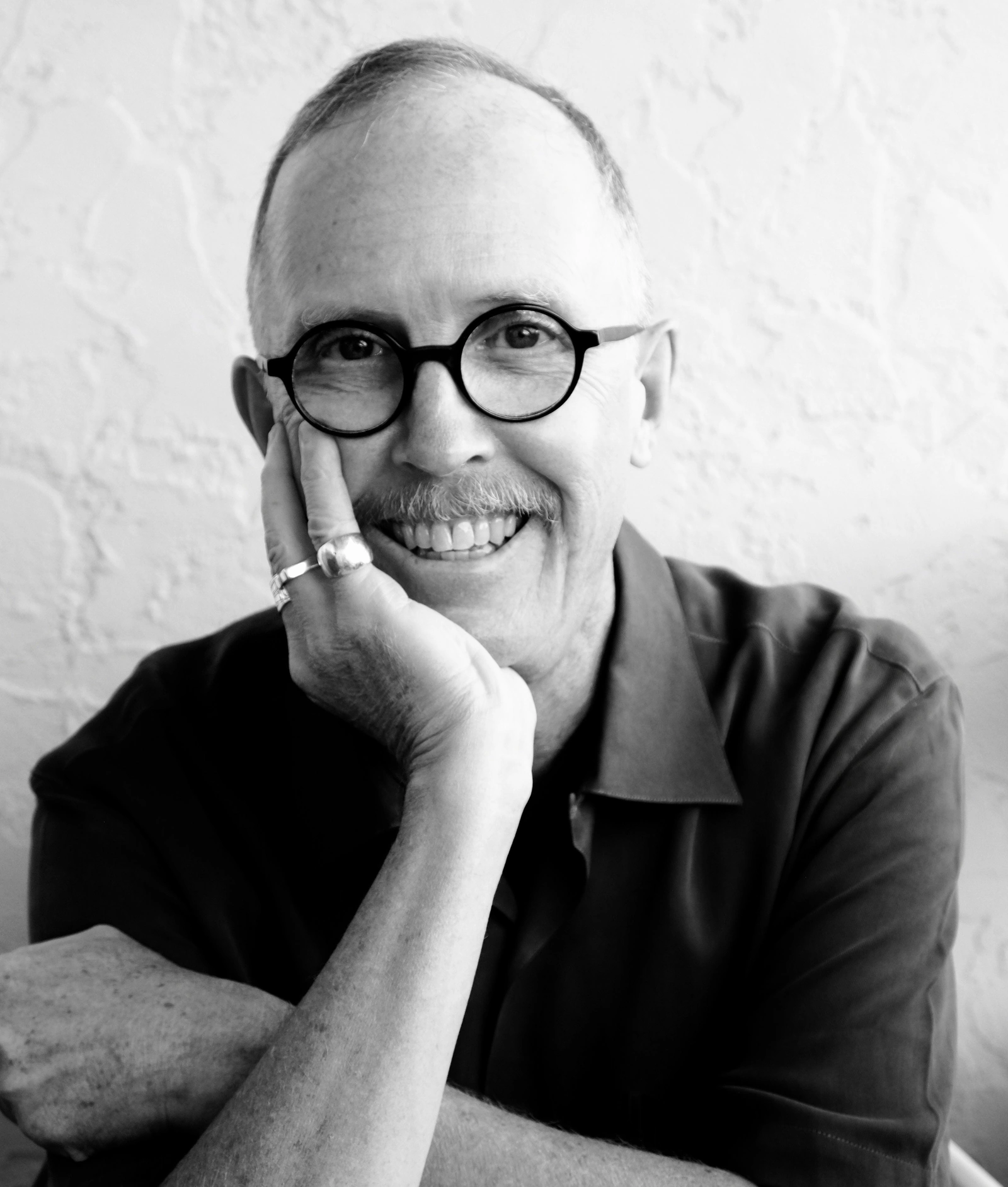
Attr: John Preston
| 30 Quotes | |
| Known as | John Barton (poet) |
| Occup. | Poet |
| From | Canada |
| Born | March 6, 1957 Edmonton, Alberta, Canada |
| Age | 69 years |
| Cite | |
Citation Formats
APA Style (7th ed.)
John barton biography, facts and quotes. (2026, March 15). FixQuotes. https://fixquotes.com/authors/john-barton/
Chicago Style
"John Barton biography, facts and quotes." FixQuotes. March 15, 2026. https://fixquotes.com/authors/john-barton/.
MLA Style (9th ed.)
"John Barton biography, facts and quotes." FixQuotes, 15 Mar. 2026, https://fixquotes.com/authors/john-barton/. Accessed 31 Mar. 2026.
Early Life and Background
John Barton was born on March 6, 1957, in Edmonton, Alberta, and came of age in a Canada whose literary institutions were still consolidating after the postwar cultural surge. He belongs to the generation after the nationalist breakthroughs of the 1960s, when poets such as Margaret Atwood, Al Purdy, and bpNichol had helped make Canadian poetry both more self-conscious and more formally adventurous. Barton grew up in the West, a region that often sharpened a writer's sense of distance from central Canadian cultural power, and that peripheral vantage became important to his later work: he would repeatedly test where intimacy ends and public speech begins, and how a poet from outside old metropolitan centers claims authority without surrendering uncertainty.
His early life also unfolded under social pressures that made self-disclosure a fraught artistic act. Barton would become one of the notable openly gay voices in Canadian poetry, but the Canada of his youth was still marked by powerful residues of silence around sexuality, masculinity, and private feeling. That tension between concealment and utterance never left his writing. Even when his poems are coolly structured, they often carry a pulse of confession, scrutiny, and self-revision. The emotional climate of his beginnings - western reserve, intellectual ambition, and a young gay man's awareness of how language can expose or protect - helped form the psychological core of a poet who would later make candor itself a technical problem.
Education and Formative Influences
Barton studied at the University of Victoria, a crucial setting for his formation as both poet and critic. Victoria in the 1970s and early 1980s offered a serious literary milieu on the Pacific coast, with strong links to Canadian modernism and to British and American traditions. Barton absorbed not only contemporary Canadian poetry but also the discipline of close reading, prosodic attention, and editorial judgment. He was drawn to poets whose formal intelligence could contain volatile feeling - writers for whom craft was not the opposite of disclosure but its enabling condition. That double allegiance, to emotional risk and technical exactness, would define him. He also developed early as an anthologist and reviewer, evidence of a mind interested in literary systems as much as singular poems; he was not merely producing work, but thinking about how a national literature is assembled, debated, and transmitted.
Career, Major Works, and Turning Points
Over the 1980s and 1990s Barton established himself as one of Canada's most intelligent lyric and sequence poets, publishing books that explored eros, memory, artifice, and mortality with unusual formal range. His collections include West of Darkness; A Poor Photocopy of God; Hypothesis; Sweet Ellipsis; and Hymn, among others, while The Essential John Barton later offered a selective map of his achievement. He also became an important editor and literary organizer, most notably co-editing The Malahat Review in Victoria, where he helped shape the reception of Canadian writing while experiencing the practical strain of little-magazine culture. His role as editor, critic, and anthologist widened his influence beyond his own poems; at the same time, it sharpened his sense that literary life is collaborative, contentious, and institutionally fragile. A major turning point was the increasing explicitness with which he wrote desire, especially gay desire, not as a marginal subject but as a central human drama. Another was his sustained movement toward meditative retrospection, in which time itself - how it wounds, layers, and estranges the self - became a governing subject.
Philosophy, Style, and Themes
Barton has often described poetry not as ornament or thesis but as a mode of discovery. “The point of an experiment is not to arrive at a predetermined end point, to prove or disprove anything, but to deliver a poem that reveals much about the process taken”. That remark clarifies the unusual balance in his work between control and openness: his poems are carefully made, but they do not pretend to final certainty. They proceed by testing perception, dramatizing hesitation, and letting consciousness expose its own workings. Just as revealing is his claim that “Poets can't resist the dramatic pull of their lives and so inevitably write autobiographical verse”. Barton does not treat autobiography as naive self-spilling; he treats it as an unavoidable gravitational force that form must discipline. The self in his poems is neither sovereign nor stable. It is staged, interrogated, and made answerable to memory.
Time, for Barton, is less a backdrop than a pressure field. “My obsession with time informs my poetry so completely, it is hard for me to summarize it. We want time to pass, for new things to happen to us, we want to hold on to certain moments, we don't want our lives to end”. This is close to the emotional engine of his oeuvre. Desire in Barton is always temporal: to love is to anticipate loss, to remember is to revise, to speak is already to feel belated. Stylistically, he has worked across lyric, dramatic framing, sequence, and formal patterning, often favoring poems that move with essayistic intelligence yet retain pressure from image and cadence. His themes - erotic vulnerability, art's mediation of experience, the ethics of reading, the instability of recollection, and the mortal body's relation to beauty - give his work a distinctive mixture of sensual immediacy and intellectual composure.
Legacy and Influence
John Barton's legacy rests on more than the individual success of his books. He helped enlarge the emotional and formal possibilities of late 20th-century and early 21st-century Canadian poetry, especially by insisting that gay experience, literary intelligence, and formal seriousness belong together. As editor, reviewer, anthologist, and mentor-like public figure, he participated in building the very conversation in which Canadian poetry understands itself. His poems endure because they refuse easy oppositions: they are personal without being shapeless, crafted without being bloodless, reflective without losing urgency. In Barton, readers encounter a poet for whom art is not an escape from life but a disciplined reenactment of its instability - a record of how memory, desire, and time make and unmake the speaking self.
Our collection contains 30 quotes written by John, under the main topics: Witty One-Liners - Art - Friendship - Mortality - Writing.
Source / external links