
John Berger Biography Quotes 22 Report mistakes
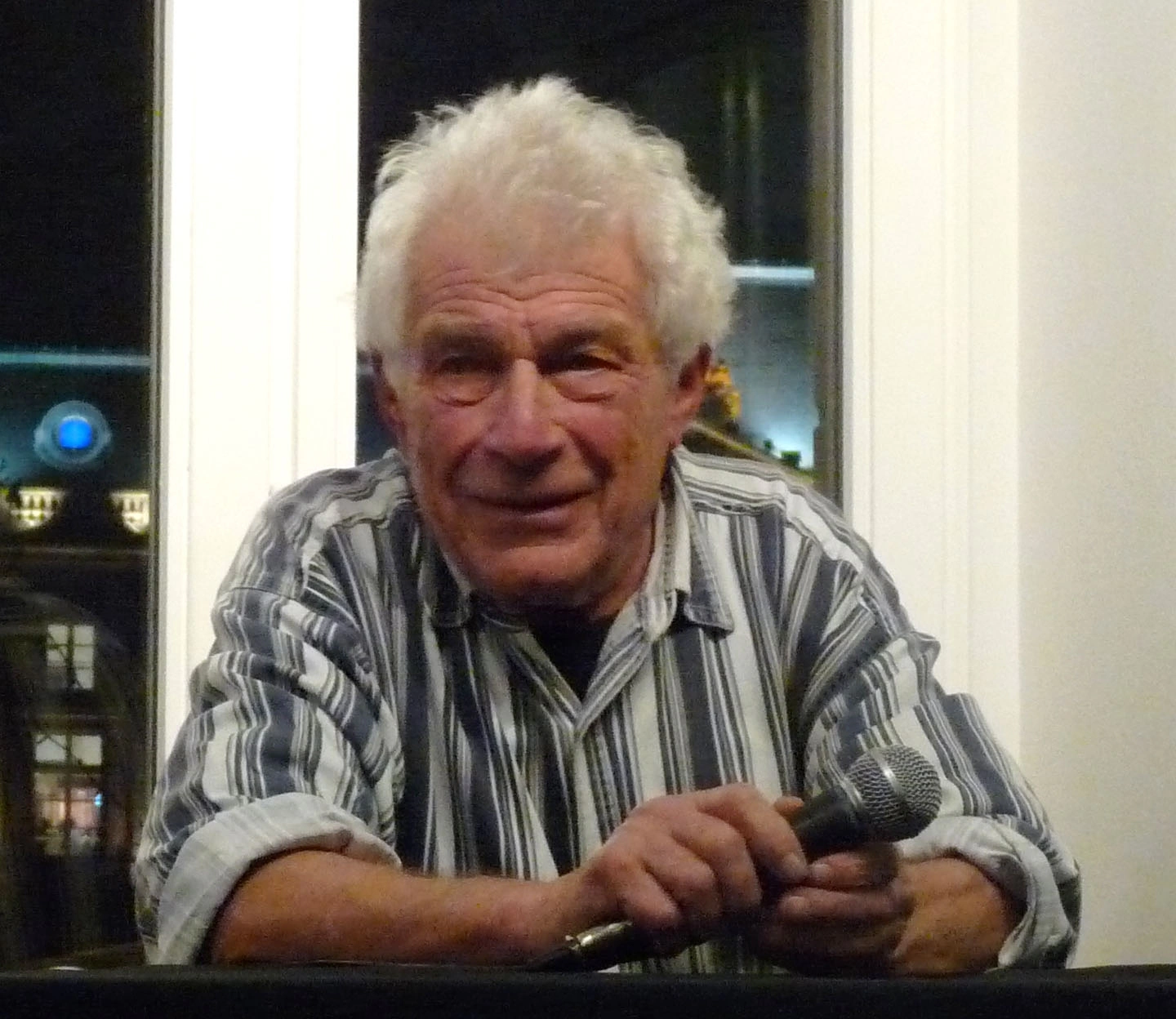
| 22 Quotes | |
| Born as | John Peter Berger |
| Occup. | Artist |
| From | England |
| Born | November 5, 1926 Stoke Newington, County of London |
| Age | 99 years |
| Cite | |
Citation Formats
APA Style (7th ed.)
John berger biography, facts and quotes. (2026, February 11). FixQuotes. https://fixquotes.com/authors/john-berger/
Chicago Style
"John Berger biography, facts and quotes." FixQuotes. February 11, 2026. https://fixquotes.com/authors/john-berger/.
MLA Style (9th ed.)
"John Berger biography, facts and quotes." FixQuotes, 11 Feb. 2026, https://fixquotes.com/authors/john-berger/. Accessed 27 Mar. 2026.
Early Life and Background
John Peter Berger was born on 1926-11-05 in London, England, into a country still sorting itself after World War I and already drifting toward another. His father, Stanley Berger, had been an infantry officer and was later a schoolmaster; the household carried the aftertaste of military discipline alongside books, talk, and the quiet pressure to make sense of a violent century. Berger grew up with the sense that history was not an abstract timeline but something that pressed on the body - on what could be afforded, how people spoke, and what was permitted to be seen.As a young man he drew incessantly, looking for a craft that could hold reality without flattering it. The Blitz years and wartime rationing shaped his early moral imagination: public language promised unity, while daily life exposed class divisions and the hierarchy of whose suffering counted. That tension would become a lifelong engine in his work - a determination to strip prestige from power and return attention to those living at the edge of official narratives.
Education and Formative Influences
Berger trained as an artist at the Central School of Art in London and then at the Chelsea School of Art, where technical instruction collided with the postwar argument about what art was for. He absorbed European painting and modernism, but also the pull of Marxist criticism and the example of writers who treated aesthetics as a social question rather than a private taste. Early employment as an art teacher and critic sharpened his eye for how institutions package culture, and how the marketplace turns seeing itself into a commodity.Career, Major Works, and Turning Points
In the 1950s Berger emerged as a sharp, controversial art critic in London, writing for the New Statesman and other outlets while painting and exhibiting. His breakthrough as a public intellectual came with the BBC television series and book Ways of Seeing (1972), which translated art history into a democratic language and examined how oil painting, advertising, and gendered looking were bound to property and power. That same year his novel G. won the Booker Prize; Berger famously donated half the prize money to the Black Panthers and used the rest to support research on migrant labor, making the award itself part of his critique. He moved to France, living for decades in rural Haute-Savoie, and produced a body of hybrid work - essays, fiction, scripts, and collaborations with photographer Jean Mohr - including A Seventh Man (1975) on migrant workers and the later trilogy Into Their Labours (Pig Earth, Once in Europa, Lilac and Flag), which elegized the peasantry under economic modernization while refusing nostalgia.Philosophy, Style, and Themes
Berger wrote as if criticism were a form of witness. He distrusted purely formal analysis, insisting that every image has a social address: someone is speaking, someone is being persuaded, someone is being priced. In Ways of Seeing he anatomized the erotics of display with the line, “Nakedness reveals itself. Nudity is placed on display. The nude is condemned to never being naked. Nudity is a form of dress”. The sentence is not prudish but diagnostic: Berger understood that modern spectatorship trains desire to travel through possession, turning bodies - and then everything else - into objects for inspection and control. His psychological concern was shame, and how cultures manufacture it to discipline looking and being looked at.Running beneath his criticism is a politics of displacement and an ethics of attention. He treated the migrant, the tenant farmer, and the casual laborer not as symbols but as people carrying the strain of historical forces in their gestures and silences. “Emigration, forced or chosen, across national frontiers or from village to metropolis, is the quintessential experience of our time”. The force of the claim comes from lived observation: Berger saw modernity as a machine that moves bodies faster than it grants them meaning, and he tried to write in a way that returned continuity - memory, tenderness, and the right to be complex. His compassion was never apolitical; it was sharpened by an analysis of wealth that makes deprivation appear natural: “The poverty of our century is unlike that of any other. It is not, as poverty was before, the result of natural scarcity, but of a set of priorities imposed upon the rest of the world by the rich”. The inward mood of his work is therefore double - grief for what is lost, and anger at how loss is organized.
Legacy and Influence
Berger died in 2017, but his influence continues to widen because he changed what criticism could sound like: intimate without being private, political without being slogan, rigorous without being elitist. Generations of artists, writers, filmmakers, and scholars cite Ways of Seeing as a gateway to visual literacy and to feminist and Marxist art history; documentary photographers and essayists still learn from his collaborations with Mohr how to pair image and text without subordinating either. More broadly, Berger modeled an intellectual life lived in public argument yet anchored in solidarity, insisting that to describe the world clearly is already to choose sides - and that the deepest form of seeing is a kind of responsibility.Our collection contains 22 quotes written by John, under the main topics: Witty One-Liners - Ethics & Morality - Wisdom - Art - Mortality.
Source / external links