
John Bruton Biography Quotes 28 Report mistakes
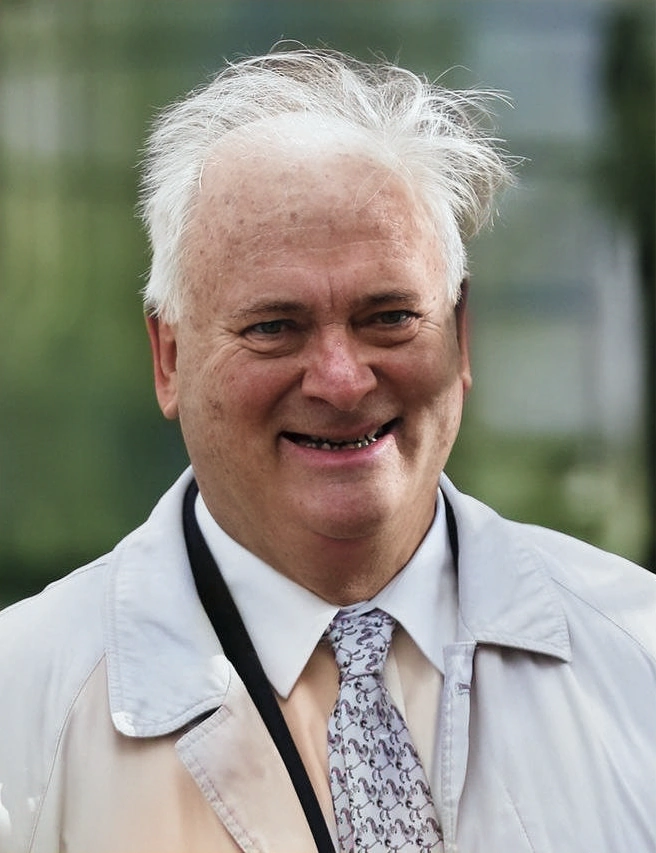
| 28 Quotes | |
| Born as | John Gerard Bruton |
| Occup. | Politician |
| From | Ireland |
| Spouse | Finola Gill (1978) |
| Born | May 18, 1947 Dunboyne, County Meath, Ireland |
| Age | 78 years |
| Cite | |
Citation Formats
APA Style (7th ed.)
John bruton biography, facts and quotes. (2026, February 11). FixQuotes. https://fixquotes.com/authors/john-bruton/
Chicago Style
"John Bruton biography, facts and quotes." FixQuotes. February 11, 2026. https://fixquotes.com/authors/john-bruton/.
MLA Style (9th ed.)
"John Bruton biography, facts and quotes." FixQuotes, 11 Feb. 2026, https://fixquotes.com/authors/john-bruton/. Accessed 26 Mar. 2026.
Early Life and Background
John Gerard Bruton was born on May 18, 1947, in Dunboyne, County Meath, in the cautious, church-influenced Ireland that emerged from World War II intact but economically constrained and culturally conservative. The state was still negotiating its post-independence identity - officially neutral, socially tight-laced, and marked by large-scale emigration. In that context, Bruton's generation grew up sensing both the limits of insularity and the pressure to modernize.Family and parish life in rural Meath formed his instinct for community obligation and the practical arts of persuasion. Bruton's later public demeanor - orderly, deliberate, and rarely theatrical - reflected an early habit of taking politics as administration with moral consequences, rather than as spectacle. His politics would repeatedly return to a single question that shadowed mid-century Ireland: how to widen opportunity without losing social cohesion.
Education and Formative Influences
Bruton studied at University College Dublin, where the intellectual temperature was rising: economic modernization, European integration, and the early tremors of Northern Ireland's coming crisis circulated through student life and national debate. He absorbed Catholic social thinking, constitutionalism, and a technocratic confidence in policy tools - the sense that budgets, institutions, and cross-border frameworks could redirect a country's fate more reliably than charismatic rhetoric.Career, Major Works, and Turning Points
Elected to Dail Eireann for Meath in 1969, Bruton quickly became one of Fine Gael's policy-minded figures. He served as Minister for Finance (1981-82) in Garret FitzGerald's first coalition, then as Minister for Industry, Trade, Commerce and Tourism (1986-87), and later as Minister for Finance again (1994). In 1990 he succeeded Alan Dukes as leader of Fine Gael, and in 1994 became Taoiseach, heading the "Rainbow Coalition" with Labour and Democratic Left until 1997. His premiership coincided with Ireland's acceleration toward the Celtic Tiger era and with delicate Northern Ireland diplomacy, including work that helped lay groundwork toward the 1998 Good Friday Agreement (concluded under Bertie Ahern). After losing office, Bruton remained an influential European voice, serving as the European Union's Ambassador to the United States (2004-2009), advocating transatlantic cooperation as a strategic necessity rather than a sentimental attachment. He died in 2024, recognized as a statesman whose core commitments outlasted electoral tides.Philosophy, Style, and Themes
Bruton's inner life in politics was organized around a belief in institutions: that peace and prosperity are not accidents but engineered outcomes of rules, incentives, and shared norms. His temperament was cautious but not passive - he preferred patient bargaining to dramatic confrontation, and he treated coalition as a discipline that forces clarity about essentials. That disposition made him effective in the Irish-European tradition of incremental, consensus-driven change: economic credibility, social partnership, and constitutional steadiness.Europe, for Bruton, was not merely a market but a moral architecture. “The European Union is the world's most successful invention for advancing peace”. This was not a slogan but a psychological anchor: it allowed him to interpret Irish modernization as an extension of a larger postwar redemption narrative, in which former enemies bound themselves to procedures that made violence less thinkable. He pushed the idea further in democratic terms: “The E.U. is more than just a trade organization or a common market; it is a guarantee of democracy, freedom, justice, and human rights. Nations cannot stay in the E.U. if they do not respect these guarantees”. The sentence reveals his governing reflex - legitimacy comes from adherence to constraints, not from raw majoritarian will. Even his Atlanticism followed this pattern: “When the E.U. and the U.S. agree, other countries follow”. Power, in his worldview, was most durable when pooled, codified, and made exemplary.
Legacy and Influence
Bruton's legacy rests on a particular kind of leadership: sober, policy-driven, and internationalist, aimed at making the state competent enough that citizens could take stability for granted. As Taoiseach, he embodied the coalition-era skill of balancing fiscal prudence with social partnership, and he helped normalize the idea that Ireland's sovereignty could be strengthened, not weakened, through European membership and rule-based cooperation. As EU ambassador in Washington, he translated Ireland's pragmatic Europeanism into a broader argument for transatlantic alignment, leaving a record that continues to resonate as Europe and the United States debate democracy, security, and the uses of economic interdependence in an unsettled world.Our collection contains 28 quotes written by John, under the main topics: Justice - Leadership - Freedom - War - Peace.
Other people related to John: Albert Reynolds (Politician), Dick Spring (Politician)
Source / external links