
John Buchan Biography Quotes 15 Report mistakes
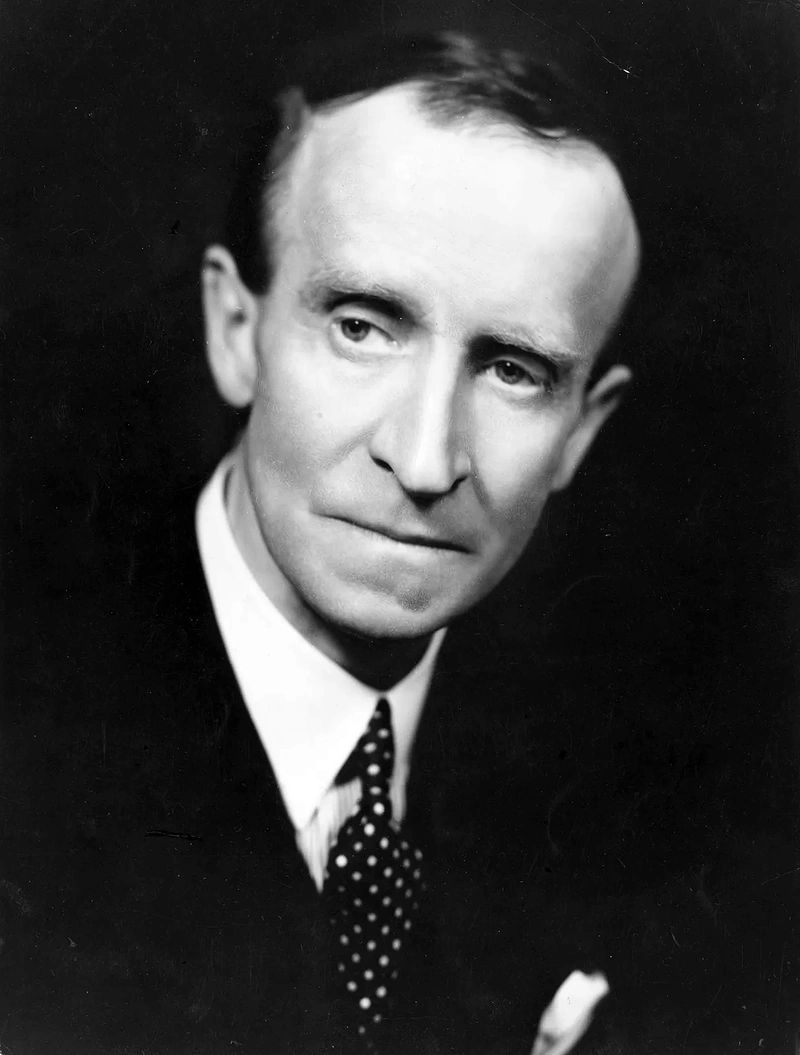
Attr: Britannica
| 15 Quotes | |
| Occup. | Politician |
| From | Scotland |
| Born | August 26, 1875 Perth, Scotland |
| Died | February 11, 1940 Montreal, Quebec, Canada |
| Cause | stroke |
| Aged | 64 years |
| Cite | |
Citation Formats
APA Style (7th ed.)
John buchan biography, facts and quotes. (2026, February 11). FixQuotes. https://fixquotes.com/authors/john-buchan/
Chicago Style
"John Buchan biography, facts and quotes." FixQuotes. February 11, 2026. https://fixquotes.com/authors/john-buchan/.
MLA Style (9th ed.)
"John Buchan biography, facts and quotes." FixQuotes, 11 Feb. 2026, https://fixquotes.com/authors/john-buchan/. Accessed 12 Feb. 2026.
Early Life and Background
John Buchan was born on August 26, 1875, in Perth, Scotland, the eldest son of John Buchan, a Free Church of Scotland minister, and Helen Jane Masterton. His childhood moved with his fathers calls, but the moral climate was steady - earnest Presbyterian discipline, respect for learning, and a household in which duty was not an abstraction but a daily practice. That temper, more than any single event, shaped the adult Buchan: emotionally controlled, observant, and drawn to systems - of belief, of government, of strategy.In 1883 the family settled in Fife, where the landscape and coastal weather fed a lifelong love of moorland, walking, and angling, and where he learned early how community life can be both intimate and watchful. Scotland in his youth was also an imperial and industrial age: confidence in Britains world role sat beside anxieties about class, labor, and modernity. Buchan grew up absorbing both the romance of wide horizons and the sense that civilization was a fragile achievement requiring constant stewardship.
Education and Formative Influences
He attended Hutchesons Grammar School in Glasgow and won scholarships to the University of Glasgow and then Brasenose College, Oxford, where he took a first in Literae Humaniores. At Oxford he moved easily between classics, history, and theology, and began publishing early - essays and fiction that mixed adventure with a historians eye for motive. His friendships and mentors in these years pushed him toward a life that would combine letters with public service; he admired intellectual authority, but he was also drawn to the practical arts of persuasion, administration, and institutional continuity.Career, Major Works, and Turning Points
Buchans career braided politics, publishing, intelligence work, and prolific authorship. After a period in South Africa he entered British public life, later serving as a Conservative Member of Parliament for the Scottish Universities (1927-1935). During the First World War he worked in government information and propaganda, helping shape narratives meant to stiffen resolve at home and influence opinion abroad, an experience that sharpened his sense of how fragile morale could be in mass society. His literary breakthrough came with the espionage thriller The Thirty-Nine Steps (1915), followed by Greenmantle (1916) and Mr Standfast (1919), and he also wrote substantial biographies and histories, notably Julius Caesar (1914), a multi-volume History of the Great War, and later a widely read biography of Oliver Cromwell. In 1935 he was appointed Governor General of Canada and raised to the peerage as Baron Tweedsmuir; the viceregal role suited his ceremonial tact and his belief in constitutional traditions, though illness shadowed his final years. He died in Ottawa on February 11, 1940, and was buried in Canada, a symbolic closing to a life spent translating Scottish sensibility into imperial and transatlantic public service.Philosophy, Style, and Themes
Buchans inner life was disciplined rather than demonstrative. He wrote as a man suspicious of theatrical feeling, yet intensely responsive beneath the surface - a temperament captured by his own observation that "He disliked emotion, not because he felt lightly, but because he felt deeply". That self-management became a governing ethic: keep your head, honor the code, do the next necessary thing. In his political work it showed as civility and institutional loyalty; in his fiction it became heroes who succeed less by brilliance than by endurance, attention, and a capacity to read other people accurately.His themes are those of a late-Victorian moral imagination passing through the shocks of total war: leadership, the thinness of order, and the obligation to build the future without severing the past. His ideal leader does not manufacture virtue but releases it: "The task of leadership is not to put greatness into humanity, but to elicit it, for the greatness is already there". Yet he was no complacent optimist about progress. The spy novels and wartime histories return to the sense that civilized life can crack quickly under pressure: "You think that a wall as solid as the earth separates civilization from barbarism. I tell you the division is a thread, a sheet of glass. A touch here, a push there, and you bring back the reign of Saturn". Even his pastoral love of fishing and the outdoors works as moral training - patience, humility, and hope practiced through small, repeated acts against uncertainty.
Legacy and Influence
Buchan endures as a bridge figure: a Scottish intellectual who helped define the modern political thriller while also serving at high levels of the British state and the Canadian Crown. The Thirty-Nine Steps became a template for chase-and-conspiracy storytelling, shaping later espionage fiction and film, while his histories and biographies reflected an older ideal of public letters - the writer as civic educator. Politically, his Canadian tenure is remembered for energetic travel, support for culture, and a steadying constitutional presence on the eve of global war. His deeper legacy is psychological and moral: a model of restrained feeling harnessed to service, convinced that character is destiny and that the safeguards of civilization are not permanent structures but habits that must be renewed by each generation.Our collection contains 15 quotes written by John, under the main topics: Wisdom - Learning - Deep - Hope - Peace.
Other people related to John: Gilbert Parker (Politician), James Buchan (Novelist)