
John C. Hull Biography Quotes 19 Report mistakes
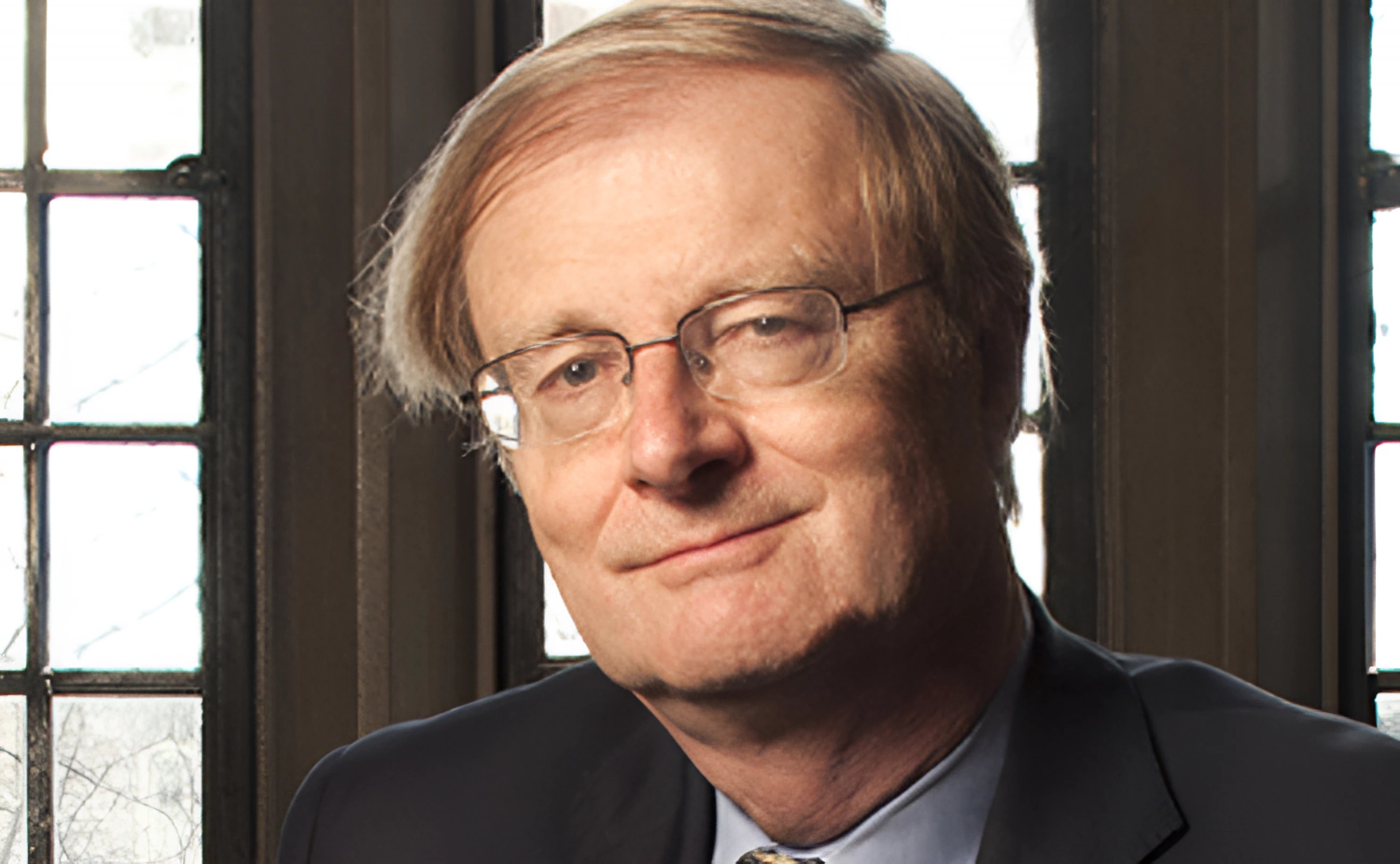
| 19 Quotes | |
| Born as | John Charles Hull |
| Occup. | Professor |
| From | USA |
| Born | October 31, 1939 |
| Age | 86 years |
| Cite | |
Citation Formats
APA Style (7th ed.)
John c. hull biography, facts and quotes. (2026, February 19). FixQuotes. https://fixquotes.com/authors/john-c-hull/
Chicago Style
"John C. Hull biography, facts and quotes." FixQuotes. February 19, 2026. https://fixquotes.com/authors/john-c-hull/.
MLA Style (9th ed.)
"John C. Hull biography, facts and quotes." FixQuotes, 19 Feb. 2026, https://fixquotes.com/authors/john-c-hull/. Accessed 25 Mar. 2026.
Early Life and Background
John Charles Hull was born on October 31, 1939, in the United States, and came of age as American higher education and the postwar economy pushed mathematics, engineering, and management science into the center of public life. The world that formed him was one in which computation was moving from a rare institutional resource to a professional necessity, and where finance was beginning to look less like a craft and more like an applied science. That generational timing mattered: Hull would later become one of the key interpreters who translated fast-developing quantitative ideas into teachable frameworks.Although much of his private early biography is not widely documented, Hulls professional persona suggests a temperament shaped by careful reasoning and an instinct for simplification without losing rigor. He would become associated with the University of Toronto and with a style of academic work aimed at practitioners as much as scholars, reflecting a broader late-20th-century shift: finance departments increasingly served not only to theorize markets but to supply techniques for banks, regulators, and risk managers.
Education and Formative Influences
Hull trained in the quantitative traditions that flourished in North American universities in the 1960s and 1970s, when stochastic modeling, optimization, and computing were remaking economics and business. He earned a doctorate and moved through academic posts before consolidating his career in Canada, absorbing the era-defining evolution of modern finance: the rise of option pricing, the growth of futures and swaps markets, and the emergence of risk management as a discipline after successive bouts of inflation, volatile interest rates, and financial innovation.Career, Major Works, and Turning Points
Hull became best known as a professor of finance and as the author of Options, Futures, and Other Derivatives, a textbook whose successive editions helped standardize how derivatives are taught worldwide. That book, along with his research and case-driven pedagogy, arrived at a moment when derivatives desks were expanding quickly and regulators were struggling to keep conceptual pace. His career arc also tracks the industrys own learning curve: early confidence in elegant models gave way to a more sober focus on model risk, liquidity, and tail events - topics Hull brought into classrooms and professional training through updates that mirrored new crises and new regulatory regimes.Philosophy, Style, and Themes
Hulls writing and teaching are characterized by a rare combination: technical exactness paired with an insistence on operational meaning. He treats mathematical finance not as a set of sacred formulas but as a toolkit whose reliability depends on assumptions, data, and market microstructure. His own account of professional curiosity underscores how contingent expertise can be in a fast-moving field: “I didn't become interested in derivatives until 1982, 1983”. That late start became a strength - it positioned him as a disciplined synthesizer who learned the subject as it was crystallizing, then built a clear pathway for others to follow.A second theme is humility about hedging and measurement, especially where nonlinear payoffs and extreme events expose the limits of elegant approximations. Hull has emphasized the practical discovery that models can seduce users into overconfidence: “We concluded that you cannot rely on delta hedging alone. It sounds simplistic to say that now, but back then, this was the sort of thing people were only just beginning to realize”. His approach to Value at Risk shows the same stance: supportive of quantification, but alert to where the numbers can lie if distributions are misspecified - “One important measurement issue concerns the fat tails problem that I mentioned earlier. VAR is concerned with extreme outcomes. If the tails of the probability distributions we are using are too thin, our VAR measures are likely to be too low”. Psychologically, these lines reveal a teacher who prefers durable judgment to fashionable certainty, and who frames progress as learning to see where simplifications break.
Legacy and Influence
Hull has had enduring influence less through a single signature theorem than through intellectual infrastructure: generations of students, quants, traders, and risk managers learned the language of derivatives and risk from his explanations, examples, and careful derivations. By continually revising his work in step with changing markets - from interest-rate modeling refinements to the post-crisis emphasis on counterparty credit risk and stress testing - he helped shape a common professional curriculum across universities and industry. His legacy is the normalization of clarity in a field that rewards complexity: a model is not finished when it is solved, but when its limits are understood and communicated.Our collection contains 19 quotes written by John, under the main topics: Knowledge - Investment - Marketing - Money.
Source / external links