
John Calvin Biography Quotes 21 Report mistakes
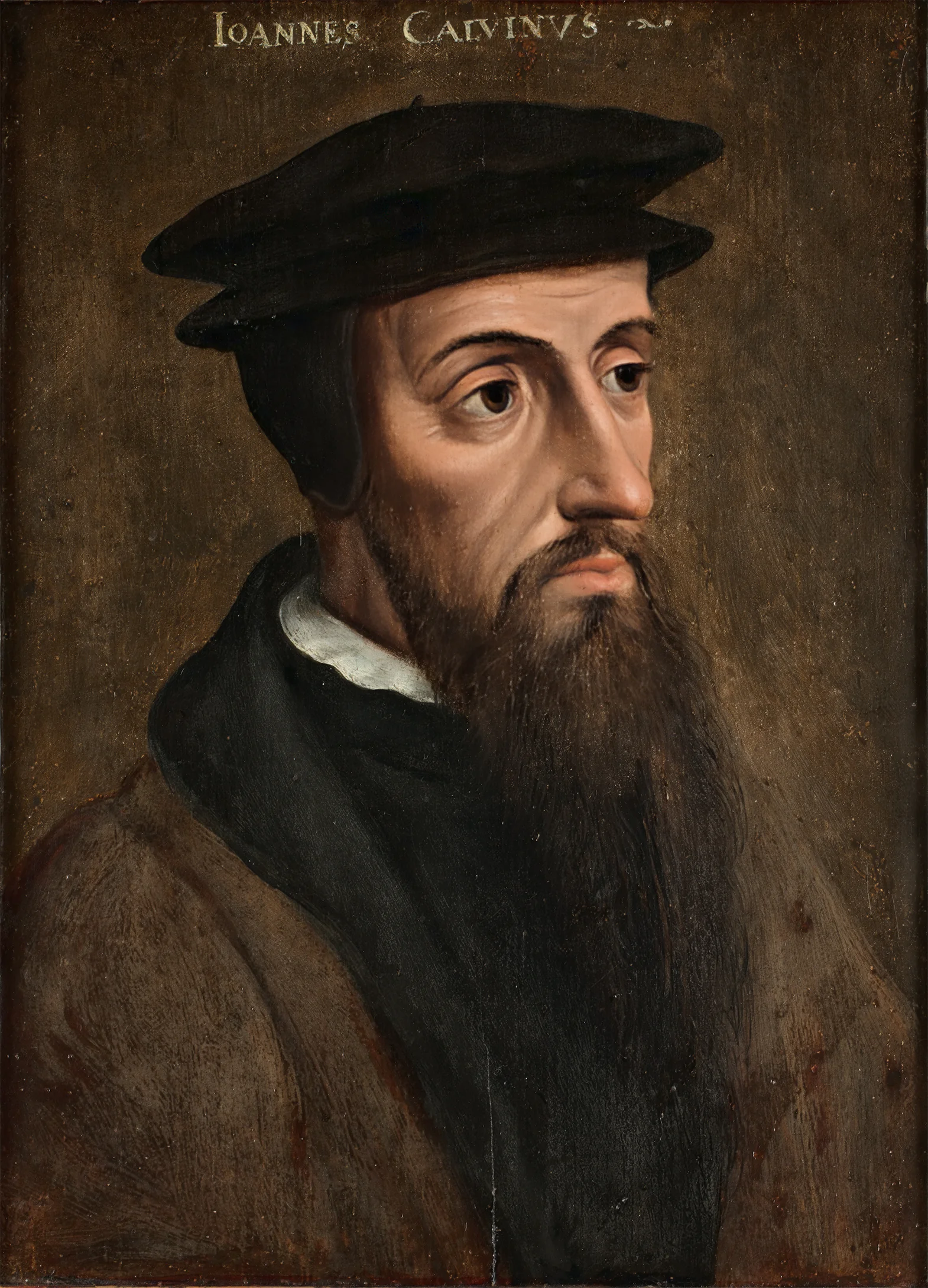
| 21 Quotes | |
| Born as | Jehan Cauvin |
| Occup. | Theologian |
| From | France |
| Born | July 10, 1509 Noyon, Picardy, France |
| Died | May 27, 1564 Geneva, Republic of Geneva (present-day Switzerland) |
| Aged | 54 years |
| Cite | |
Citation Formats
APA Style (7th ed.)
John calvin biography, facts and quotes. (2026, February 11). FixQuotes. https://fixquotes.com/authors/john-calvin/
Chicago Style
"John Calvin biography, facts and quotes." FixQuotes. February 11, 2026. https://fixquotes.com/authors/john-calvin/.
MLA Style (9th ed.)
"John Calvin biography, facts and quotes." FixQuotes, 11 Feb. 2026, https://fixquotes.com/authors/john-calvin/. Accessed 12 Feb. 2026.
Early Life and Background
Jean (Jehan) Cauvin was born on 10 July 1509 in Noyon, Picardy, a cathedral town where ecclesiastical administration was part of the air one breathed. France under Francis I was proud, centralized, and culturally radiant, yet riddled with tensions between a reforming humanist elite and a church whose courts, benefices, and patronage shaped ambition. Calvin grew up watching how spiritual authority could be both sincere devotion and a career ladder, a double vision that later made him unusually sensitive to hypocrisy and unusually confident that doctrine must discipline life.His father, Gerard Cauvin, worked in connection with the Noyon cathedral chapter and aimed his capable son toward advancement within the church. Family bereavements - his mother died when he was young - and the pressures of patronage helped form an inward, controlled temperament. Even before he became a religious exile, he knew the precariousness of depending on institutions. That early experience of ordered clerical life and its moral compromises became the soil from which his later insistence on moral clarity, church order, and pastoral oversight would grow.
Education and Formative Influences
Calvin studied in Paris, first at the College de la Marche and then the austere College de Montaigu, where scholastic discipline coexisted with the newer humanist philology circulating through the universities. His father later redirected him toward law, sending him to Orleans and Bourges, where he encountered the methods of legal reasoning and, at Bourges, the influence of the Greek scholar Melchior Wolmar; both sharpened his taste for precise definitions and argumentative structure. The humanist demand to read texts in their original languages fused in him with a jurist's hunger for coherent systems - a fusion that would mark his theology as both exegetical and architectonic.Career, Major Works, and Turning Points
Sometime around 1533-1534 Calvin underwent what he called a sudden conversion, turning decisively to the Reformation amid rising persecution after the Affair of the Placards. He fled Paris, began writing, and in 1536 published the first Latin edition of the Institutes of the Christian Religion, initially a compact defense of evangelical faith that he expanded throughout his life into a defining Protestant synthesis. That same year he was drawn into Geneva by Guillaume Farel; conflict with the city councils led to banishment (1538), a formative exile in Strasbourg under Martin Bucer, marriage to Idelette de Bure (1540), and then recall to Geneva (1541). There, through preaching, biblical commentaries, the Ecclesiastical Ordinances, and a disciplined network of pastors and the Consistory, he helped build a reformed civic-church order that became a training ground for ministers across Europe. His later years saw intense polemics, the founding of the Geneva Academy (1559), and the notorious Servetus affair (1553), which fixed on him the era's grim assumption that theological error could be a public crime.Philosophy, Style, and Themes
Calvin's inner life was marked by a moral seriousness that verged on anguish when conscience confronted God. He treated theology less as speculation than as the medicine of the soul, probing motivation with the precision of a confessor and the rigor of a lawyer. He could describe the psychological torment of guilt with surgical realism: "The torture of a bad conscience is the hell of a living soul". That sentence is not merely a warning; it reveals how deeply he felt the stakes of integrity, and why he distrusted any piety that left the will untouched. Yet his pastoral aim was consolation: assurance grounded not in self-confidence but in God's promise, received through faith and disciplined by repentance.His most famous doctrines - God's sovereignty, providence, and election - were for him not cold metaphysics but a way to relocate human security away from the unstable self. He relentlessly attacked the mind's tendency to turn anxieties and desires into substitute gods: "Every one of us is, even from his mother's womb, a master craftsman of idols". In that diagnosis lies both his severity and his compassion: severity because the heart is never neutral, compassion because sin is not only outward vice but inward misdirection. His prose mirrors this spirituality: clear, energetic, and compressive, with an orator's cadence in French sermons and a builder's logic in Latin argument. When controversy came, he felt compelled to speak as a matter of vocation, not temperament: "A dog barks when his master is attacked. I would be a coward if I saw that God's truth is attacked and yet would remain silent". The line discloses a psyche that equated restraint with betrayal, explaining both his power as a reforming leader and the harshness that could follow from unwavering certainty.
Legacy and Influence
Calvin died in Geneva on 27 May 1564, leaving a body of biblical commentaries, sermons, letters, and the final 1559 Institutes that shaped Reformed Christianity from Scotland to the Netherlands and, through Huguenot refugees and later Puritan migrations, into North America. His model of a disciplined, educated ministry and a church accountable through collective oversight helped create durable Protestant institutions, while his vision of vocation and providence contributed to later debates about capitalism, politics, and modern subjectivity. Admired as a pastoral theologian and condemned by critics as an architect of spiritual severity, Calvin endures because he articulated a coherent inner logic for Protestant life - a God-centered realism about human motives paired with an insistence that doctrine must become a lived, communal order.Our collection contains 21 quotes written by John, under the main topics: Witty One-Liners - Ethics & Morality - Nature - Kindness - Work Ethic.
Other people related to John: Abraham Kuyper (Theologian), Michael Servetus (Scientist), John Hales (Theologian)
Frequently Asked Questions
- John Calvin Reformation: John Calvin's role in the Reformation was pivotal in the establishment of a distinct Reformed tradition within Protestantism, influencing religious practices and beliefs.
- What did John Calvin do in the Reformation: In the Reformation, John Calvin's teachings and writings helped solidify and spread Protestant ideas, especially through his work in Geneva.
- Why was John Calvin important: John Calvin was important for his contributions to theology, particularly his role in shaping Reformed theology and influencing Protestant churches.
- John Calvin, predestination: John Calvin strongly advocated the doctrine of predestination, the belief that God has predetermined who will be saved and who will be damned.
- John Calvin Religion: John Calvin was a Protestant theologian and a key leader in the Reformed tradition of Christianity.
- John Calvin beliefs: John Calvin's beliefs emphasized the sovereignty of God, the authority of Scripture, and the doctrine of predestination.
- What did John Calvin do: John Calvin was a leading figure in the Protestant Reformation, known for his influential role in developing Calvinism.
- How old was John Calvin? He became 54 years old
Source / external links