
John Chamberlain Biography Quotes 3 Report mistakes
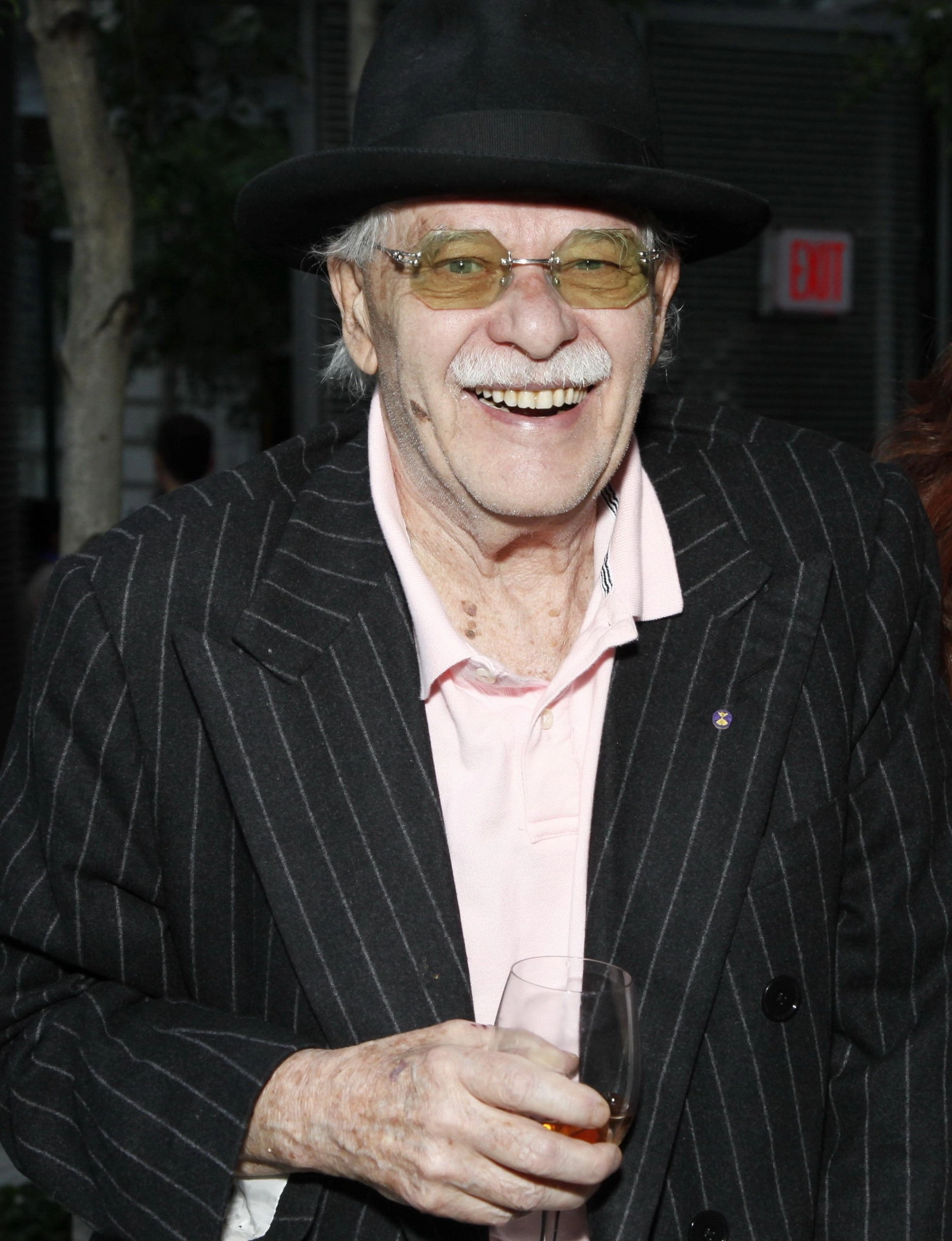
| 3 Quotes | |
| Born as | John Angus Chamberlain |
| Occup. | Artist |
| From | USA |
| Born | April 16, 1927 Rochester, Indiana |
| Died | December 21, 2011 Manhattan, New York City, New York, U.S. |
| Aged | 84 years |
| Cite | |
Citation Formats
APA Style (7th ed.)
John chamberlain biography, facts and quotes. (2026, February 11). FixQuotes. https://fixquotes.com/authors/john-chamberlain/
Chicago Style
"John Chamberlain biography, facts and quotes." FixQuotes. February 11, 2026. https://fixquotes.com/authors/john-chamberlain/.
MLA Style (9th ed.)
"John Chamberlain biography, facts and quotes." FixQuotes, 11 Feb. 2026, https://fixquotes.com/authors/john-chamberlain/. Accessed 28 Mar. 2026.
Early Life and Background
John Angus Chamberlain was born on April 16, 1927, in Rochester, Indiana, a small Midwestern town where the visual vocabulary of American industry was not museum-bound but lived - cars, chrome, barns, scrap, and the practical improvisations of repair. He came of age during the Depression and World War II years, when mass production and scarcity coexisted and when the idea of America was increasingly mediated by machines. That early environment mattered: Chamberlain later treated the automobile not as a symbol to be illustrated but as a bodily fact of American life, something already dented by use, accident, and time.In 1943 he enlisted in the U.S. Navy, serving during the final phase of World War II. Military life gave him a disciplined intimacy with tools, metal, and the systems that keep objects functioning - knowledge he later inverted into sculpture that looked like catastrophe stilled. Returning to civilian life in the late 1940s, he entered an America transitioning into consumer abundance, where the car became both aspiration and disposable shell. Chamberlain would turn that cultural contradiction into an enduring sculptural engine.
Education and Formative Influences
After the war he studied at the Art Institute of Chicago (late 1940s), then moved through advanced study at Black Mountain College in North Carolina (mid-1950s), a crucible where painting, dance, music, and poetry collided. There he encountered the legacy of Abstract Expressionism and the school's experimental ethos, absorbing a sense that materials, gestures, and chance could carry meaning without illustration; the presence of artists such as Robert Rauschenberg and the broader Black Mountain community helped normalize risk, hybridity, and a studio practice that treated the everyday object as fair game for high art.Career, Major Works, and Turning Points
By the late 1950s Chamberlain settled into the New York art world, and in 1959 he made a decisive leap: instead of welding tidy forms, he began compressing and assembling crushed automobile parts, using a rented compactor and later hydraulic tools to create dense, radiant collisions of steel. That breakthrough aligned him with, yet also distinguished him from, contemporaries in Neo-Dada and the emerging Pop moment - he shared their interest in the manufactured world, but not their cool distance. Throughout the 1960s and 1970s, his signature crushed-car sculptures established him as a major American sculptor, while he also produced work in other materials, including later explorations with aluminum foil and Plexiglas, proving that the method was not a gimmick but a philosophy of how form is found. His career continued across decades with major exhibitions and critical debates about whether his work was more painterly than sculptural - a debate he quietly validated by making color and surface feel as consequential as mass.Philosophy, Style, and Themes
Chamberlain's inner life reads through his refusal to moralize the wreckage he used. He was not interested in lecturing about consumerism so much as excavating emotion from it, letting bent fenders and torn panels become equivalents for sensation. “I'm more interested in seeing what the material tells me than in imposing my will on it”. The line captures a psychological posture: a deliberate surrender that is also a form of control, where listening to matter becomes a way to avoid the false certainty of concept. The crushed car parts, already scarred by anonymous events, allowed him to collaborate with chance and history rather than pretend the studio was a clean origin point.His sculptures often read like freeze-frames of impact, but they are composed with an eye for lyric color, counterweight, and rhythm that owes as much to painting as to fabrication. Their mood oscillates between exuberance and bruising, as if desire and damage were inseparable. “Art is basically made by dissatisfied people who are willing to find some means to relieve the dissatisfaction”. In Chamberlain, dissatisfaction did not become confession; it became structure - a way to transmute restlessness into formal resolution. Even his darker formulations point outward, implying art as communication across private turbulence: “Art is a liaison between some sort of deranged mentality and others who are not going through it”. That liaison helps explain the works' strange accessibility: they are abstract yet familiar, violent yet festive, as if the viewer recognizes the modern self in the beautiful heap.
Legacy and Influence
Chamberlain died on December 21, 2011, leaving a body of work that permanently expanded the acceptable sources of sculptural beauty and the emotional range of abstraction. He helped define a distinctly American synthesis - industrial debris and high chroma, accident and choreography - that influenced generations of artists working with assemblage, found materials, and process-driven form. His crushed-car sculptures remain touchstones for thinking about postwar prosperity's underside, but also for something more intimate: how the damaged surface can carry light, and how an artist can build a lasting language by trusting what the world has already done to its materials.Our collection contains 3 quotes written by John, under the main topics: Art.
Other people related to John: Isabel Paterson (Journalist), Frank Chodorov (Writer)
Source / external links