
John Churton Collins Biography Quotes 9 Report mistakes
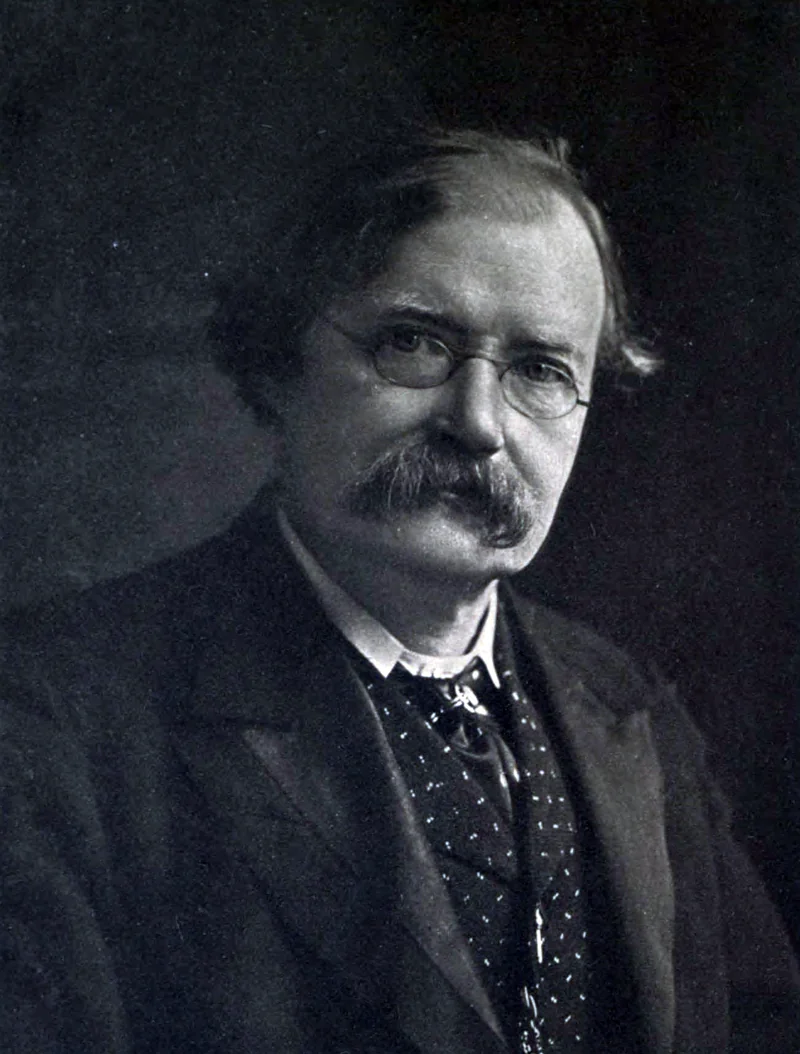
| 9 Quotes | |
| Occup. | Critic |
| From | England |
| Born | March 26, 1848 England |
| Died | September 25, 1908 England |
| Aged | 60 years |
| Cite | |
Citation Formats
APA Style (7th ed.)
John churton collins biography, facts and quotes. (2026, February 3). FixQuotes. https://fixquotes.com/authors/john-churton-collins/
Chicago Style
"John Churton Collins biography, facts and quotes." FixQuotes. February 3, 2026. https://fixquotes.com/authors/john-churton-collins/.
MLA Style (9th ed.)
"John Churton Collins biography, facts and quotes." FixQuotes, 3 Feb. 2026, https://fixquotes.com/authors/john-churton-collins/. Accessed 27 Mar. 2026.
Early Life and Background
John Churton Collins was born on March 26, 1848, in England, in the thick of the Victorian settlement with print - an era when the review, the sermon, and the parliamentary speech competed to define public taste. His middle name, taken from Thomas Churton, hints at a family culture that respected clerical learning and the disciplines of letters. The England of his boyhood was confident, argumentative, and increasingly professionalized: criticism was becoming a vocation, and the periodical press a kind of informal university.From early on Collins developed the temperament of the exacting reader: sensitive to cadence, fiercely alert to intellectual pretension, and suspicious of reputations that could not survive quotation and close comparison. He was not a critic formed by salons or coteries but by the library and the classroom, where argument had to be sustained by evidence. The inner pattern that emerges in his later essays - impatience with vagueness, a moral insistence on standards, and a relish for polemic - suggests a young man who found in literature both a refuge and a tribunal.
Education and Formative Influences
Collins was educated at Oxford (Balliol College), where the classical tradition, the authority of philology, and the Victorian hunger for system shaped his mind; the Oxford atmosphere of rigorous textual scholarship combined with public moral debate gave him a model of criticism as both learned and civic. He absorbed the methods of comparison and the habit of checking assertions against sources, and he watched the era's intellectual crosscurrents - Arnoldian humanism, utilitarian argument, and the new historical criticism - contend for cultural leadership, leaving him convinced that taste without knowledge was vanity and knowledge without judgment mere pedantry.Career, Major Works, and Turning Points
Collins made his name as a formidable man of letters, writing criticism and scholarship while teaching for periods as an academic, and he became widely known for the pugnacious precision of his reviews and for essays that treated English poetry as a field requiring the same accuracy demanded in classical studies. Among his best-remembered books are Studies in Shakespeare (1904) and Essays and Studies (1895), along with polemical interventions such as The Study of English Literature (1891), which pressed for higher scholarly standards and better training for students and teachers. His turning points were less a matter of changing subjects than of sharpening aims: as the late-Victorian press rewarded brisk opinion, he insisted on documentation; as reputations hardened into orthodoxy, he tested them with quotation, historical context, and attention to language itself, sometimes making enemies but also forcing readers to re-open cases they thought closed.Philosophy, Style, and Themes
Collins treated criticism as a moral craft: the critic owed the public not geniality but discrimination, and he distrusted the easy social lubricants of praise. The aphorism “Never trust a man who speaks well of everybody”. captures his psychological posture - not misanthropy so much as a fear that indiscriminate approval masks intellectual laziness or social self-interest. He wrote in a compact, emphatic style, often deploying the balanced sentence and the sharpened aside of the classical rhetorician, and he aimed to make judgment feel inevitable by piling up textual particulars: a metrical decision here, a historical anachronism there, a borrowed commonplace uncovered and returned to its owner. In an age enamored of sweeping theories about culture, he preferred the stubborn fact and the telling example.Yet beneath the severity ran an unusually intimate understanding of how reputations and friendships deform the search for accuracy. “Truth is the object of philosophy, but not always of philosophers”. reads like a confession of the critic's permanent dilemma: the institutions that claim to serve truth - universities, journals, circles of influence - can instead serve career, fashion, or ideology. Collins therefore returned again and again to the theme of misapplied emotion, arguing that sentimentality can be as corrupting as cynicism; his own counsel, “Half our mistakes in life arise from feeling where we ought to think, and thinking where we ought to feel”. , is also a self-portrait of a man trying to keep judgment clear without letting it become inhuman. The result was criticism that could be combative but rarely casual: he wrote as if errors mattered because language mattered, and language mattered because it formed the conscience of a reading nation.
Legacy and Influence
Collins died on September 25, 1908, just as English literary study was being reshaped into a more formal discipline, and his enduring significance lies in how he helped define what seriousness could mean in criticism: not mere opinion, but informed judgment accountable to texts and to history. Later academic critics would surpass him in theory, but many shared his conviction that standards are a public good; his essays remain a bracing record of late-Victorian intellectual life, when literature was treated as a central arena for national self-understanding. For readers of quotations as well as students of criticism, he endures as a voice insisting that clarity is not cruelty, that evidence is a form of respect, and that the critic's first duty is to the truth of the page.Our collection contains 9 quotes written by John, under the main topics: Witty One-Liners - Truth - Wisdom - Friendship - Humility.
Source / external links