
John Ciardi Biography Quotes 21 Report mistakes
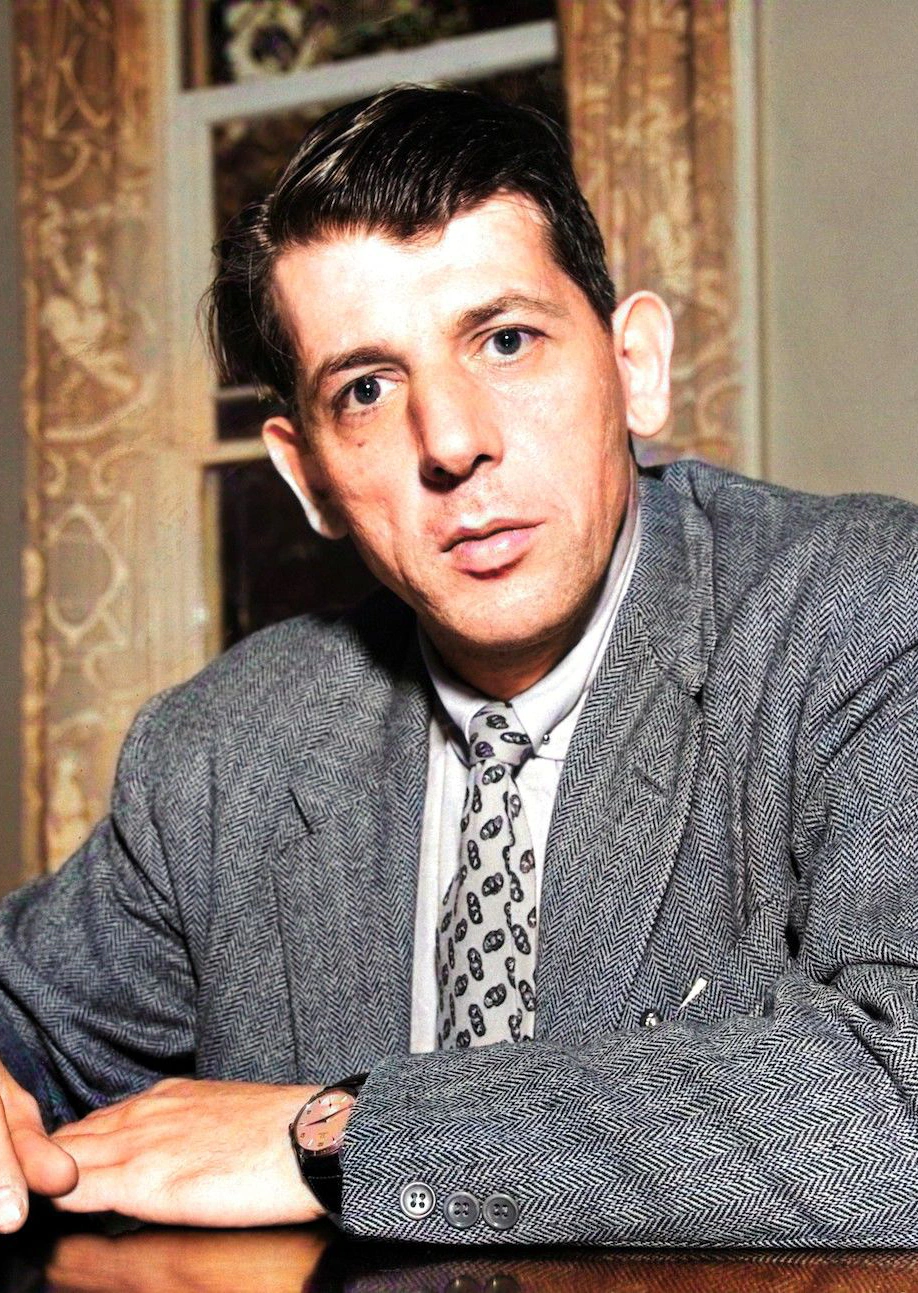
| 21 Quotes | |
| Born as | John Anthony Ciardi |
| Occup. | Dramatist |
| From | USA |
| Spouse | Judith Hostetter |
| Born | June 24, 1916 Boston, Massachusetts, USA |
| Died | March 30, 1986 Metuchen, New Jersey, USA |
| Cause | Heart attack |
| Aged | 69 years |
| Cite | |
Citation Formats
APA Style (7th ed.)
John ciardi biography, facts and quotes. (2026, February 11). FixQuotes. https://fixquotes.com/authors/john-ciardi/
Chicago Style
"John Ciardi biography, facts and quotes." FixQuotes. February 11, 2026. https://fixquotes.com/authors/john-ciardi/.
MLA Style (9th ed.)
"John Ciardi biography, facts and quotes." FixQuotes, 11 Feb. 2026, https://fixquotes.com/authors/john-ciardi/. Accessed 26 Mar. 2026.
Early Life and Background
John Anthony Ciardi was born on June 24, 1916, in Boston, Massachusetts, to an Italian American family shaped by the citys immigrant neighborhoods and the moral arithmetic of scarcity. His childhood tightened early: his father died when Ciardi was still young, and the loss left him with a lifelong sensitivity to the way private catastrophe can quietly determine a persons public posture - the quick wit, the braced skepticism, the refusal to sentimentalize.He came of age in the long shadow between the First World War and the Depression, when aspirations were both more urgent and more precarious. Boston offered him two countervailing educations: the street-level fluency of working people and the intimidating presence of New England letters, a tradition that could feel like a closed club. Ciardi learned to argue his way into rooms, and that habit - talk as a tool, language as leverage - later became central to his identity as a poet-critic, translator, and teacher as much as any single genre label could hold.
Education and Formative Influences
Ciardi studied at Bates College in Lewiston, Maine, graduating in 1938, and went on to the University of Michigan, where he earned an MA and then a PhD. Those years trained him in prosody and criticism at a moment when American poetry was negotiating between modernist experiment and public address. Michigan also gave him a durable sense that literary culture is not just produced on the page but built in institutions - classrooms, journals, and debates - and that a writer who can translate between worlds (academic and popular, classical and contemporary) can enlarge the audience for serious art.Career, Major Works, and Turning Points
During World War II Ciardi served as a U.S. Army Air Forces bombardier, flying missions over Europe; the discipline, risk, and moral ambiguity of wartime experience sharpened his later insistence on clarity and responsibility in language. After the war he taught at Harvard University and became a vigorous public critic of literary fashion, editing and writing in venues that reached beyond the academy. He published multiple volumes of poetry and essays and became widely known for his interpretations of poetry for general readers, but his most enduring single project was his translation of Dantes The Divine Comedy (Inferno 1954; Purgatorio 1961; Paradiso 1970), a sustained act of cultural mediation that balanced narrative drive with formal ambition. By the 1960s and 1970s he was also a prominent writer for younger audiences and a familiar voice in American letters - admired for making difficult texts speak in an American idiom while remaining combative about standards.Philosophy, Style, and Themes
Ciardis work is animated by a democratic faith in intelligence - not as credential but as practice. He distrusted the insulation of cultured talk from lived experience, and he treated the classroom as a civic space where language should prepare students to meet reality rather than evade it: “The classroom should be an entrance into the world, not an escape from it”. That sentence doubles as autobiography. Coming from loss, war, and the pressure of social mobility, Ciardi did not regard literature as therapy or ornament; he regarded it as training for attention, moral choice, and the hard pleasure of precision. Even his humor has an edge: it is the grin of someone who has watched grand systems fail and still believes in the usefulness of a well-made line.Stylistically, Ciardi favored argument, narrative momentum, and the speaking voice - poetry as a form of talk refined by meter, image, and wit. He could be satiric about class and social pretense, reducing inherited status to residue and posture: “Gentility is what is left over from rich ancestors after the money is gone”. Yet his satire rarely collapses into cynicism, because he remained interested in the human need for meaning-making even when meanings are unstable. That compassion appears in his willingness to honor uncertainty as a legitimate stage of thought, especially for the young: “It is easy enough to praise men for the courage of their convictions. I wish I could teach the sad young of this mealy generation the courage of their confusions”. In his Dante, that ethic becomes structural - a guided journey through error, consequence, and the strenuous hope of moral education.
Legacy and Influence
Ciardi died on March 30, 1986, in Billerica, Massachusetts, leaving a reputation that is best understood as a bridge: between scholarly rigor and public speech, between American vernacular energy and European canonical weight. His Dante translations remain widely read for their accessibility and narrative force, and his essays helped shape mid-20th-century debates about poetic clarity, pedagogy, and literary responsibility. If later eras have leaned toward either specialist opacity or pure entertainment, Ciardi stands as evidence that a writer can be both popular and exacting - and that the most durable influence may come not from founding a school but from enlarging the circle of readers capable of serious attention.Our collection contains 21 quotes written by John, under the main topics: Witty One-Liners - Motivational - Wisdom - Art - Love.
Source / external links