
John Connally Biography Quotes 2 Report mistakes
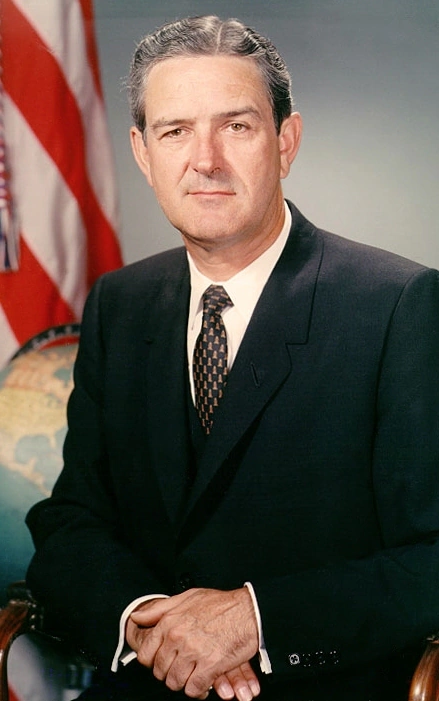
| 2 Quotes | |
| Born as | John Bowden Connally, Jr. |
| Occup. | Politician |
| From | USA |
| Born | February 27, 1917 Floresville, Wilson County, Texas |
| Died | June 15, 1993 Houston, Texas |
| Cause | Lung Disease |
| Aged | 76 years |
| Cite | |
Citation Formats
APA Style (7th ed.)
John connally biography, facts and quotes. (2026, February 11). FixQuotes. https://fixquotes.com/authors/john-connally/
Chicago Style
"John Connally biography, facts and quotes." FixQuotes. February 11, 2026. https://fixquotes.com/authors/john-connally/.
MLA Style (9th ed.)
"John Connally biography, facts and quotes." FixQuotes, 11 Feb. 2026, https://fixquotes.com/authors/john-connally/. Accessed 5 Mar. 2026.
Early Life and Education
John Bowden Connally, Jr. was born on February 27, 1917, in Floresville, Texas, and grew up in a large family shaped by the rhythms of farming and the aspirations of early twentieth-century Texas. Ambitious and academically inclined, he attended the University of Texas at Austin, where he studied law and developed early leadership skills in campus organizations. He married Idanell Brill, known as Nellie, a partnership that would remain central to his public and private life for more than half a century. After earning his law degree, he began practicing in Texas just as the nation was entering a period of global conflict and domestic transformation.Military Service and Early Political Apprenticeship
During World War II, Connally served as a naval officer in the Pacific theater and in stateside assignments, rising to positions of responsibility that honed his executive temperament. Decorated for his service, he returned to Texas with the bearing of a veteran and the network of a generation that had commanded ships and managed crises. He soon became closely associated with Lyndon B. Johnson, then an ambitious congressman and later a senator. Connally helped guide Johnson's rise with legal and political acumen, including crucial work in the 1948 Senate race that cemented Johnson's statewide prominence. In the postwar years Connally also established a successful Houston legal practice and served as adviser and attorney to influential business leaders, deepening his understanding of the oil, ranching, and finance sectors that powered the Texas economy.Entry to National Office
Connally's reputation as a savvy organizer and loyal lieutenant to Lyndon B. Johnson brought him to the attention of John F. Kennedy, who in 1961 appointed Connally Secretary of the Navy. Though his tenure was brief, it introduced him to national policymaking at the highest levels and to key figures across the administration, including Defense Department leaders and congressional committee chairs. He resigned within the year to pursue the governorship of Texas, carrying into state politics a rare combination of federal experience, business credibility, and political instincts forged in the Johnson orbit.Governor of Texas
Elected in 1962 and reelected in 1964 and 1966, Connally served three consecutive terms as governor (1963, 1969), a period marked by rapid economic growth, social change, and the complex demands of the civil-rights era. He championed expanded higher education and workforce development, sought to attract industry, and invested in transportation and infrastructure to support the state's burgeoning urban corridors. Connally worked with legislative leaders, including Lt. Governor Preston Smith and House Speaker Ben Barnes, to navigate budgets and policy priorities. A conservative Democrat, he positioned himself as a pragmatic steward of order and growth, often at the center of intraparty tensions with more liberal Democrats such as Senator Ralph Yarborough. His approach emphasized business-friendly development and an incremental path on sensitive social issues, reflecting the balancing act expected of a statewide leader in mid-1960s Texas.Dallas, 1963
On November 22, 1963, Connally rode in the presidential limousine with President John F. Kennedy and First Lady Jacqueline Kennedy as the motorcade moved through downtown Dallas. Beside him sat Nellie Connally, whose gracious exchange with the President just moments earlier became part of the day's tragic memory. When shots rang out in Dealey Plaza, Connally was severely wounded in the chest, wrist, and thigh. Rushed to Parkland Memorial Hospital, he underwent emergency surgery performed by a team that included Dr. Robert Shaw and Dr. Charles Gregory. Connally recovered, but the experience left indelible physical and emotional marks. He later voiced confidence in the overall findings of the Warren Commission regarding the assassin, while disagreeing with aspects of the single-bullet theory, a nuanced stance he maintained for the rest of his life.Secretary of the Treasury
After leaving the governorship, Connally returned to national service when President Richard Nixon appointed him Secretary of the Treasury in 1971. Taking office amid inflationary pressures and international monetary strains, he became a central figure in the administration's New Economic Policy. He helped design and defend the epochal 1971 decision to suspend dollar convertibility into gold, reshape exchange-rate regimes, and impose temporary wage and price controls. The realignment that followed, including the Smithsonian Agreement, signaled the end of Bretton Woods as the world had known it. Connally's forceful style in meetings with foreign finance ministers and central bankers, among them Federal Reserve Chairman Arthur Burns and senior Treasury officials, underscored Washington's new priorities. A line widely attributed to him, "It is our currency, but your problem", captured both his rhetorical flair and the shifting leverage of U.S. policy. He left the Treasury in 1972 after a tenure that placed him at the fulcrum of global economic change.Legal Challenges and Acquittal
In the mid-1970s, Connally faced federal charges related to allegations that he had accepted money to influence dairy price supports during his time at the Treasury. The case drew national attention, in part because of his prominence and bipartisan relationships. Supported by testimony from friends and colleagues, and with Nellie Connally standing by him throughout, he was acquitted on all counts in 1975. The verdict allowed him to resume his public role, though the episode left a lasting layer of scrutiny around his dealings and underscored the intensity of post-Watergate politics.Party Switch and Presidential Ambitions
Connally formally switched from the Democratic to the Republican Party in 1973, a move that reflected both ideological evolution and the larger realignment underway in the Sun Belt. With national stature, connections to Nixon and later to Republican leaders, and a reputation as a compelling speaker, he entered the 1980 Republican presidential primaries. Despite substantial fundraising and endorsements, he struggled to convert organizational strength into votes in a field dominated by Ronald Reagan. Connally withdrew before the convention and supported the eventual nominee, cementing his place among the most prominent Texans to have straddled both major parties in the later twentieth century.Business Endeavors and Later Years
Between and after his stints in public office, Connally practiced law and pursued business ventures in energy, real estate, and finance, drawing on decades of relationships across Texas and Washington. The economic downturns of the 1980s, particularly in oil and property markets, strained many Texas fortunes, and Connally was not immune; he sought bankruptcy protection amid cascading liabilities. Even so, he remained a sought-after counselor on public policy, trade, and international finance, using his experience at Treasury and as governor to advise clients and comment on national debates. He continued to appear at public events, often alongside former colleagues from the Kennedy, Johnson, and Nixon years, and remained devoted to family life with Nellie, whose grace and candor had endeared her to many since the fateful day in Dallas.Death and Legacy
John Connally died on June 15, 1993, in Houston, Texas, at the age of 76. He was remembered by admirers as a commanding presence with a resonant voice and a gift for coalition-building, and by critics as emblematic of a hard-edged, business-first style of governance. His career traversed eras and parties: the New Deal Democratic South, the modernization of Texas, the trauma of November 1963, the global monetary upheavals of 1971, and the conservative ascendance of the late twentieth century. Central figures in his life, Lyndon B. Johnson, John F. Kennedy, Richard Nixon, Ronald Reagan, and, always, Nellie Connally, help define his narrative. Yet his most enduring imprint lies in the bridge he embodied between state and national power, and in the testament of resilience he offered after surviving the gunfire in Dallas, returning again and again to the arena where he believed policy, politics, and personal courage converge.Our collection contains 2 quotes written by John, under the main topics: Leadership - Nostalgia.
Other people related to John: Jim Bishop (Journalist), Edward Bennett Williams (Lawyer), John C. White (Politician)
Source / external links