
John D. Rockefeller Biography Quotes 27 Report mistakes
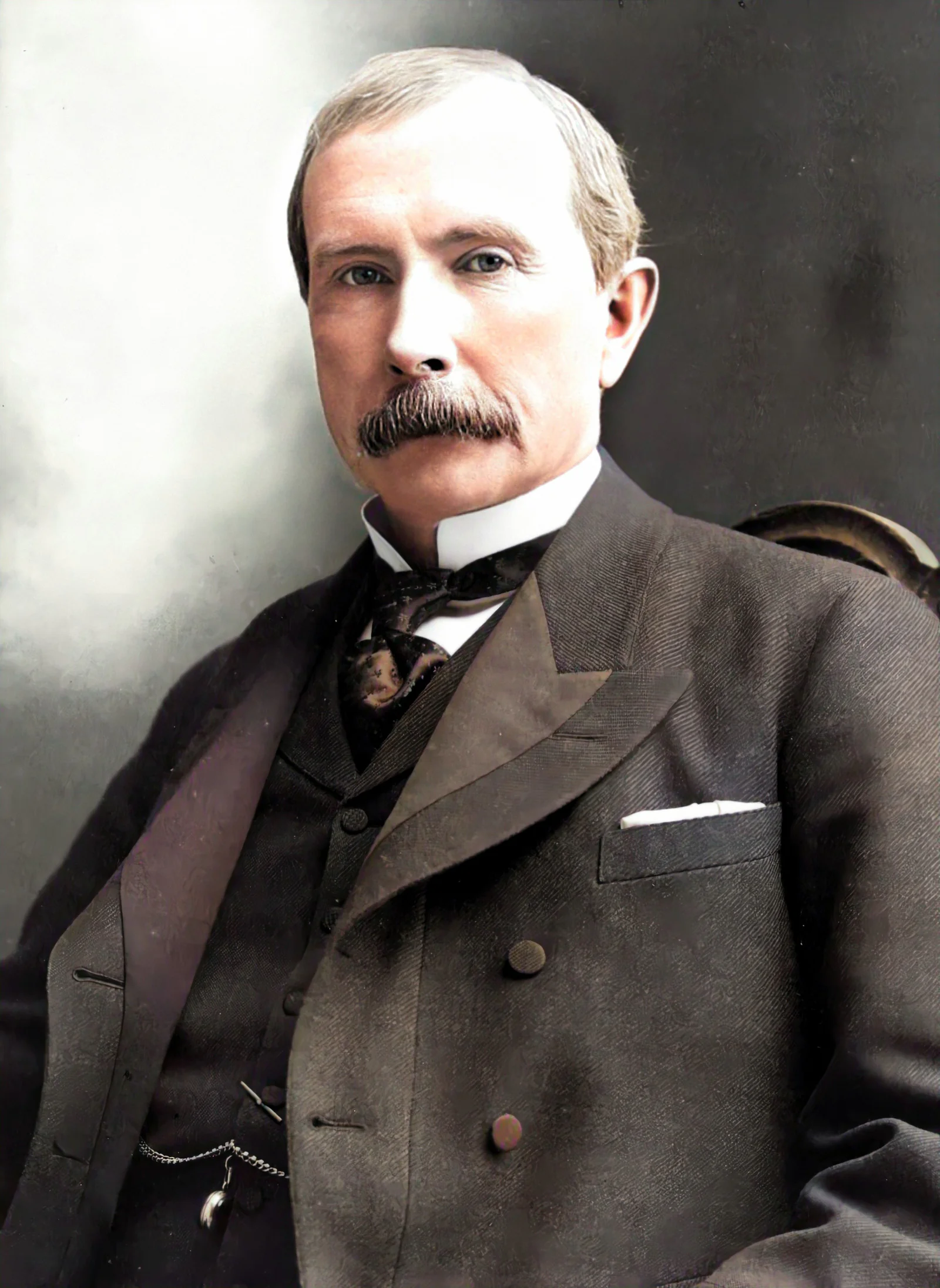
| 27 Quotes | |
| Born as | John Davison Rockefeller |
| Occup. | Businessman |
| From | USA |
| Spouse | Laura Celestia Spelman |
| Born | July 8, 1839 Richford, New York, USA |
| Died | May 23, 1937 Ormond Beach, Florida, USA |
| Cause | Natural causes |
| Aged | 97 years |
| Cite | |
Citation Formats
APA Style (7th ed.)
John d. rockefeller biography, facts and quotes. (2026, February 2). FixQuotes. https://fixquotes.com/authors/john-d-rockefeller/
Chicago Style
"John D. Rockefeller biography, facts and quotes." FixQuotes. February 2, 2026. https://fixquotes.com/authors/john-d-rockefeller/.
MLA Style (9th ed.)
"John D. Rockefeller biography, facts and quotes." FixQuotes, 2 Feb. 2026, https://fixquotes.com/authors/john-d-rockefeller/. Accessed 5 Mar. 2026.
Early Life and Background
John Davison Rockefeller was born on July 8, 1839, in Richford, New York, into a family shaped by mobility, hustle, and moral tension. His mother, Eliza Davison Rockefeller, was devout, frugal, and steady - the household's anchor and the source of his lifelong habits of bookkeeping, churchgoing, and disciplined giving. His father, William Avery "Big Bill" Rockefeller, was a charismatic itinerant peddler and sometime con man who drifted in and out of family life. The contrast between Eliza's order and Bill's improvisation formed the central drama of Rockefeller's inner world: a craving for control, respectability, and predictable systems built in reaction to early uncertainty.In the 1850s the family settled in the Cleveland, Ohio, area, a city rising with canals, railroads, and the commercial pulse of the American interior. Rockefeller began work young, famously recording every penny, and he absorbed the rhythms of a society where credit, commodities, and reputation mattered as much as muscle. The era rewarded those who could translate chaos into routine - and Rockefeller learned to treat volatility not as fate but as a problem to be priced, hedged, and managed. He was not born into privilege, but into a frontier capitalism where a tight conscience and a tighter ledger could become a kind of armor.
Education and Formative Influences
Rockefeller received a practical education rather than an elite one: brief study at Central High School in Cleveland and then a business program at Folsom Mercantile College in 1855, aimed at penmanship, accounting, and commercial law. More formative than formal schooling was the Baptist church culture of temperance and stewardship, along with the ethic of self-improvement that pervaded mid-19th-century America. He internalized the belief that work was moral, waste was sin, and wealth - if gained with discipline - demanded an accounting not only to partners and banks but to God.Career, Major Works, and Turning Points
After becoming a bookkeeper and then a partner in a produce commission firm (Clark and Rockefeller), he moved into oil refining in 1863 as the Civil War economy expanded and kerosene lit the nation. In 1870 he and associates incorporated Standard Oil of Ohio, and Rockefeller's genius emerged: relentless cost control, vertical integration, secret freight rebates, and strategic acquisitions that made refining less a gamble than an engineered machine. By the 1880s Standard Oil dominated American refining and distribution through the trust structure, provoking public outrage and pioneering the modern debate over monopoly power. The turning point came with the Progressive Era's legal assault: in 1911 the US Supreme Court ordered Standard Oil broken up under the Sherman Antitrust Act, a judgment that both condemned Rockefeller's methods and confirmed how thoroughly he had reshaped the industrial landscape. In later life he withdrew from day-to-day business, managed vast holdings, and professionalized his giving through institutions that would outlast him. He died on May 23, 1937, in Ormond Beach, Florida.Philosophy, Style, and Themes
Rockefeller's style blended piety with calculation. He saw business not as a romantic adventure but as an administrative science: systems, incentives, and measurable efficiencies. “Good management consists in showing average people how to do the work of superior people”. That sentence captures his psychological core - a preference for process over brilliance, and for organizations that could scale human effort without depending on any single temperament. He cultivated quiet authority, delegated aggressively, and relied on lieutenants to execute tactics while he maintained strategic direction, often appearing calm precisely because he had converted uncertainty into routines and reporting lines.His moral language, however, reveals how he justified power. “I believe that every right implies a responsibility; every opportunity, an obligation; every possession, a duty”. This was not mere sentiment; it was a framework that allowed him to treat wealth as stewardship, even when the path to it drew fierce criticism. He also framed competition itself as ethically suspect: “Competition is a sin”. In Rockefeller's mind, unrestrained rivalry produced waste, instability, and higher prices - an economy of duplication rather than coordination. The theme running through his life is the urge to replace disorder with order: in markets through consolidation, in personal life through routine and faith, and in public life through philanthropy designed to be systematic rather than sentimental.
Legacy and Influence
Rockefeller left a double legacy that still structures arguments about capitalism: the builder of a modern corporate form and the symbol of its abuses. Standard Oil accelerated integration of production, transportation, and distribution, helping define the scale and practices of 20th-century enterprise, while the antitrust case against it became a foundational precedent for regulating concentrated power. His philanthropy - notably the University of Chicago (founded 1890), the Rockefeller Institute for Medical Research (1901), the General Education Board (1902), and the Rockefeller Foundation (1913) - professionalized giving and helped shape public health, scientific research, and higher education worldwide. Yet his enduring influence lies less in any single donation than in the template he created: wealth amassed through industrial consolidation and then laundered into legitimacy through institution-building, a pattern both admired for its effectiveness and contested for what it suggests about who gets to organize society in the first place.Our collection contains 27 quotes written by John, under the main topics: Motivational - Ethics & Morality - Friendship - Leadership - Meaning of Life.
Other people related to John: David Rockefeller (Businessman), Ida Tarbell (Journalist)
John D. Rockefeller Famous Works
- 1909 Random Reminiscences of Men and Events (Autobiography)
Source / external links