
John Dewey Biography Quotes 25 Report mistakes
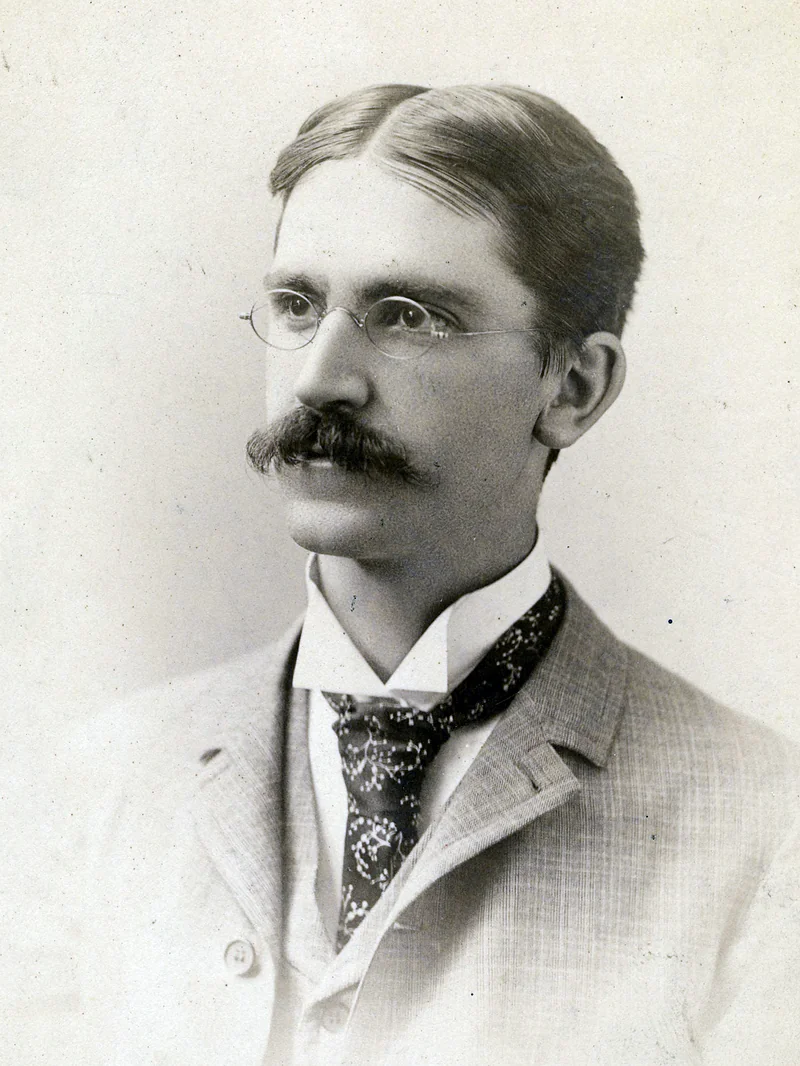
| 25 Quotes | |
| Occup. | Philosopher |
| From | USA |
| Born | October 20, 1859 Burlington, Vermont, U.S. |
| Died | June 1, 1952 New York City, U.S. |
| Aged | 92 years |
| Cite | |
Citation Formats
APA Style (7th ed.)
John dewey biography, facts and quotes. (2026, February 2). FixQuotes. https://fixquotes.com/authors/john-dewey/
Chicago Style
"John Dewey biography, facts and quotes." FixQuotes. February 2, 2026. https://fixquotes.com/authors/john-dewey/.
MLA Style (9th ed.)
"John Dewey biography, facts and quotes." FixQuotes, 2 Feb. 2026, https://fixquotes.com/authors/john-dewey/. Accessed 24 Mar. 2026.
Early Life and Background
John Dewey was born on October 20, 1859, in Burlington, Vermont, a small lakefront town whose civic life mixed New England Protestant habits, local party politics, and the aftershocks of the Civil War. His father, Archibald Dewey, ran a grocery and served in the Union Army; his mother, Lucina Rich, brought an intense moral seriousness that left Dewey with a lifelong sensitivity to the ways private conscience and public institutions shape one another. Burlington was not a metropolis, but it was porous to the new America of railroads, newspapers, and industrial discipline - forces that would later make Dewey suspicious of any philosophy that treated ideas as detached from social change.Dewey came of age as the United States was remaking itself: corporate capitalism consolidated power, immigration accelerated, and political reform movements tried to reconcile democracy with modern scale. He was neither a romantic loner nor a court philosopher by temperament. Friends and students later described him as steady, courteous, and relentlessly purposeful - an intellectual who preferred committees, classrooms, and experimental projects to grand gestures, and who believed that democracy had to be built in the everyday texture of association.
Education and Formative Influences
He entered the University of Vermont, graduating in 1879, and after brief teaching turned to graduate study at Johns Hopkins University, where he earned the PhD in 1884. There he encountered the late-19th-century collision of German idealism, Darwinian biology, and the new scientific psychology. G.W.F. Hegel initially gave him a sense of mind and society as an organic whole, while William James and Charles Sanders Peirce helped push him toward pragmatism and experimental inquiry; the result was a habit of treating concepts as tools for coping with problems rather than as mirrors of eternal reality.Career, Major Works, and Turning Points
Dewey taught at the University of Michigan (1884-1894), the University of Chicago (1894-1904), and then Columbia University (1904-1930), where he became the best-known public philosopher of his era. In Chicago he helped found the Laboratory School, turning pedagogy into a test site for his emerging view that learning grows from guided activity and social cooperation. His major works track both intellectual maturation and national crisis: The School and Society (1899) and Democracy and Education (1916) argued that schooling must serve democratic life; Human Nature and Conduct (1922) and Experience and Nature (1925) recast ethics and metaphysics in terms of habits and environments; The Public and Its Problems (1927) confronted mass society and communication; Logic: The Theory of Inquiry (1938) formalized inquiry as a disciplined, self-correcting practice. He also acted publicly - supporting progressive causes, helping found the NAACP, chairing the 1937 commission that investigated the charges against Leon Trotsky, and traveling widely, including influential visits to Japan, China (1919-1921), and Turkey, where educational modernization was debated as part of nation-building.Philosophy, Style, and Themes
Dewey's signature move was to treat experience not as private sensation but as transaction: organisms and environments continually shape each other, and intelligence is the method by which humans reorganize that relationship. He distrusted both authoritarian certainty and paralyzing doubt, pushing instead for fallibilism disciplined by consequences. “Anyone who has begun to think, places some portion of the world in jeopardy”. The line captures his psychology: he saw thought as a risky moral act because it threatens settled routines, invites conflict, and demands responsibility for outcomes. In his view, ideas are not ornaments; they are instruments that can revise institutions, including the institutions that first taught us what to fear.His educational theory was the most visible expression of this temperament. He fought the twin temptations of rote traditionalism and sentimental permissiveness: “The belief that all genuine education comes about through experience does not mean that all experiences are genuinely or equally educative”. Behind the caution lies his lifelong concern with formation - how habits are built, how attention is trained, how freedom is made practical. In ethics, too, he rejected fixed virtues in favor of growth: “The self is not something ready-made, but something in continuous formation through choice of action”. Dewey wrote in a plain, procedural style, sometimes dense with qualifications because he wanted philosophy to resemble inquiry itself - incremental, social, revisable. Democracy, for him, was less a constitution than a way of living together: shared problems, shared experiments, and shared learning.
Legacy and Influence
Dewey died on June 1, 1952, in New York City, after a life that spanned Lincoln's America and the early Cold War. His legacy remains double-edged and enduring: celebrated as the architect of modern progressive education and criticized when later reforms caricatured his views as lax or anti-intellectual. Yet his core claims continue to animate debates in philosophy of education, political theory, and public reason - that inquiry is a social practice, that institutions should be judged by how they enable growth, and that democracy must be cultivated in classrooms, workplaces, and media systems as much as at the ballot box. In an age still torn between technocracy and populist anger, Dewey's insistence that intelligence is cooperative - and that freedom is learned - keeps returning as both challenge and invitation.Our collection contains 25 quotes written by John, under the main topics: Ethics & Morality - Wisdom - Nature - Deep - Learning.
Other people related to John: B. R. Ambedkar (Politician), Cornel West (Educator), Randolph Bourne (Writer), Albert Barnes (Theologian), Corliss Lamont (Philosopher), Albion W. Small (Sociologist), Morris Raphael Cohen (Philosopher), Hilary Putnam (Philosopher), James Harvey Robinson (Historian), Norman Thomas (Activist)
John Dewey Famous Works
- 1939 Creative Democracy , The Task Before Us (Essay)
- 1939 Freedom and Culture (Book)
- 1938 Logic: The Theory of Inquiry (Book)
- 1938 Experience and Education (Book)
- 1934 A Common Faith (Book)
- 1934 Art as Experience (Book)
- 1930 Individualism Old and New (Book)
- 1929 Impressions of Soviet Russia and the Revolutionary World (Book)
- 1927 The Public and Its Problems (Book)
- 1925 Experience and Nature (Book)
- 1922 Human Nature and Conduct (Book)
- 1920 Reconstruction in Philosophy (Book)
- 1916 Democracy and Education (Book)
- 1910 The Influence of Darwin on Philosophy and Other Essays (Collection)
- 1910 How We Think (Book)
- 1903 Studies in Logical Theory (Book)
- 1902 The Child and the Curriculum (Book)
- 1899 School and Society (Book)
- 1897 My Pedagogic Creed (Essay)