
John Dryden Biography Quotes 49 Report mistakes
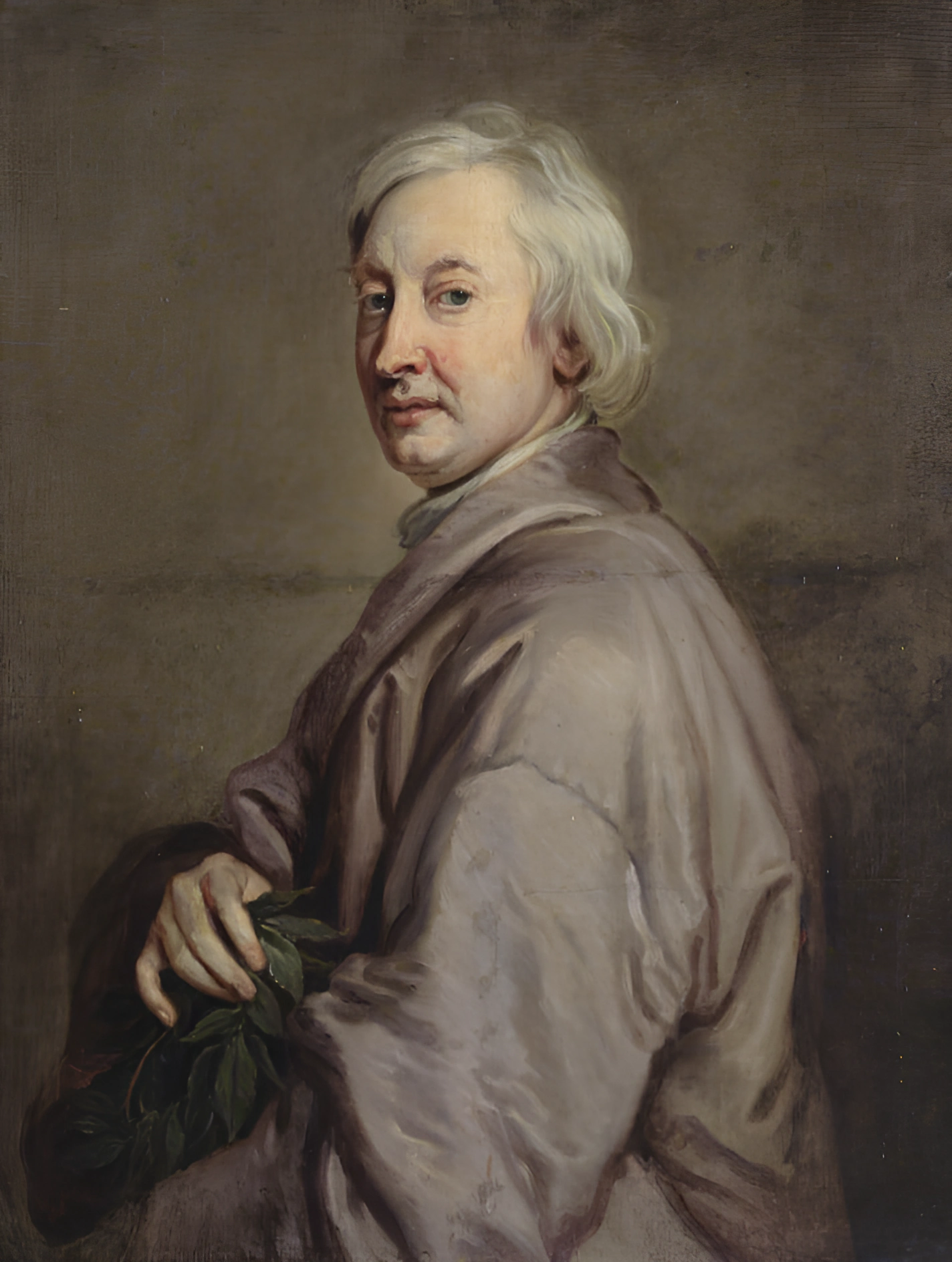
Attr: After Godfrey Kneller
| 49 Quotes | |
| Occup. | Poet |
| From | England |
| Born | August 9, 1631 Aldwincle, Northamptonshire, England |
| Died | May 12, 1700 |
| Aged | 68 years |
| Cite | |
Citation Formats
APA Style (7th ed.)
John dryden biography, facts and quotes. (2026, February 11). FixQuotes. https://fixquotes.com/authors/john-dryden/
Chicago Style
"John Dryden biography, facts and quotes." FixQuotes. February 11, 2026. https://fixquotes.com/authors/john-dryden/.
MLA Style (9th ed.)
"John Dryden biography, facts and quotes." FixQuotes, 11 Feb. 2026, https://fixquotes.com/authors/john-dryden/. Accessed 5 Mar. 2026.
Early Life and Background
John Dryden was born on August 9, 1631, at Aldwincle, Northamptonshire, into a substantial Puritan-leaning gentry family whose status rested on land, clerical connections, and the habits of provincial authority. His father, also John Dryden, was a local justice; through his mother, Erasmus Dryden of Canons Ashby and the Pickering line, he inherited both kinship networks and the sense that public affairs were a family business. That inheritance mattered: Dryden came of age as the old English order cracked under Civil War pressures, when allegiance and advancement could change with a sermon, a regiment, or a parliamentary vote.The political whiplash of the 1640s and 1650s formed his emotional weather. The young poet absorbed a world in which speech was policed, piety was political, and power changed hands with sudden finality. That atmosphere sharpened two lifelong instincts - a distrust of fanatic certainty and a pragmatic ear for where authority was moving. He would later be caricatured as an opportunist, but his early environment better explains him as a man trained to survive ideological storms without surrendering the craft that could outlast them.
Education and Formative Influences
Dryden was educated at Westminster School under the formidable Richard Busby, then entered Trinity College, Cambridge (BA 1654). Westminster gave him Latin fluency, rhetorical discipline, and a taste for public argument; Cambridge added scholastic method but also the frustration of a country scholar watching London set the tempo. He steeped himself in the classical poets and critics - Virgil, Horace, Juvenal - and in the emerging English arguments about drama, religion, and sovereignty that would soon dominate his own prose prefaces. The result was a writer who treated literature as a civic instrument: poems and plays were not escapes from history but engines within it.Career, Major Works, and Turning Points
Dryden entered public view during the Interregnum, then pivoted with the Restoration: his "Astraea Redux" (1660) welcomed Charles II, and he quickly became the era's central literary professional. He wrote occasional masterpieces that defined the public mood - "Annus Mirabilis" (1667) on war, plague, and fire - while remaking English theater with heroic drama and then with sharper, satiric tragicomedy. Appointed Poet Laureate (1668) and Historiographer Royal (1670), he used these platforms to become the chief critic of his day through prefaces and essays, even as rivals and politics pressed him. His fiercest political poem, "Absalom and Achitophel" (1681), turned the Exclusion Crisis into enduring allegory; later, his conversion to Catholicism under James II brought loss of office after 1688 and forced a final reinvention as translator and classicist, culminating in the muscular, influential "Fables Ancient and Modern" (1700). He died in London on May 12, 1700, and was buried in Westminster Abbey.Philosophy, Style, and Themes
Dryden's inner life was a negotiation between appetite for order and awareness of human volatility. He believed language could discipline chaos, yet he never forgot how thin the barrier is between brilliance and self-destruction: “Great wits are sure to madness near allied, and thin partitions do their bounds divide”. That line is not merely epigram; it is a diagnosis of the Restoration court and playhouse, where reputations flared and collapsed overnight, and of his own craft, which required proximity to power without being consumed by it. His satires show a mind allergic to cant, but his best work also admits how easily reason becomes performance.His style married classical clarity to metropolitan speed. In criticism he prized compression and force, insisting that eloquence should strike rather than sprawl: “If you be pungent, be brief; for it is with words as with sunbeams - the more they are condensed the deeper they burn”. This ethic shaped his couplets - balanced, forward-driving, built to persuade - and his stage dialogue, where argument becomes character. Yet beneath the polish lies a wary psychology: Dryden repeatedly explores restraint, delayed retaliation, and the politics of endurance - “Beware the fury of a patient man”. It is a theme of individuals and nations alike, and it fits a poet who watched England punish, forgive, and punish again, and who learned to make patience itself a form of power.
Legacy and Influence
Dryden stands as the principal architect of Restoration literary authority: he stabilized the heroic couplet as an instrument of argument, helped modernize English dramatic practice, and modeled the writer as public intellectual through criticism that linked taste to moral and civic judgment. His translations and adaptations set a template for later English classicism, while his satires defined political poetry as a venue for ideas sharpened into memorable persons. For Pope, Johnson, and countless later stylists, Dryden was the proof that English could be both supple and exacting - a language capable of statecraft, comedy, rage, and resignation, all within the same controlled line.Our collection contains 49 quotes written by John, under the main topics: Witty One-Liners - Motivational - Ethics & Morality - Wisdom - Truth.
Other people related to John: Thomas Shadwell (Dramatist), John Wilmot (Writer), Jeremy Collier (Clergyman), Nathaniel Lee (Dramatist), Thomas Otway (Dramatist), William Davenant (Poet), George Etherege (Dramatist), Richard Blackmore (Poet)
John Dryden Famous Works
- 1682 Mac Flecknoe (Poem)
- 1681 Absalom and Achitophel (Poem)
- 1678 All for Love (Play)
- 1675 Aureng-Zebe (Play)
- 1667 Annus Mirabilis (Poem)
Source / external links