
John Dyer Biography Quotes 30 Report mistakes
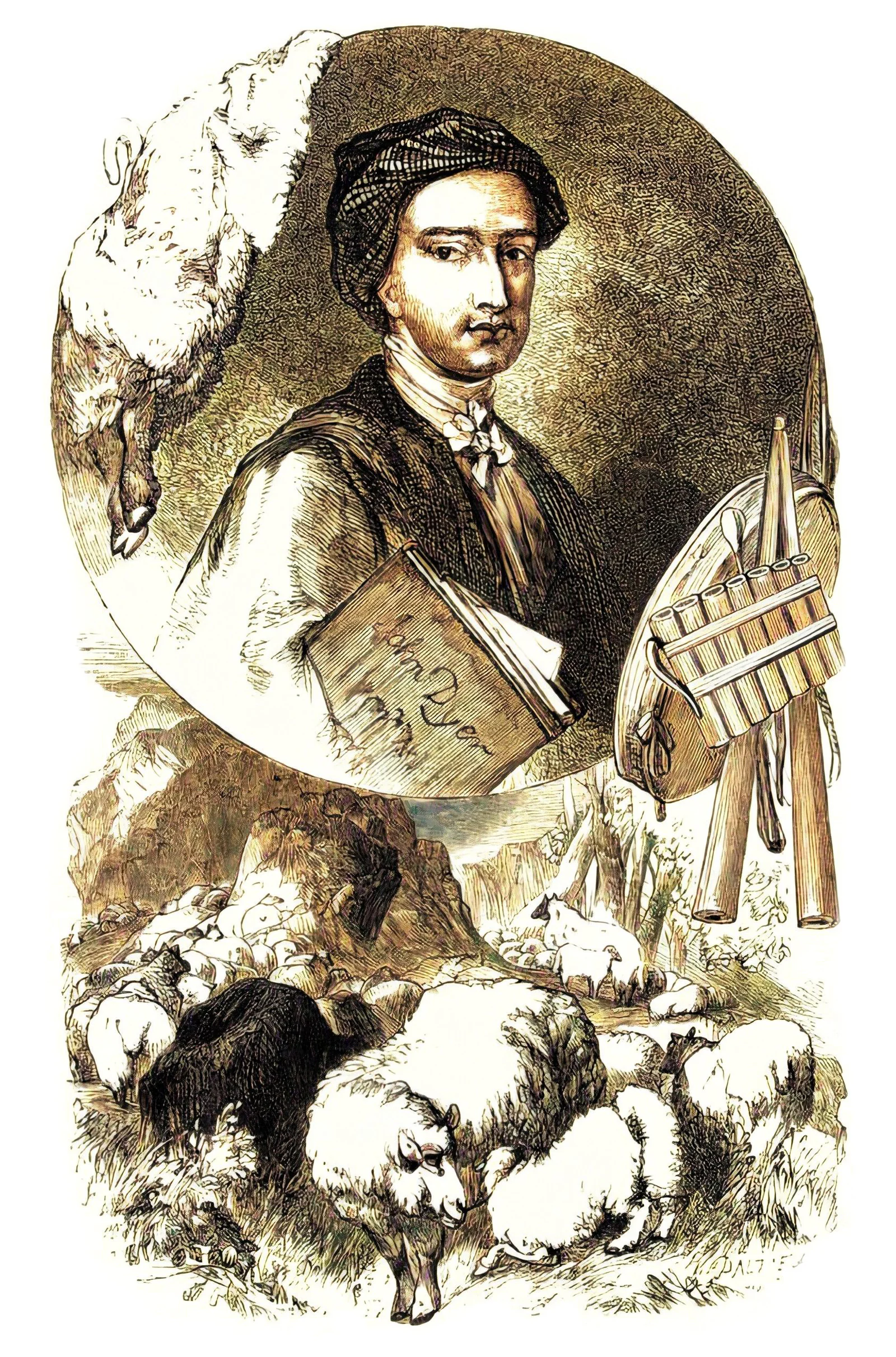
Attr: Brothers Dalziel, CC BY-SA 4.0
| 30 Quotes | |
| Occup. | Artist |
| From | United Kingdom |
| Born | August 19, 1699 Falmouth, Cornwall, England |
| Died | December 24, 1757 |
| Aged | 58 years |
| Cite | |
Citation Formats
APA Style (7th ed.)
John dyer biography, facts and quotes. (2026, February 2). FixQuotes. https://fixquotes.com/authors/john-dyer/
Chicago Style
"John Dyer biography, facts and quotes." FixQuotes. February 2, 2026. https://fixquotes.com/authors/john-dyer/.
MLA Style (9th ed.)
"John Dyer biography, facts and quotes." FixQuotes, 2 Feb. 2026, https://fixquotes.com/authors/john-dyer/. Accessed 26 Mar. 2026.
Early Life and Background
John Dyer was born on 19 August 1699 in Aberglasney, Carmarthenshire, in the orbit of a Welsh gentry household whose identity was tied to land, memory, and the moral economy of rural Britain. Wales at the turn of the 18th century stood in a tense balance between local tradition and the expanding reach of London culture after the 1707 Act of Union. Dyer grew up amid rivers, woods, and ruined abbeys - a landscape already half-poetic, half-historical - and this early intimacy with place became the bedrock of his imagination.He also arrived at a moment when Britain was beginning to look at itself differently: commerce and empire were widening horizons, while antiquarianism and the pastoral were becoming fashionable ways to feel rooted. Dyer absorbed that contradiction early - a desire to belong to a specific valley and, at the same time, to translate it into a language legible to metropolitan taste. Even before he took up a professional path, his inner life seems marked by a recurring impulse: to turn scenery into meaning, and to make stillness carry emotional weight.
Education and Formative Influences
Little is securely documented about Dyer's formal schooling, but his artistic formation followed a recognizable route for an ambitious provincial talent in early Georgian Britain: a period of drawing and painting practice, exposure to London-based models of landscape art, and the gradual conversion of sketching into a disciplined craft. He came of age when the "tour" - travel as self-education - was becoming a cultural instrument; the conversation between classical ideals and British scenery pushed artists toward more structured composition without losing the felt weather of real places. For Dyer, the formative influence was not only art theory but the habit of walking, looking, and revisiting a view until it yielded its emotional geometry.Career, Major Works, and Turning Points
Dyer established himself first as a painter of topographical and landscape views, then turned increasingly to poetry, a shift that suggests ambition as well as restlessness: he wanted language to do what paint could not. Travel on the Continent proved decisive, expanding his sense of scale and giving him classical reference points that later tightened his pastoral vision into something more architectural. His major poetic work, "Grongar Hill" (first published 1726), distilled a specific Welsh prospect into a meditation on time, social order, and the bittersweet pleasure of distance; later, "The Ruins of Rome" (1740) translated antiquity into moral reflection, while the georgic "The Fleece" (1757) tried to yoke national commerce, labor, and landscape into one sustained argument. Across these turning points, Dyer repeatedly remade himself - painter to poet, local observer to European traveler - while keeping the same core subject: how a place forms a mind.Philosophy, Style, and Themes
Dyer's distinctive contribution is the way he treats landscape as a psychological instrument. His poems do not merely describe views; they stage perception itself - the eye moving from foreground to horizon, the mind shifting from pleasure to judgment. In "Grongar Hill" the prospect becomes an ethics lesson: beauty is inseparable from mutability, and the most moving scene is the one that quietly insists it will not last. His style favors lucid, measured sentences and carefully modulated transitions, as if he mistrusted rhetorical fireworks and preferred the steady pressure of observation. That preference aligns with a temperament that seeks equilibrium: the world is consoling, but only if one looks long enough to accept its losses.The supplied "Reference Quotes" belong to a later, different John Dyer and cannot be truthfully attributed to the 1699-1757 Welsh poet-painter without inventing evidence. Still, they can illuminate - by contrast - what Dyer's surviving work implies. Where the modern voice claims, “My optimism for life carried through my work”. , Dyer's optimism is more conditional: a pastoral calm repeatedly shadowed by decay, as in Rome's ruins or the fading day on Grongar. Where another line insists, “Painting is really good fun, I have always enjoyed it”. , Dyer's art suggests a quieter drive - not fun but steadiness, the solace of order imposed on flux. And where one says, “The lifestyle that an artist can have, the freedom to wander in the landscape with no real pressure or deadlines, was a very attractive one”. , Dyer's wandering reads less like leisure than method: walking as a way to test how far the self can travel while still recognizing home.
Legacy and Influence
Dyer died on 24 December 1757, leaving a reputation that has never been purely literary or purely visual, but hybrid - a maker who helped British culture learn to read its own scenery. "Grongar Hill" became a touchstone for later landscape poets, anticipating the more inward prospect poems of the mid-to-late 18th century and contributing to the sensibility that would flower in Romanticism. "The Fleece", ambitious and uneven, nonetheless reflects an important national impulse: to bind aesthetics to political economy, pastoral pleasure to industrial reality. His enduring influence lies in his disciplined tenderness toward place - an art of looking that makes landscape not an escape from history but a way of thinking inside it.Our collection contains 30 quotes written by John, under the main topics: Witty One-Liners - Motivational - Ethics & Morality - Funny - Art.
Source / external links