
John Foster Dulles Biography Quotes 12 Report mistakes
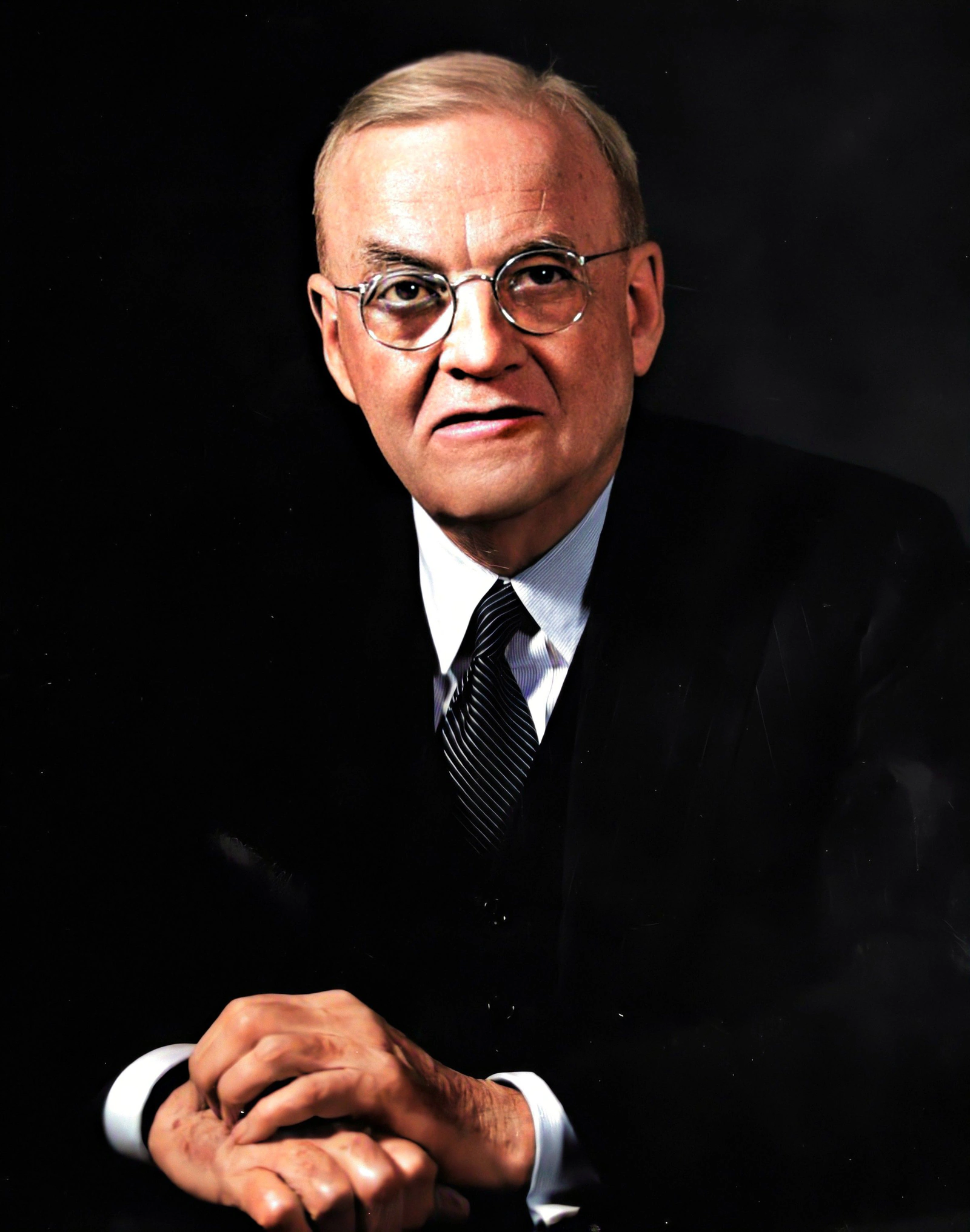
| 12 Quotes | |
| Occup. | Diplomat |
| From | USA |
| Spouse | Janet Pomeroy Avery (1912-1959) |
| Born | February 25, 1888 Washington DC, USA |
| Died | May 24, 1959 Washington DC, USA |
| Cause | Cancer |
| Aged | 71 years |
| Cite | |
Citation Formats
APA Style (7th ed.)
John foster dulles biography, facts and quotes. (2026, February 11). FixQuotes. https://fixquotes.com/authors/john-foster-dulles/
Chicago Style
"John Foster Dulles biography, facts and quotes." FixQuotes. February 11, 2026. https://fixquotes.com/authors/john-foster-dulles/.
MLA Style (9th ed.)
"John Foster Dulles biography, facts and quotes." FixQuotes, 11 Feb. 2026, https://fixquotes.com/authors/john-foster-dulles/. Accessed 25 Mar. 2026.
Early Life and Background
John Foster Dulles was born on February 25, 1888, in Washington, D.C., into a Protestant establishment that treated public service as inheritance and obligation. His father, Allen Macy Dulles, was a Presbyterian minister and theologian; the household was disciplined, verbally exacting, and steeped in moral categories of sin, duty, and redemption. That early atmosphere mattered: Dulles grew into a man who believed policy was never merely technical, and who often translated geopolitics into a drama of virtue and peril.
He was raised largely in Watertown, New York, in a family network that sat near the nerve center of Republican diplomacy. His maternal grandfather, John W. Foster, had been U.S. secretary of state; his uncle by marriage, Robert Lansing, later held the same post. The era of his boyhood - the closing frontier, the rise of U.S. overseas power, the confidence of Anglo-American legalism - offered a template: the world could be argued into order, but only by those who mastered institutions and insisted on rules.
Education and Formative Influences
Dulles attended Princeton University, graduating in 1908, and then George Washington University Law School (LL.B., 1911). Princeton in the Progressive Era combined moral earnestness with an emerging professional-managerial ethos; law, for Dulles, was not a refuge from politics but a vocabulary for it. He entered the elite Wall Street firm Sullivan and Cromwell, where international finance and treaty-making blended, and where he learned to treat clauses, guarantees, and enforcement mechanisms as levers of history - habits that later shaped both his suspicion of vague internationalism and his preference for binding commitments.
Career, Major Works, and Turning Points
During World War I he served on U.S. delegations and in 1919 was a legal adviser at the Paris Peace Conference, witnessing firsthand how idealistic settlement language could collide with power and grievance. In the interwar years he rose at Sullivan and Cromwell, advising major corporations with global interests while also building a parallel identity as a Republican foreign-policy counselor. In 1945 he helped draft the U.N. Charter at San Francisco, and in 1948 he served as U.S. delegate to the U.N. General Assembly. A senator from New York briefly in 1949, he became Dwight D. Eisenhower's secretary of state in 1953, the office that made his name synonymous with Cold War strategy: NATO consolidation, the end of the Korean War armistice negotiations phase, the 1954 Geneva talks on Indochina, the SEATO framework, and crisis diplomacy from the Taiwan Strait to Suez and Hungary. Behind the scenes his department worked in tandem with CIA covert operations (notably Iran 1953 and Guatemala 1954), reflecting his belief that the struggle with communism required instruments beyond public persuasion. Diagnosed with cancer, he resigned in 1959 and died on May 24, 1959, as the Cold War entered a more nuclear-saturated, psychologically brittle phase.
Philosophy, Style, and Themes
Dulles' inner life mixed clerical moral seriousness with a lawyer's hunger for enforceable clarity. He was often caricatured as rigid, yet his rigidity came from fear of drift: he distrusted half-measures that, in his view, invited miscalculation and ultimately catastrophe. His signature doctrine of "massive retaliation" was less a taste for apocalypse than an attempt to prevent it by creating bright lines in an era of blurred fronts - “Our capacity to retaliate must be, and is, massive in order to deter all forms of aggression”. In that sentence lies his psychological wager: if deterrence is credible enough, war becomes less likely, and moral responsibility shifts from the threatened to the aggressor.
He also insisted that international institutions could not substitute for character, a Protestant premise translated into diplomacy: “The United Nations was not set up to be a reformatory. It was assumed that you would be good before you got in and not that being in would make you good”. Dulles used such formulations to reject what he saw as sentimental faith in procedure, while still relying heavily on alliances, charters, and formal commitments. His much-debated "brinkmanship" was presented as an art of controlled extremity - “The ability to get to the verge without getting into the war is the necessary art. If you try to run away from it, if you are scared to go to the brink, you are lost”. The theme running through his style is compulsion toward decisiveness: better to risk criticism for firmness than to invite disaster through ambiguity, a stance that made him formidable in negotiations and dangerous in crises.
Legacy and Influence
Dulles remains one of the defining architects of mid-century American power: he helped harden containment into a global alliance system, elevated nuclear deterrence into explicit doctrine, and normalized the fusion of public diplomacy with covert action. His legacy is therefore double-edged - stabilizing to allies who wanted guarantees, destabilizing to regions where anti-communism justified intervention and where local politics were reduced to binary moral categories. Yet his influence persists in the language of credibility, deterrence, and alliance commitment that still frames U.S. strategy; even critics borrow his premises when they argue over red lines, escalation control, and the limits of international organizations.
Our collection contains 12 quotes written by John, under the main topics: Witty One-Liners - Ethics & Morality - Work Ethic - War - Success.
Other people related to John: Rockwell Kent (Artist), James Bryant Conant (Scientist)
Source / external links