
John Fowles Biography Quotes 16 Report mistakes
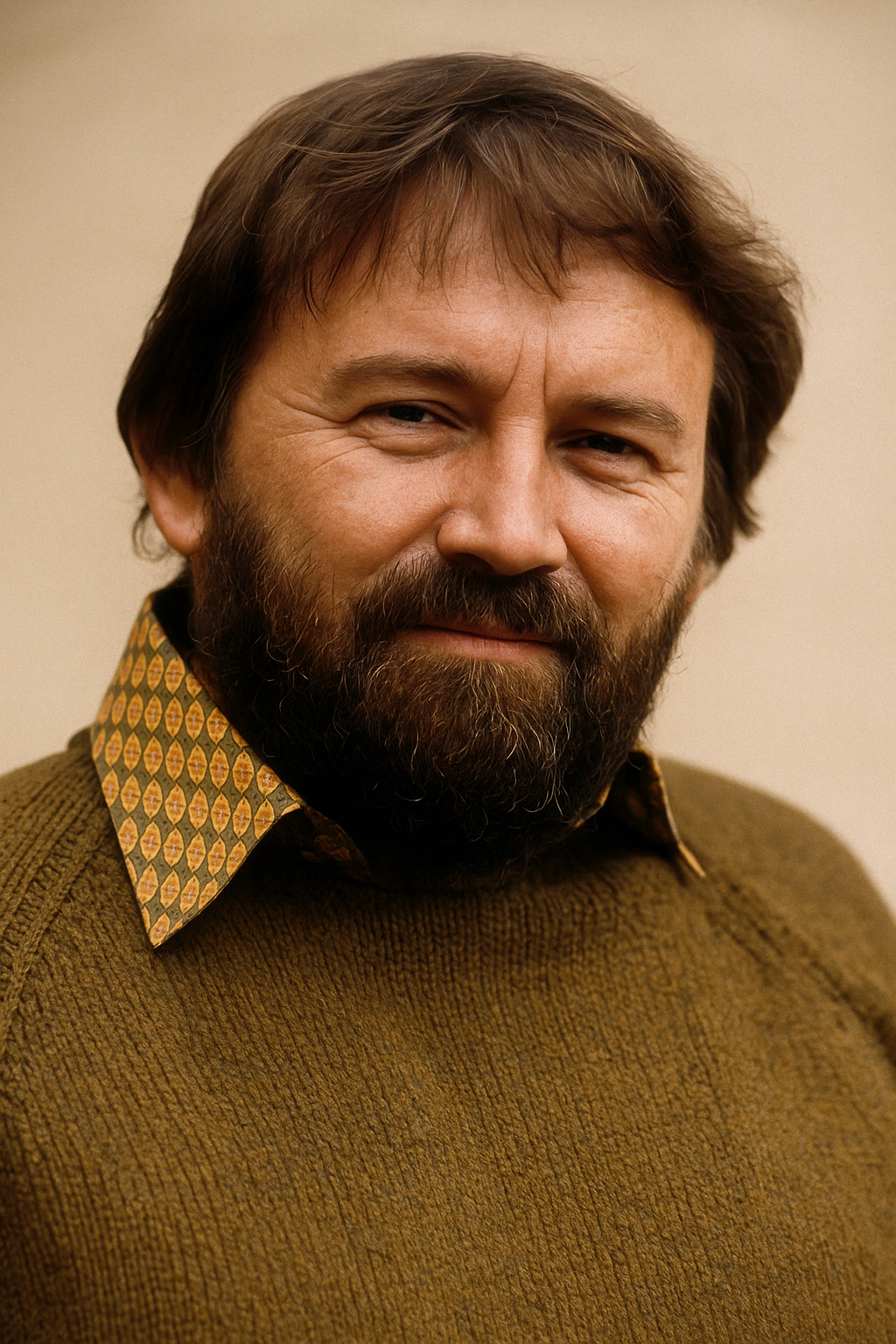
| 16 Quotes | |
| Born as | John Robert Fowles |
| Occup. | Writer |
| From | England |
| Born | March 31, 1926 Leigh-on-Sea, Essex, England |
| Died | November 5, 2005 Lyme Regis, Dorset, England |
| Aged | 79 years |
| Cite | |
Citation Formats
APA Style (7th ed.)
John fowles biography, facts and quotes. (2026, March 1). FixQuotes. https://fixquotes.com/authors/john-fowles/
Chicago Style
"John Fowles biography, facts and quotes." FixQuotes. March 1, 2026. https://fixquotes.com/authors/john-fowles/.
MLA Style (9th ed.)
"John Fowles biography, facts and quotes." FixQuotes, 1 Mar. 2026, https://fixquotes.com/authors/john-fowles/. Accessed 5 Mar. 2026.
Early Life and Background
John Robert Fowles was born on 1926-03-31 in Leigh-on-Sea, Essex, a coastline of salt wind, sea walls, and suburban respectability that would later reappear, transfigured, in his sense of England as both a physical landscape and a moral weather. He grew up between the afterglow of the Great War and the tightening shadows that led to the Second, in a household shaped by conventional ambitions and the quiet pressures of class. The young Fowles absorbed the English habit of emotional reticence - the polished surface of manners - while privately developing an appetite for intensity, for the hidden life beneath what a community permits itself to say.
World War II arrived during his adolescence as a massive national interruption, and it left him with an adult awareness of how quickly institutions demand obedience and how easily private conscience can be bullied by public necessity. That friction - between the social self and the inward self - became one of his lifelong engines. Even before he chose writing as a vocation, he cultivated a writerly stance: observant, skeptical, and hungry for experiences that would crack open the narrowness he associated with English conformity.
Education and Formative Influences
Fowles attended Bedford School, then served in the Royal Marines during the war years, an experience that sharpened his distrust of authority and intensified his need for personal autonomy. He read French at the University of Edinburgh and later at New College, Oxford, where existentialism and modern French literature offered an intellectual language for what he already felt: that freedom is both essential and terrifying, and that identity is not given but chosen. Teaching posts in France and on the Greek island of Spetses provided formative encounters with Mediterranean light, myth, and erotic candor - contrasts to postwar Britain that fed his imagination and helped crystallize the settings and tensions that would surface in his early fiction.
Career, Major Works, and Turning Points
After returning to England, Fowles taught at a London school while writing his first major novels, and in 1963 he broke through with The Collector, a psychologically acute duel between captor and captive that announced his preoccupation with power, desire, and the ethics of possession. The success enabled him to live as a full-time writer, much of it based in Lyme Regis, Dorset, whose fossils, cliffs, and Victorian aura became central to The French Lieutenant's Woman (1969), his most influential work - a daring, self-aware historical novel that tests the limits of storytelling and choice. He broadened his range with The Magus (revised 1977), a labyrinth of deception and self-discovery rooted in his Greek experience; the story collection The Ebony Tower (1974); Daniel Martin (1977), a large-scale meditation on art, England, and middle age; and later novels such as Mantissa (1982) and A Maggot (1985). Across these turning points, he kept returning to the novel as a moral laboratory: a place to stage freedom, to dramatize manipulation, and to ask what it costs to become fully oneself.
Philosophy, Style, and Themes
Fowles wrote from a conviction that fiction is not escape but a parallel reality where the self can be tested. “There are many reasons why novelists write, but they all have one thing in common - a need to create an alternative world”. That alternative world, in his hands, is rarely comforting: it is designed to unsettle complacency and expose the reader to the pressures that shape choice. His narrators frequently step forward to remind us that plots are traps as well as pleasures, that authority can hide inside a sentence, and that the writer who seems to offer certainty may actually be another kind of magician. The result is a style that braids psychological realism with gamesmanship, mixing Victorian pastiche, contemporary introspection, and philosophical challenge.
At the core of his inner life was a fierce respect for individual responsibility, allied to a suspicion of any system - political, romantic, or aesthetic - that promises final answers. “The most important questions in life can never be answered by anyone except oneself”. This insistence on self-authorship shapes his recurring dramas: characters placed inside elaborate scenarios that tempt them to surrender agency, then forced to confront what they have colluded in. His erotic themes are similarly unsentimental, treating desire as both a doorway to authenticity and a mechanism of control; he captured the cruel loop of craving with the observation, “Most marriages recognize this paradox: Passion destroys passion; we want what puts an end to wanting what we want”. Again and again, Fowles returns to the fulcrum moment when a person must decide whether to live as an object in someone else's story or as the maker of their own.
Legacy and Influence
Fowles died on 2005-11-05 in England, leaving a body of work that helped redefine what the modern British novel could do: converse with its own artifice, raid the past without being imprisoned by it, and treat freedom as a lived ethical problem rather than a slogan. The French Lieutenant's Woman became a touchstone for postmodern historical fiction, while The Magus and The Collector remain enduring studies of manipulation and self-deception. His lasting influence lies less in any single technique than in the seriousness with which he treated the reader: as a moral participant, not a consumer, invited into an "alternative world" where the price of curiosity is self-knowledge.
Our collection contains 16 quotes written by John, under the main topics: Ethics & Morality - Wisdom - Sarcastic - Nature - Writing.
Other people related to John: Karel Reisz (Director)
Frequently Asked Questions
- John Fowles famous works: The French Lieutenant's Woman; The Magus; The Collector.
- John Fowles influenced by: Sartre, Camus, Thomas Hardy, Victorian fiction, French literature, Greek myth.
- John Fowles movies: Adaptations: The Collector (1965), The Magus (1968), The French Lieutenant's Woman (1981); TV: The Ebony Tower (1984).
- John Fowles wife: Married Elizabeth Christy (1954–1990); later married Sarah Smith (1998).
- John Fowles young: Raised in Leigh-on-Sea, Essex; schooled at Bedford; studied French at Oxford; trained with the Royal Marines; taught on Spetses, Greece.
- John Fowles books: The Collector; The Magus; The French Lieutenant's Woman; The Ebony Tower; Daniel Martin; Mantissa; A Maggot; The Aristos (essays).
- How old was John Fowles? He became 79 years old
Source / external links