
John Fredriksen Biography Quotes 10 Report mistakes
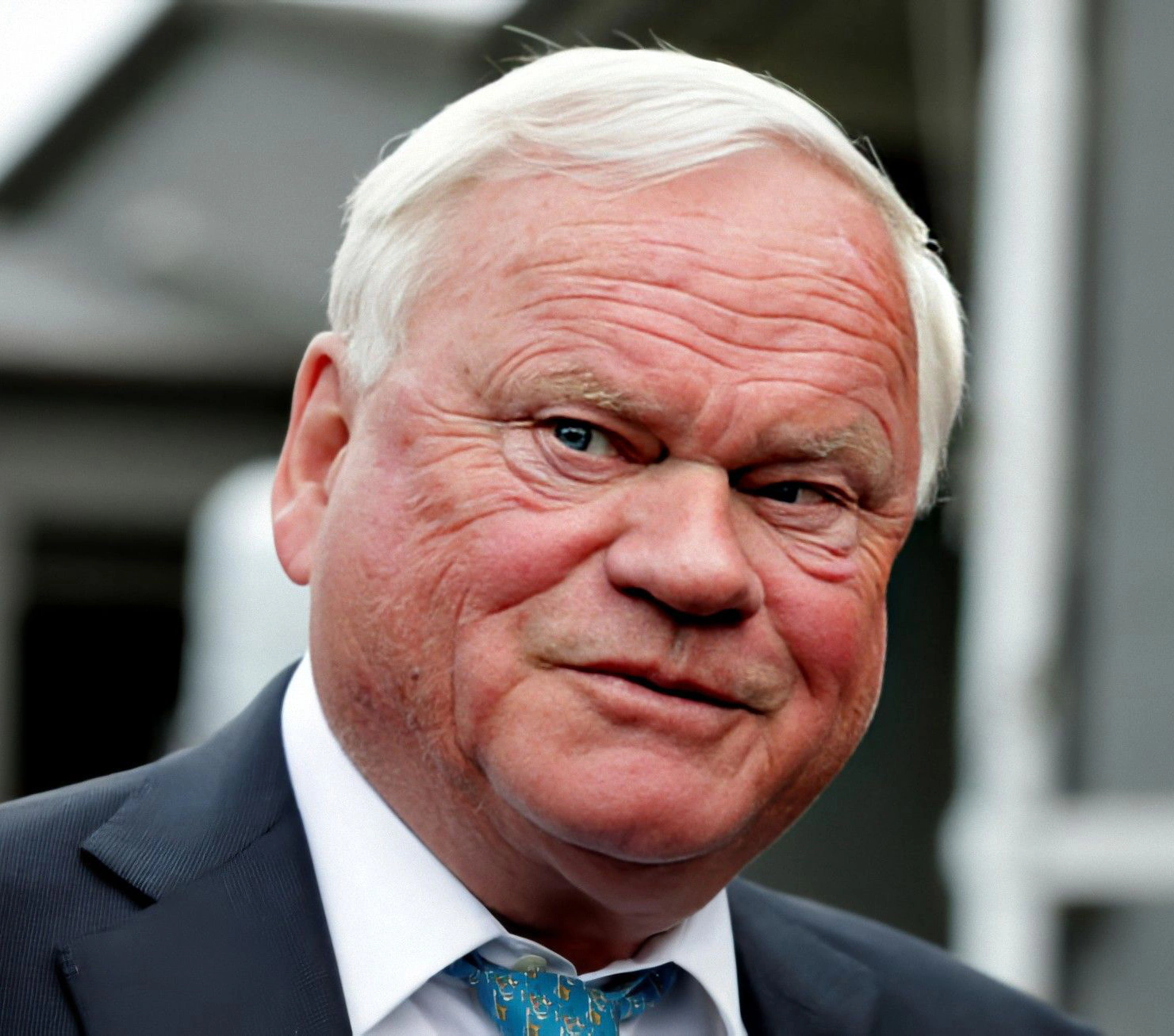
| 10 Quotes | |
| Occup. | Businessman |
| From | Norway |
| Born | May 10, 1944 Oslo, Norway |
| Age | 81 years |
| Cite | |
Citation Formats
APA Style (7th ed.)
John fredriksen biography, facts and quotes. (2026, February 11). FixQuotes. https://fixquotes.com/authors/john-fredriksen/
Chicago Style
"John Fredriksen biography, facts and quotes." FixQuotes. February 11, 2026. https://fixquotes.com/authors/john-fredriksen/.
MLA Style (9th ed.)
"John Fredriksen biography, facts and quotes." FixQuotes, 11 Feb. 2026, https://fixquotes.com/authors/john-fredriksen/. Accessed 6 Mar. 2026.
Early Life and Background
John Fredriksen was born on May 10, 1944, in Norway, into a country still emerging from German occupation and rebuilding its merchant fleet and industrial base. That postwar maritime atmosphere mattered: Norway was a small nation with a large seafaring footprint, where shipping was not a glamorous abstraction but a practical language of jobs, risk, and foreign exchange. In later decades Fredriksen would embody a specifically late-20th-century variant of the Norwegian maritime archetype - outward-facing, unsentimental, and intensely attuned to cycles.He came of age during the long European recovery and the early boom years that preceded the oil shocks of the 1970s. Shipping fortunes in those years could be made quickly and lost just as fast, and the industry rewarded people who could read freight rates like weather. Fredriksen's biography is often told as a saga of audacity and reinvention, but at its core sits a deeper psychological through-line: a willingness to treat volatility as a working condition rather than a threat, and to build a life where mobility - of capital, citizenship, and ships - was a form of leverage.
Education and Formative Influences
Public details about Fredriksen's formal schooling are limited compared with the visibility of his later corporate life, but his formative education was plainly experiential - learned in port cities, in chartering rooms, and through the unforgiving arithmetic of leverage and liquidity. He entered business in an era when information traveled by telex and relationships mattered as much as balance sheets, and he absorbed the merchant-marine lesson that timing and counterparties can decide outcomes as decisively as engineering. The broader intellectual influence was the rise of globalized commodity transport and the deregulated capital flows of the late 20th century, conditions that turned shipping into a financial instrument as much as a logistics service.Career, Major Works, and Turning Points
Fredriksen built his reputation as a shipping magnate by expanding aggressively through tanker markets and then institutionalizing that expansion through a web of listed and private companies, with Frontline emerging as a flagship name in crude-oil transport and a barometer of tanker-cycle strategy. As the world economy whipsawed through oil crises, recessions, and commodity super-cycles, he repeatedly positioned to buy tonnage or restructure fleets when others were forced sellers, then harvest returns when rates normalized. Over time his sphere broadened beyond pure shipping into offshore drilling and energy-adjacent assets, most notably through Seadrill, reflecting the late-1990s and 2000s belief that deepwater and high-spec rigs would command durable premiums - a bet complicated later by collapses in oil prices and the capital intensity of modern offshore fleets. A key turning point in his public story was his relocation to London and his cosmopolitan corporate posture: it signaled a businessman less anchored to national sentiment than to global capital markets, and it made him emblematic of a new class of European industrialists who treated geography as a variable.Philosophy, Style, and Themes
Fredriksen's style is often described as hard-edged and pragmatic, but it is more precise to call it cycle-literate. He treats markets as living systems with recurrent manias and panics, and he constructs organizations that can survive the down-cycle long enough to exploit it. The emotional discipline this requires is a defining feature of his inner life as a businessman: detachment from applause, tolerance for being unpopular, and a bias toward decisive action when uncertainty is maximal. That psychology aligns with his insistence that “I've learned that you can't make everyone happy, but as long as you do the right thing for your business, you'll be successful”. The sentence reads less like bravado than self-protection - a justification for choices that inevitably produce winners and losers in leveraged industries.His themes recur across shipping and offshore: calculated risk, speed, and an almost engineering-like focus on execution. He frames ambition not as a moral posture but as a process of positioning - buying assets when they are mispriced, financing them creatively, and exiting before complacency sets in. That is the logic behind “Risk-taking is essential in business, but it has to be calculated risk-taking”. , a line that reveals a mind allergic to both timidity and gambling. And when he says, “In business, it's important to always be one step ahead of the competition”. , the emphasis is on temporal advantage - being early in ordering, early in scrapping, early in refinancing - rather than on bigness for its own sake. In the Fredriksen worldview, the edge is not optimism; it is preparedness, liquidity, and the nerve to act before consensus forms.
Legacy and Influence
Fredriksen's enduring influence lies in how he helped redefine modern shipping and offshore as capital-markets businesses, where fleet strategy, corporate structure, and timing can matter as much as seamanship. Admirers see a builder who professionalized scale and used public listings to fund expansion; critics see a hard operator emblematic of shareholder-first capitalism and the human costs of restructuring. Either way, he stands as a case study in late-20th- and early-21st-century globalization: a Norwegian-born magnate operating from London, deploying mobile capital into mobile assets, and demonstrating - for better and worse - how the rhythms of energy and trade can shape not only corporate fortunes but the temperament of the people who ride those rhythms.Our collection contains 10 quotes written by John, under the main topics: Motivational - Work Ethic - Success - Vision & Strategy - Perseverance.
Frequently Asked Questions
- John Fredriksen Forbes: John Fredriksen is frequently listed on Forbes as one of the wealthiest individuals in the world, notably in the shipping industry.
- John Fredriksen biography: John Fredriksen is a Norwegian-born shipping magnate, known for building a global business empire primarily in oil and shipping.
- Fredriksen Group: The Fredriksen Group is a conglomerate of companies involved in shipping, offshore drilling, and marine services, owned by John Fredriksen.
- John Fredriksen house: John Fredriksen reportedly owns properties in several locations, including London and Cyprus.
- John Fredriksen family office: John Fredriksen's family office is associated with the Fredriksen Group, managing his investments.
- John Fredriksen wife: John Fredriksen was married to Inger Astrup Fredriksen, who passed away in 2006.
- John Fredriksen yacht: John Fredriksen owns a yacht named 'The Lady Christine', a luxurious vessel.
- John Fredriksen daughters: John Fredriksen has two daughters, Kathrine and Cecilie Fredriksen.
- How old is John Fredriksen? He is 81 years old
Source / external links