
John Galsworthy Biography Quotes 13 Report mistakes
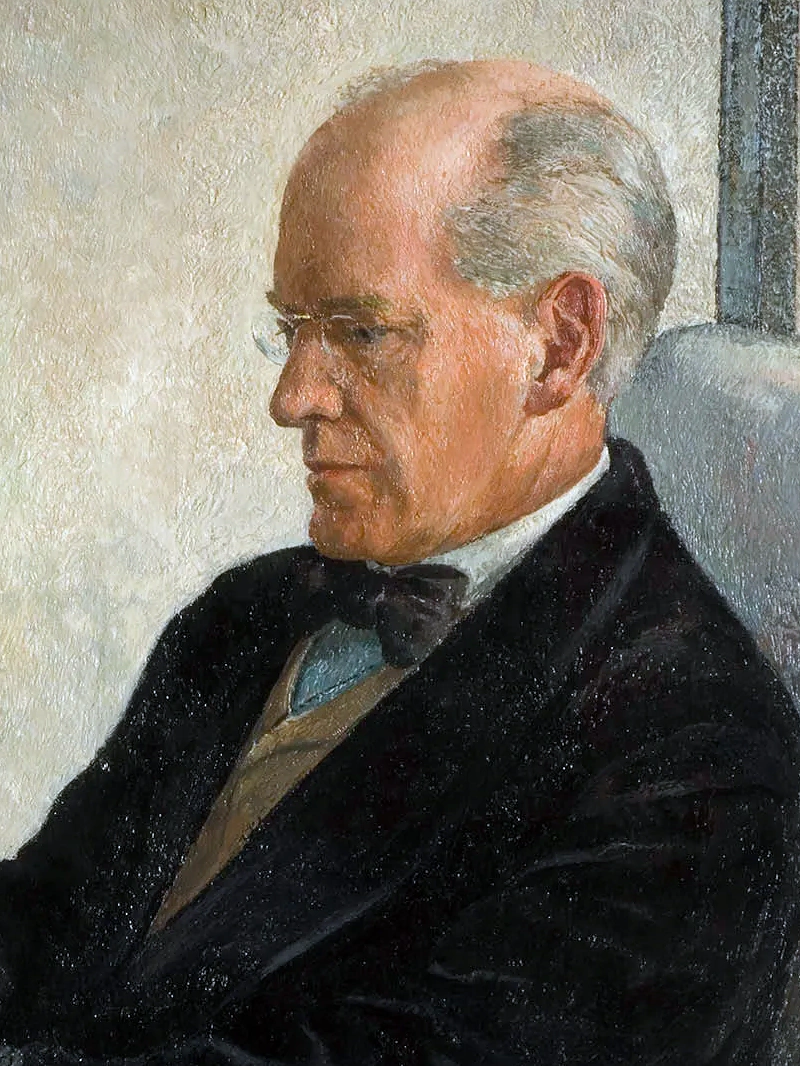
Attr: Britannica
| 13 Quotes | |
| Occup. | Author |
| From | England |
| Born | August 14, 1867 |
| Died | January 31, 1933 |
| Aged | 65 years |
| Cite | |
Citation Formats
APA Style (7th ed.)
John galsworthy biography, facts and quotes. (2026, February 11). FixQuotes. https://fixquotes.com/authors/john-galsworthy/
Chicago Style
"John Galsworthy biography, facts and quotes." FixQuotes. February 11, 2026. https://fixquotes.com/authors/john-galsworthy/.
MLA Style (9th ed.)
"John Galsworthy biography, facts and quotes." FixQuotes, 11 Feb. 2026, https://fixquotes.com/authors/john-galsworthy/. Accessed 26 Mar. 2026.
Early Life and Background
John Galsworthy was born on August 14, 1867, in Kingston Hill, Surrey, into the comfortable world of the English upper middle class - a milieu of property, professional security, and quiet assumptions about rank. His father, John Galsworthy, was a solicitor with substantial means; the household moved between London and the Home Counties, close enough to the City to profit from its rhythms but far enough to preserve the manners of the suburbs and the country. The late-Victorian years of his boyhood were marked by a public faith in progress and empire, and a private reliance on inheritance and respectability - precisely the blend he would later anatomize with surgical patience.The central emotional pressure of his early life came from inside that respectable shell. He fell in love with Ada Nemesis Pearson, the wife of his cousin Arthur Galsworthy. The affair grew slowly, out of proximity and shared temperament, but it set him against family loyalty and social code, and it did not resolve quickly: Ada remained married for years before she and John could be together. The long concealment trained him in the double vision that would define his art - sympathy without sentimentality, and a sense that the greatest dramas occur behind drawn curtains.
Education and Formative Influences
He was educated at Harrow School and New College, Oxford, then trained for the law at Lincoln's Inn, though he never became a practicing barrister. Travel and reading did more to shape him than chambers did: on sea voyages and in continental cities he began to watch class and nationality as systems rather than decorations. He admired the realism of Turgenev and Tolstoy, and responded to the social conscience of late-19th-century European fiction. By the 1890s he was writing seriously, initially publishing under the name John Sinjohn, as if testing how far he could step away from the family name before claiming it.Career, Major Works, and Turning Points
Galsworthy turned decisively to literature in the early 1900s, and his major public identity arrived with The Man of Property (1906), the opening novel of what became The Forsyte Saga, later expanded by In Chancery (1920), To Let (1921), and interludes, and followed by A Modern Comedy (1929) and End of the Chapter (1934, posthumous). He wrote plays with a reformist edge, notably Strife (1909) on labor conflict and Justice (1910) on the cruelty of the penal system - a work credited with helping shift opinion toward prison reform. During and after World War I he served as a moral commentator rather than a propagandist, insisting on humane treatment for social casualties at home as well as abroad. In 1932 he received the Nobel Prize in Literature, honored for a body of work that made the English propertied classes legible to themselves, and he died in London on January 31, 1933.Philosophy, Style, and Themes
His fiction is powered by an ethical realism: the belief that institutions are made of habits, and habits are made of daily choices. The Forsytes are not monsters but embodiments of a civilization where ownership passes for virtue, and where feeling must be translated into assets or etiquette to be admissible. Galsworthy understood how moral certainty can be purchased with distance, and he warned against it in the compact cynicism of “Idealism increases in direct proportion to one's distance from the problem”. That line captures his method: he repeatedly moves the camera close to consequences - the trapped wife, the ruined clerk, the aging parent, the worker with no leverage - until the reader can no longer keep politics at the level of abstract principle.Stylistically he favored clarity, irony, and accumulating detail over rhetorical fireworks. He had a journalist's ear for public noise and a novelist's patience with private self-deception; hence his dislike of spectacle masquerading as truth: “Headlines twice the size of the events”. Yet he was not a purely disenchanted observer. His work returns, stubbornly, to love as the one force that embarrasses property and outlives social bookkeeping - in Irene's silent resistance, in Soames's hunger to possess what cannot be owned, and in younger generations trying to live past inherited codes. The assertion “Love has no age, no limit; and no death”. reads in his world less like comfort than like diagnosis: love persists, but it does not guarantee justice, and it can be both liberation and lifelong wound.
Legacy and Influence
Galsworthy's enduring influence lies in how he made the English class system visible as psychology - a set of instincts about security, taste, and entitlement that reproduces itself even when individuals wish to be kind. The Forsyte books became a template for the modern family saga, while Justice helped demonstrate that serious drama could change public conversation. In later decades critics sometimes faulted his restraint or his moral steadiness, yet his best work remains a record of an era shifting from Victorian certainty to modern doubt, rendered with compassion for persons and a hard eye for systems. His characters endure because they are not merely of their time: they are recognizable wherever possession competes with tenderness, and where respectability demands that people lie politely about what they want most.Our collection contains 13 quotes written by John, under the main topics: Witty One-Liners - Ethics & Morality - Wisdom - Love - Leadership.
Other people related to John: Susan Hampshire (Actress)
John Galsworthy Famous Works
- 1928 Swan Song (Novel)
- 1926 The Silver Spoon (Novel)
- 1924 The White Monkey (Novel)
- 1922 The Forsyte Saga (Collection)
- 1922 Loyalties (Play)
- 1921 To Let (Novel)
- 1920 In Chancery (Novel)
- 1920 The Skin Game (Play)
- 1918 Indian Summer of a Forsyte (Novella)
- 1910 Justice (Play)
- 1909 Strife (Play)
- 1906 The Silver Box (Play)
- 1906 The Man of Property (Novel)
- 1904 The Island Pharisees (Novel)