
John Gotti Biography Quotes 4 Report mistakes
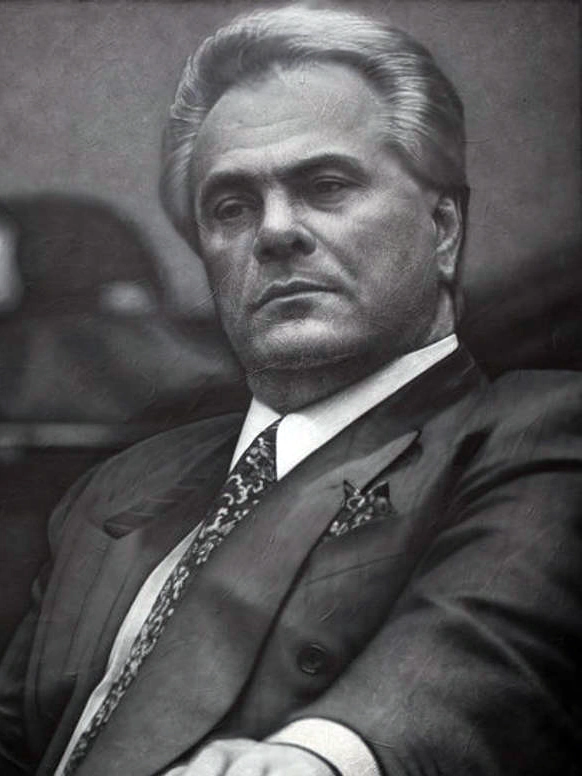
| 4 Quotes | |
| Occup. | Criminal |
| From | USA |
| Born | October 27, 1940 |
| Died | June 10, 2002 |
| Aged | 61 years |
| Cite | |
Citation Formats
APA Style (7th ed.)
John gotti biography, facts and quotes. (2026, February 11). FixQuotes. https://fixquotes.com/authors/john-gotti/
Chicago Style
"John Gotti biography, facts and quotes." FixQuotes. February 11, 2026. https://fixquotes.com/authors/john-gotti/.
MLA Style (9th ed.)
"John Gotti biography, facts and quotes." FixQuotes, 11 Feb. 2026, https://fixquotes.com/authors/john-gotti/. Accessed 6 Mar. 2026.
Early Life
John Joseph Gotti Jr. was born on October 27, 1940, in the Bronx, New York, and grew up in poverty in Brooklyn as one of many children in a large family. He left school as a teenager and gravitated to street gangs in East New York, developing a reputation for toughness and a knack for organizing petty rackets. In Ozone Park he attached himself to the orbit of the Gambino crime family through Carmine Fatico, whose crew operated out of the Bergin Hunt and Fish Club. There he forged bonds with lifelong associates, including Angelo Ruggiero and his own brother Gene Gotti, and began making money through hijacking, loan-sharking, and gambling around Idlewild (later JFK) Airport.Entry into Organized Crime
By the 1960s Gotti was a trusted soldier for the Gambino family. He served prison time after a 1968 federal hijacking conviction. Upon release he returned to the Bergin crew and, in 1973, participated with Ruggiero and Ralph Galione in the killing of James McBratney, who had been involved in the kidnapping of a relative of boss Carlo Gambino. Arrested and prosecuted, Gotti pleaded to a reduced count and served several years. Paroled in 1977, he was soon inducted as a made man under underboss Aniello Dellacroce, a mentor who favored Gotti's street instincts and loyalty. With Carmine Fatico aging and facing his own legal troubles, Gotti became acting capo of the Bergin crew and then took command of the crew outright.Rise in the Gambino Family
Through the late 1970s and early 1980s, Gotti's crew grew lucrative and feared. He cultivated Dellacroce while bristling under the leadership of boss Paul Castellano, whose businesslike style clashed with Gotti's street orientation. Law enforcement pressure increased when FBI bugs captured Angelo Ruggiero discussing drug trafficking, implicating members of Gotti's circle and straining relations with Castellano. Despite the internal friction, Gotti consolidated influence in Queens and Brooklyn and extended his reach to construction, trucking, and union rackets.The Castellano Assassination and Seizure of Power
In December 1985, Dellacroce died, removing Gotti's most powerful patron and intensifying the family's succession crisis. Two weeks later, Paul Castellano and his driver-bodyguard Thomas Bilotti were gunned down outside Sparks Steak House in Manhattan. The hit, carried out with the involvement of trusted lieutenants such as Frank DeCicco and Salvatore "Sammy the Bull" Gravano, cleared the path for Gotti to seize the top spot. He was soon acknowledged as boss of the Gambino family, with DeCicco serving as underboss until DeCicco was killed by a car bomb in 1986. Joseph "Joe Piney" Armone and later Gravano rose in the hierarchy as Gotti reshaped the family around his loyalists, including consigliere Frank Locascio.The Dapper Don and Teflon Don
Gotti made the Ravenite Social Club in Little Italy his headquarters, holding nightly meetings and projecting a media-savvy image. Expensive suits, coiffed hair, and sidewalk interviews earned him the nickname "the Dapper Don". He also became known as the "Teflon Don" after a string of failed prosecutions. In 1986, an ambitious racketeering case led by federal prosecutor Diane Giacalone collapsed in acquittals and mistrials, while Gotti's defense lawyer Bruce Cutler became a combative public face for the boss. Newspapers chronicled his appearances, and reporters such as John Miller conducted memorable on-the-street interviews. Gotti's celebrity complicated life inside the Mafia, where discretion was prized, but it also cemented his hold over parts of the Gambino family at the height of his power.The FBI Bugs and 1992 Conviction
Behind the scenes, the FBI relentlessly targeted Gotti's inner circle. Agents placed surveillance devices at the Ravenite and, crucially, in an upstairs apartment where Gotti held private conversations. Those recordings, along with testimony from insiders, formed the backbone of a sweeping racketeering indictment in 1990 against Gotti, Gravano, and Locascio. With Cutler and other longtime defense lawyers disqualified for potential conflicts, Gotti faced trial in 1992 in the Eastern District of New York before Judge I. Leo Glasser. The government's team, led by U.S. Attorney Andrew Maloney's office and prosecutor John Gleeson, unveiled tapes in which Gotti discussed family business and criticized Gravano. In a dramatic turn, Gravano flipped, admitted involvement in numerous murders, and testified against his boss. The jury convicted Gotti of racketeering and multiple murders, and he received life imprisonment without the possibility of parole.Prison Years and Death
Gotti served his sentence primarily at the federal penitentiary in Marion, Illinois, under highly restrictive conditions. Even from prison, he remained a symbolic figure, while the family leadership passed to his brother Peter Gotti and, for a period, to his son John A. Gotti in an acting capacity. Health problems emerged in the late 1990s when he was diagnosed with throat cancer. After surgery and a brief return to prison, his condition worsened. He died on June 10, 2002, at the U.S. Medical Center for Federal Prisoners in Springfield, Missouri, and was buried at St. John Cemetery in Queens.Family and Inner Circle
Gotti married Victoria DiGiorgio in 1962, and they raised their family in Howard Beach, Queens. Their children included Angel, Victoria, John A. (often called Junior), and Frank. The family suffered a tragedy in 1980 when young Frank was killed in a traffic accident; the driver, John Favara, disappeared months later, an event widely believed to be a retaliatory underworld hit, though direct responsibility was never proven in court. Among Gotti's siblings, Gene Gotti became a made man and key lieutenant, while Peter Gotti later served as the family's boss. Associates such as Angelo Ruggiero, Joseph Armone, Robert DiBernardo, and Willie Boy Johnson intersected with Gotti's story in ways that drew sustained scrutiny from law enforcement and often ended in prison, death, or cooperation with authorities.Public Image and Legacy
Gotti's public persona reshaped how Americans encountered the Mafia. His tailored appearance and swagger appealed to tabloid culture, yet the coverage also galvanized a new era of aggressive federal prosecutions under the Racketeer Influenced and Corrupt Organizations Act. Figures like Rudolph Giuliani had already weakened the Commission's authority through landmark cases, and Gotti's reign, followed by his high-profile conviction, accelerated the unraveling of traditional mob structures. The Ravenite tapes, the flip of Gravano, and the meticulous work of FBI squads and federal prosecutors set a template for later organized-crime cases.Gotti's life remains a study in contrasts: extreme violence and internal discipline alongside showmanship and public defiance; fierce loyalty to his crew paired with betrayals that surfaced under pressure. His rise from Brooklyn street gangs to the head of America's most powerful crime family, and his fall in a courtroom where his own words helped convict him, mark him as one of the most consequential figures in the history of organized crime in the United States.
Our collection contains 4 quotes written by John, under the main topics: Witty One-Liners - Justice - Honesty & Integrity.