
John Hancock Biography Quotes 1 Report mistakes
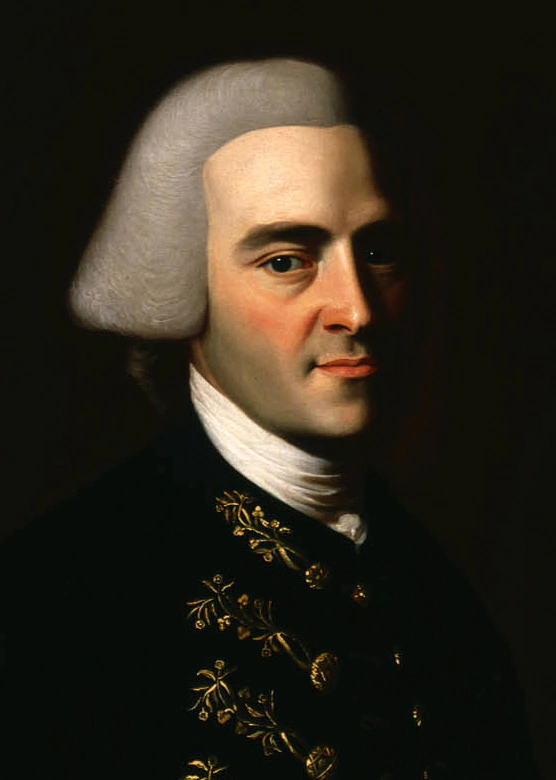
Attr: John Singleton Copley
| 1 Quotes | |
| Occup. | Politician |
| From | USA |
| Born | January 23, 1737 Braintree, Massachusetts |
| Died | October 8, 1793 Quincy, Massachusetts |
| Cause | Complications from gout |
| Aged | 56 years |
| Cite | |
Citation Formats
APA Style (7th ed.)
John hancock biography, facts and quotes. (2026, February 11). FixQuotes. https://fixquotes.com/authors/john-hancock/
Chicago Style
"John Hancock biography, facts and quotes." FixQuotes. February 11, 2026. https://fixquotes.com/authors/john-hancock/.
MLA Style (9th ed.)
"John Hancock biography, facts and quotes." FixQuotes, 11 Feb. 2026, https://fixquotes.com/authors/john-hancock/. Accessed 12 Feb. 2026.
Early Life and Education
John Hancock was born in 1737 in Braintree, Massachusetts, a town south of Boston that later became Quincy. His father, a Congregational minister, died when John was still a boy, and he was taken into the Boston household of his uncle, Thomas Hancock, one of New England's wealthiest merchants, and his aunt, Lydia Hancock. In this prosperous and disciplined environment, he received both formal schooling and a practical apprenticeship in commerce. Hancock attended Harvard College, graduating in the mid-1750s, and then returned to his uncle's countinghouse, where he learned the intricacies of Atlantic trade, shipping, finance, and the networked relationships that tied Boston to London and the Caribbean.Merchant Wealth and Public Emergence
When Thomas Hancock died in 1764, John inherited the House of Hancock and quickly became one of the richest men in Massachusetts. Standing at the intersection of commerce and civic life, he took on public duties in Boston. He served as a selectman and soon won election to the Massachusetts House of Representatives, where he worked alongside Samuel Adams, whose organizational skill and tireless advocacy shaped the town's resistance to imperial policy. Hancock's wealth, generosity to local charities, and readiness to shoulder public expenses made him popular, while his elegance and taste for ceremony made him a conspicuous figure in Boston society.Resistance to Imperial Policy
Imperial reforms after the Seven Years' War put Hancock's trade under pressure and inflamed colonial politics. He supported nonimportation agreements against the Stamp Act and Townshend duties and became a leading voice in Boston town meetings. In 1768, British customs officers seized his sloop Liberty on suspicion of smuggling, sparking street unrest and a high-profile court case. John Adams helped represent him, and the case collapsed. The episode hardened opinion in Boston, already agitated by the writings of James Otis Jr. and the organizing of Samuel Adams, and set Hancock more firmly in the Patriot camp. Clashes between townspeople and British troops culminated in the Boston Massacre in 1770, and Hancock used his platform to memorialize the dead and sustain momentum for resistance.Revolutionary Leadership in Massachusetts
By 1774, as royal authority faltered under Governor Thomas Hutchinson and later General Thomas Gage, Massachusetts Patriots formed the Provincial Congress. Hancock, working closely with Samuel Adams, John Adams, Dr. Joseph Warren, and others, rose to the presidency of that extralegal body, coordinating militia preparations, securing supplies, and corresponding with sympathetic leaders in other colonies through committees of correspondence. In April 1775, Hancock and Samuel Adams were staying in Lexington when Paul Revere and William Dawes rode out to warn of an approaching British expedition. The skirmishes at Lexington and Concord that followed marked the outbreak of war, and Hancock soon left for Philadelphia as a delegate to the Continental Congress.President of the Continental Congress
Hancock assumed the presidency of the Second Continental Congress in May 1775, succeeding Peyton Randolph. In that role he presided over debates that transformed a protest movement into an organized war effort. Under his gavel, Congress raised Continental regiments, sought foreign aid, and appointed George Washington commander in chief. Hancock's correspondence with Washington, Benjamin Franklin, and other leaders reveals the burdens of coordinating military supply, finance, and diplomacy from a city under constant pressure. Though the presidency carried prestige more than executive power, Hancock's diligence, tact, and familiarity with public ceremony helped give the new national assembly coherence during its most precarious phase.Independence and Iconic Signature
In 1776, as Thomas Jefferson drafted and Congress revised the Declaration of Independence, Hancock managed the proceedings and the risks that followed. When the document was approved, he signed first in his capacity as president of Congress. The bold, sweeping form of his signature would become a lasting emblem of the Revolution, so much so that in American parlance a person's signature is still called a John Hancock. While legend embroidered this moment, the reality was already dramatic: to sign was to affirm a break with Britain and to assume the hazards of treason.Governor of Massachusetts
Hancock returned periodically to Massachusetts to oversee state matters and, after the adoption of a new constitution, he became the first governor of the Commonwealth in 1780. He worked with colleagues such as Robert Treat Paine and Elbridge Gerry to stabilize public credit, encourage commerce, and rebuild a war-battered economy. Chronic gout limited his mobility and sometimes his attendance, and in 1785 he resigned. During the interval, James Bowdoin governed through the turmoil of Shays' Rebellion. Hancock's popularity and conciliatory posture helped him return to office in 1787, and he favored clemency for many participants in the uprising, aiming to restore civic peace while maintaining order.Constitutional Ratification and National Politics
In 1788, Hancock presided over the Massachusetts convention called to consider the new federal Constitution. Many delegates supported ratification, while others were wary of centralized power. Working in tandem with Samuel Adams and in dialogue with strong national advocates such as Fisher Ames and cautious skeptics influenced by Elbridge Gerry's concerns, Hancock advanced a practical compromise: ratify the Constitution while recommending a slate of amendments to safeguard individual liberties. This approach, echoed by other states, helped pave the way for the federal Bill of Rights championed by figures like James Madison. Hancock's stature as a Revolutionary leader and state governor lent crucial weight to this settlement.Personal Life and Character
In 1775 Hancock married Dorothy (Dolly) Quincy, a member of a prominent Massachusetts family whose poise matched his own public polish. Their household in Boston and later in what became Quincy was a social center for visiting dignitaries and local allies, including John Adams and Abigail Adams when they were in Massachusetts, and military figures such as Henry Knox. The Hancocks suffered the loss of children in an era of high mortality, a grief shared by many contemporaries. Friends and adversaries alike remarked on Hancock's blend of ceremony and generosity: he was sometimes criticized for vanity and ambition, yet he regularly extended personal credit, covered public expenses at his own cost, and contributed to civic and charitable causes.Final Years and Legacy
Hancock served continuously as governor from 1787 until his death in 1793. His final years were marked by recurring bouts of gout but also by steady, pragmatic administration, attention to Massachusetts commerce from Boston Harbor to the interior, and loyal support for the new federal government established under the Constitution. He died in Boston and received an elaborate public funeral befitting his status as a principal Patriot of Massachusetts. He was laid to rest in the Granary Burying Ground, not far from Samuel Adams and Paul Revere.John Hancock's career bridged merchant wealth and republican statecraft. He moved from Boston countinghouse to the chair of the Continental Congress and the governor's office, helping to steer Massachusetts and the United States through revolution, independence, and constitutional founding. In the company of colleagues such as George Washington, Benjamin Franklin, Thomas Jefferson, Samuel Adams, John Adams, and many others, he played a central role in the drama of American nation-making. His name, written large in 1776, endures as a symbol of personal commitment to public liberty.
Our collection contains 1 quotes written by John, under the main topics: Leadership.
Other people related to John: William Hooper (Politician), Peter Oliver (Artist)
Source / external links