
John Hume Biography Quotes 28 Report mistakes
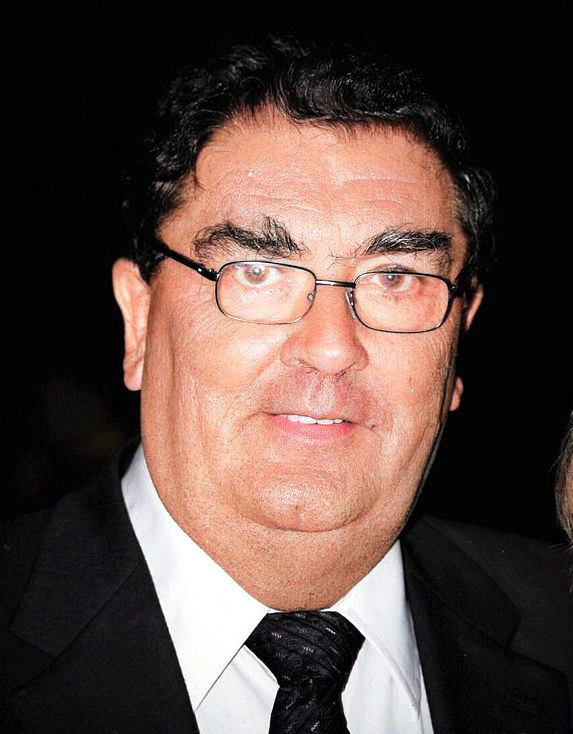
Attr: John Mathew Smith, CC BY-SA 2.0
| 28 Quotes | |
| Occup. | Politician |
| From | Ireland |
| Spouse | Patricia Hume |
| Born | January 18, 1937 Derry, Northern Ireland, United Kingdom |
| Age | 89 years |
| Cite | |
Citation Formats
APA Style (7th ed.)
John hume biography, facts and quotes. (2026, February 11). FixQuotes. https://fixquotes.com/authors/john-hume/
Chicago Style
"John Hume biography, facts and quotes." FixQuotes. February 11, 2026. https://fixquotes.com/authors/john-hume/.
MLA Style (9th ed.)
"John Hume biography, facts and quotes." FixQuotes, 11 Feb. 2026, https://fixquotes.com/authors/john-hume/. Accessed 6 Mar. 2026.
Early Life and Background
John Hume was born on January 18, 1937, in Derry/Londonderry, a walled city whose beauty masked a hard arithmetic of power: Unionist rule at Stormont, local government controlled through gerrymandering, and chronic Catholic underrepresentation in jobs and housing. He grew up in the Bogside, where working-class families lived close to one another and close to the border of possibility, and where the state was often encountered not as neutral administration but as a partisan force. His early life unfolded in the long aftershocks of partition, in a Northern Ireland that asked its Catholic minority to accept permanence without equality.Family, parish life, and the disciplined rhythms of a city shaped by factories and docks formed his sense of duty. Derry was also a place of civic memory - the Siege, the walls, the rituals of identity - and Hume learned early that history could be weaponized. The Northern Ireland he inherited offered few constitutional avenues for change, and that scarcity helped produce his defining trait: a stubborn belief that politics had to be re-engineered so that dignity did not depend on demographic victory.
Education and Formative Influences
Educated locally and trained as a teacher, Hume came of age as postwar Europe began to turn from nationalist catastrophe toward integration, planning, and social rights. His early professional life included community development and housing advocacy, experiences that exposed how discrimination functioned through paperwork, council decisions, and planning maps as much as through street confrontation. He read widely and treated ideas as practical tools - a habit that later allowed him to translate European models of interdependence into an Irish context, and to argue for change without romanticizing violence.Career, Major Works, and Turning Points
Hume emerged publicly in the 1960s as a leading figure in Northern Ireland's civil rights agitation, was elected to Parliament at Stormont and later to Westminster, and became a central architect of the Social Democratic and Labour Party (SDLP) from its founding in 1970, serving as leader from 1979 to 2001. He opposed paramilitarism while insisting that constitutional nationalism required credible pathways to self-determination and equality; that balance became his political signature. Over decades of talks and breakdowns - from Sunningdale through the Anglo-Irish Agreement to the peace process - his most consequential turning point was his sustained dialogue with Sinn Fein leader Gerry Adams in the early 1990s, a risky effort to draw republicans toward exclusively political methods. Those contacts, combined with parallel British-Irish diplomacy and American engagement, fed into the 1998 Good Friday Agreement, after which Hume shared the 1998 Nobel Peace Prize with David Trimble.Philosophy, Style, and Themes
Hume's inner life was governed by a moral impatience with humiliation and a strategic patience about how to end it. He rooted his politics in lived evidence, not abstract grievance: “I grew up in Derry, of course, and it was - Derry was the worst example of Northern Ireland's discrimination”. That sentence is less memoir than method - he treated discrimination as something measurable, correctable, and therefore politically indictable. He repeatedly framed Northern Irish civil rights as part of a broader democratic story: “The civil rights movement in the United States was about the same thing, about equality of treatment for all sections of the people, and that is precisely what our movement was about”. Psychologically, this comparison did two things at once: it dignified local protest by placing it in a universal register, and it signaled that reform, not revenge, was the proper horizon.His style was insistent, sometimes relentless, and rarely theatrical - a reformer's rhetoric, built from principles and procedures. He argued that peace required institutions engineered to prevent domination and to make identity safe, not triumphant: “In Northern Ireland, we should have institutions that respected the differences of the people and that gave no victory to either side”. Behind that formulation is his core belief that the conflict was not a clash of equally legitimate violence, but a contest between incompatible constitutional stories that needed a shared framework. He rejected ideological purity as a temptation that turned politics into moral exhibitionism, preferring negotiated reciprocity, European-style interdependence, and the idea that majorities can change - so legitimacy must be deeper than headcounts.
Legacy and Influence
Hume's enduring influence lies in how he helped shift Irish nationalism from romantic absolutism to constitutional design: consent, parity of esteem, and cross-border cooperation as practical instruments rather than slogans. The Good Friday Agreement bears his imprint in its architecture of shared institutions and dual identities, while his lifelong opposition to violence helped isolate the argument that bombs could "solve" constitutional questions. He left a template for peacemaking that is both ethical and technical: diagnose discrimination precisely, build inclusive structures, and keep talking when public certainty demands silence.Our collection contains 28 quotes written by John, under the main topics: Witty One-Liners - Freedom - Deep - Learning - Equality.
Other people related to John: Gerry Adams (Politician), Edward Heath (Leader), Bernadette Devlin (Politician), Martin McGuinness (Politician), Albert Reynolds (Politician)
Source / external links