
John Keats Biography Quotes 31 Report mistakes
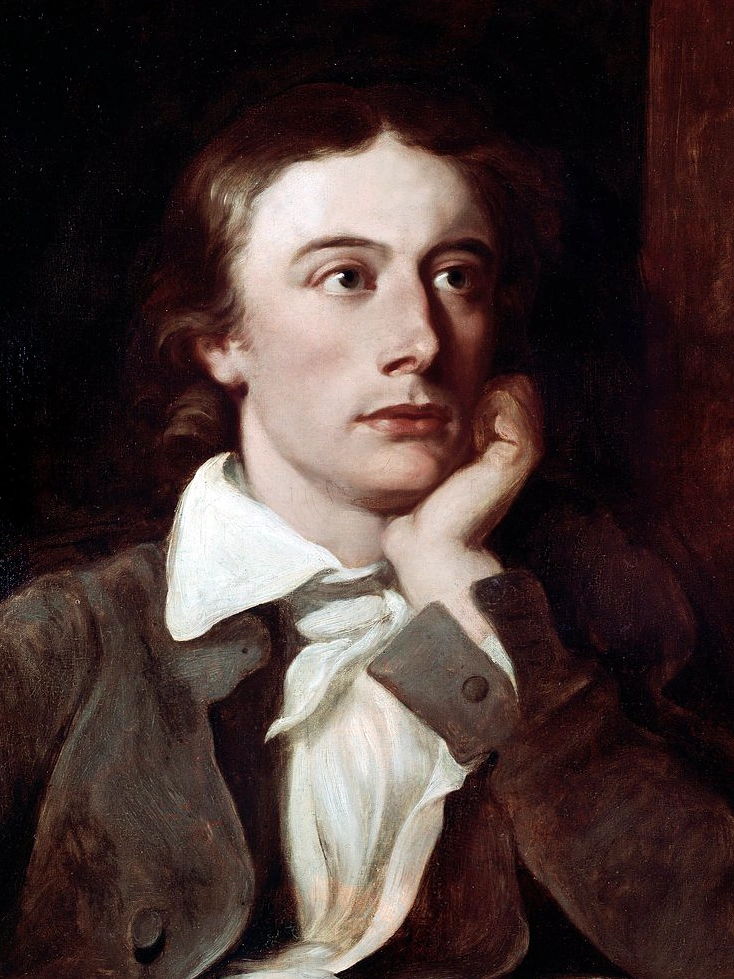
Attr: meisterdrucke.uk
| 31 Quotes | |
| Occup. | Poet |
| From | England |
| Born | October 31, 1795 Moorgate, London, England |
| Died | February 23, 1821 Rome, Italy |
| Cause | tuberculosis |
| Aged | 25 years |
| Cite | |
Citation Formats
APA Style (7th ed.)
John keats biography, facts and quotes. (2026, February 11). FixQuotes. https://fixquotes.com/authors/john-keats/
Chicago Style
"John Keats biography, facts and quotes." FixQuotes. February 11, 2026. https://fixquotes.com/authors/john-keats/.
MLA Style (9th ed.)
"John Keats biography, facts and quotes." FixQuotes, 11 Feb. 2026, https://fixquotes.com/authors/john-keats/. Accessed 6 Mar. 2026.
Early Life and Background
John Keats was born on 31 October 1795 in Moorgate, London, the eldest of Thomas Keats, a hostler who later managed the Swan and Hoop livery stable, and Frances Jennings Keats. His childhood sat at the seam between working-city pragmatism and the rising aspirations of a family trying to climb. London at the turn of the nineteenth century was loud with war news, trade, and class anxiety; Keats absorbed its energy early, but the stability beneath him proved brittle.In quick succession, loss became the atmosphere of his youth. His father died in 1804 after a fall from a horse, and his mother, worn by illness and circumstance, died of tuberculosis in 1810. Guardianship disputes followed, leaving the boy with affection but little security. These blows did not simply sadden him; they trained his alertness to fragility, a trait that later sharpened his attention to transient beauty and to the bodily costs of love, ambition, and art.
Education and Formative Influences
At John Clarke's school in Enfield, Keats moved from pugnacious boyhood to bookish intensity, aided by the headmaster John Clarke and the schoolmaster Charles Cowden Clarke, who introduced him to Spenser and the pleasures of sustained reading. In 1811 he was apprenticed to the surgeon Thomas Hammond at Edmonton, then studied at Guy's and St Thomas' hospitals, gaining a licentiate from the Society of Apothecaries in 1816. Anatomy, suffering, and the routines of urban medicine gave him an intimate education in the mortal body - knowledge that later made his sensuous poetry feel earned rather than decorative - even as literary friendships in London (notably with Leigh Hunt) drew him toward a different vocation.Career, Major Works, and Turning Points
Keats abandoned medicine for poetry in 1816-1817, publishing Poems (1817) and then the more ambitious Endymion (1818), whose luxuriance invited ridicule from hostile reviews in Blackwood's and the Quarterly. The sneers mattered less than the pressures converging behind them: his brother Tom's death from tuberculosis in 1818; his own exhausting walking tour of Scotland and the Lake District; and, crucially, his meeting with Fanny Brawne in 1818, which intensified his emotional life while his finances thinned. In 1819, during a burst of concentrated power, he wrote the great odes - "Ode to a Nightingale", "Ode on a Grecian Urn", "To Autumn", and others - alongside the ballad "La Belle Dame sans Merci" and the torso of Hyperion and The Fall of Hyperion. By early 1820, tuberculosis overtook him; he sailed for Rome with Joseph Severn and died there on 23 February 1821, aged twenty-five, as his 1820 volume Lamia, Isabella, The Eve of St Agnes, and Other Poems began to establish the magnitude of his achievement.Philosophy, Style, and Themes
Keats' inner life was defined by a rare combination of receptivity and will: a poet who could dissolve into sensation, yet measure himself against the highest standards. His letters show a mind distrustful of rigid systems and hungry for lived truth, insisting, “Nothing ever becomes real till it is experienced”. That conviction shaped his aesthetics of embodiment - the feel of ripening fruit, the ache of desire, the narcotic drift of song - as if perception itself were a moral act. At the same time, his ambition was unsentimental and explicit: “I would sooner fail than not be among the greatest”. The tension between surrender and striving animates his best work, where rapture is never far from self-scrutiny.His most distinctive concept, "Negative Capability", named the capacity to remain "in uncertainties, Mysteries, doubts" without reaching after premature certainty. This was not passivity but discipline: an acceptance that beauty and truth arrive through imaginative dwelling rather than argument. Accordingly, he grounded the poetic absolute in feeling and creative vision: “I am certain of nothing but the holiness of the heart's affections, and the truth of imagination”. The odes dramatize that creed as a series of tests - the nightingale's song against human transience, the urn's frozen perfection against lived time, autumn's plenitude against approaching loss - and the language itself enacts it, shifting from sumptuous description to philosophical pressure. Even his romance and Gothic pieces, from The Eve of St Agnes to Isabella, explore how desire makes a world, then breaks it, leaving the soul to learn from sweetness and pain alike.
Legacy and Influence
Keats' posthumous reputation rose rapidly as friends such as Shelley and Hunt framed him as a martyr to criticism, though the deeper cause was the poems' authority: a sensuous intelligence fused to metaphysical seriousness. Victorian readers embraced him, the Pre-Raphaelites borrowed his medieval color and erotic delicacy, and later poets found in him a model for lyric concentration and for honesty about doubt - from Tennyson and Yeats to modernists who admired his exacting ear. Today his letters are read alongside the poems as a record of artistic becoming, while the odes remain a touchstone for how to write beauty without naïveté - how to praise the world while admitting that the body, and the time it lives in, will not spare us.Our collection contains 31 quotes written by John, under the main topics: Motivational - Wisdom - Truth - Art - Love.
Other people related to John: Shelby Foote (Author), Amy Lowell (Poet), Andrew Motion (Poet), Dan Simmons (Author)
John Keats Famous Works
- 1820 Lamia (Poetry)
- 1819 The Eve of St. Agnes (Poetry)
- 1819 La Belle Dame sans Merci (Poetry)
- 1819 Ode on Indolence (Poetry)
- 1819 Ode to Psyche (Poetry)
- 1819 To Autumn (Poetry)
- 1819 Ode on Melancholy (Poetry)
- 1819 Ode on a Grecian Urn (Poetry)
- 1819 Ode to a Nightingale (Poetry)
- 1819 Bright Star (Poetry)
- 1819 The Fall of Hyperion: A Dream (Poetry)
- 1818 Hyperion (Poetry)
- 1818 The Human Seasons (Poetry)
- 1818 Isabella, or The Pot of Basil (Poetry)
- 1818 When I Have Fears that I may Cease to Be (Poetry)
- 1818 Endymion (Poetry)
- 1816 On First Looking into Chapman's Homer (Poetry)
- 1816 O Solitude! If I must with thee dwell (Poetry)
- 1816 Sleep and Poetry (Poetry)