
John Kricfalusi Biography Quotes 28 Report mistakes
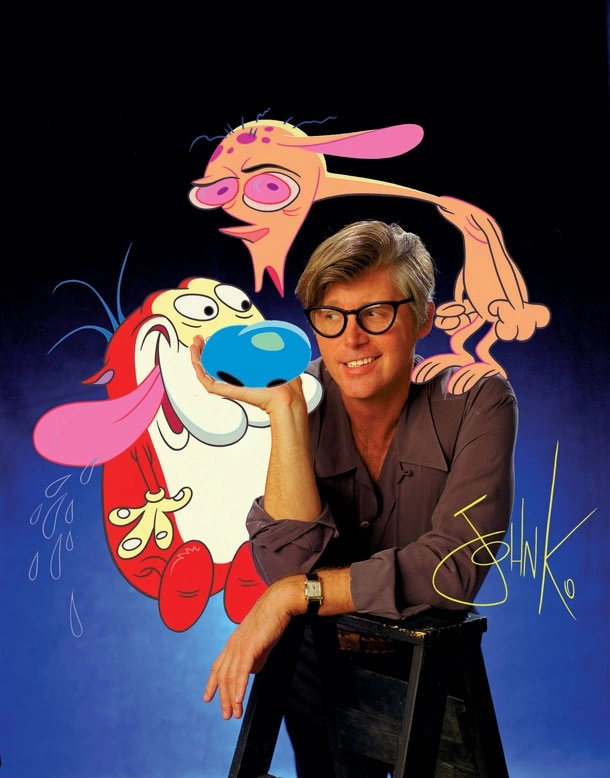
| 28 Quotes | |
| Occup. | Artist |
| From | Canada |
| Born | September 9, 1955 |
| Age | 70 years |
| Cite | |
Citation Formats
APA Style (7th ed.)
John kricfalusi biography, facts and quotes. (2026, February 11). FixQuotes. https://fixquotes.com/authors/john-kricfalusi/
Chicago Style
"John Kricfalusi biography, facts and quotes." FixQuotes. February 11, 2026. https://fixquotes.com/authors/john-kricfalusi/.
MLA Style (9th ed.)
"John Kricfalusi biography, facts and quotes." FixQuotes, 11 Feb. 2026, https://fixquotes.com/authors/john-kricfalusi/. Accessed 27 Mar. 2026.
Early Life and Background
John Kricfalusi was born September 9, 1955, in Montreal, Quebec, into a Canadian household shaped by postwar North American media and the steady hum of television. His early imagination formed in a period when reruns of classic theatrical cartoons and live-action comedy were easily accessible, and when the aesthetics of mid-century advertising - bold graphics, saturated colors, and stylized character design - still dominated the visual environment.He later lived in Ontario, including time in Ottawa, and grew up with an obsessive eye for how cartoons were built: poses, timing, mouth shapes, and the expressive elasticity of faces. Even before he entered professional animation, he developed a collector's relationship to culture - hoarding references, studying old films and animation, and internalizing the idea that entertainment could be both vulgar and formally sophisticated, a contradiction that would become central to his persona and his art.
Education and Formative Influences
Kricfalusi was largely self-taught as an artist and animator, learning less from formal schooling than from frame-by-frame study of earlier masters and the mechanics of commercial cartoon production. He drew heavily from the golden-age vocabulary of American theatrical animation (including the animation principles popularized by Disney and refined in studio systems at Warner Bros. and MGM), as well as from magazine illustration and mid-century design; this became a private curriculum in draftsmanship, staging, and comedic acceleration that positioned him against the flatter, cheaper look of much late-20th-century television animation.Career, Major Works, and Turning Points
After early industry work that included stints at studios such as Filmation and projects tied to mainstream properties, Kricfalusi became widely known as the creator of Nickelodeon's The Ren and Stimpy Show, which premiered in 1991 and detonated expectations for children's television with grotesque close-ups, rubbery acting, and a love of unpleasant detail. His tenure on the series was tumultuous - marked by clashes over deadlines, budgets, and content standards - and he was removed from production in the early 1990s, a turning point that hardened his self-image as a visionary sabotaged by bureaucracy. In later years he continued to direct and animate through his studio Spumco, creating shorts and commercials and maintaining a public role as an evangelist for older techniques and a caustic critic of contemporary TV cartooning; his reputation became further complicated by serious allegations and public controversy regarding his personal conduct, which has colored assessments of his work and presence in the field.Philosophy, Style, and Themes
Kricfalusi's core aesthetic argument is that cartoons should look drawn - not merely designed - and should move with deliberate acting choices rather than default tweening and shortcuts. He fetishizes craft, especially draftsmanship and cinematic language, and he measures the present against the past with almost moral intensity: “In old movies, the cinematography is a thousand times better than anything today. Writing, a thousand times better”. That comparative stance is not nostalgia as comfort, but nostalgia as a weapon - a way to shame lazy production, to defend exaggeration, and to insist that comedy depends on clarity of staging and the believable physics of impossible bodies.Psychologically, his public voice has often combined evangelism with contempt, as if disappointment were the only way to protect standards. When he attacks modern animated sitcom aesthetics, he is not just mocking taste; he is protecting an internal hierarchy in which effort equals virtue: “You can draw Family Guy when you're 10 years old. You don't have to get any better than that to become a professional cartoonist. The standards are extremely low”. Yet beneath the gatekeeping is a democratic fantasy about reception and laughter - the wish to bypass demographic silos and make something primal and shared: “My intended audience was everybody. I just want to make cartoons for human beings”. That tension between elitist craft ideals and universal audience ambition explains the peculiar emotional temperature of his best work: vulgar surfaces, carefully engineered timing, and an almost tender devotion to the expressive face.
Legacy and Influence
Kricfalusi's influence on 1990s and 2000s television animation is unmistakable: a renewed emphasis on extreme facial acting, painterly or graphic backgrounds, sudden tonal whiplash, and the idea that a TV cartoon could be aggressively authored. The Ren and Stimpy shockwave helped clear cultural space for more creator-driven animation and for the visual comedy of distortion, smear, and pause-for-reaction close-ups that became a shared language across studios. At the same time, his legacy remains inseparable from controversy around his behavior, forcing a split between formal impact and ethical judgment; what endures, for better and worse, is the model of the animator as auteur-critic, insisting that drawing, timing, and taste are not accessories but the whole game.Our collection contains 28 quotes written by John, under the main topics: Funny - Art - Justice - Sarcastic - Writing.
Source / external links