
John L. Phillips Biography Quotes 19 Report mistakes
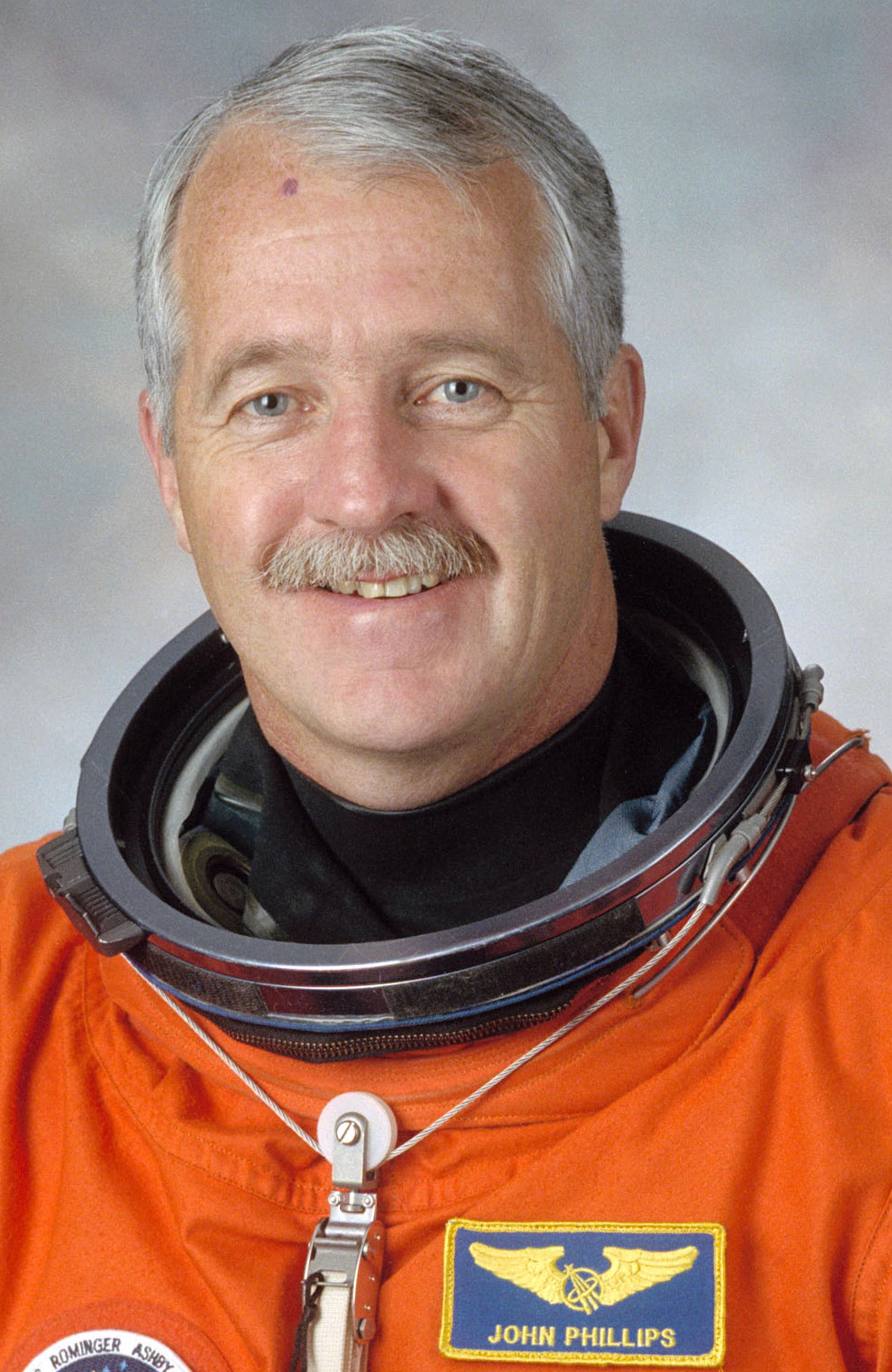
Attr: NASA, Public Domain
| 19 Quotes | |
| Born as | John Lynch Phillips |
| Occup. | Astronaut |
| From | USA |
| Born | April 15, 1951 Fort Belvoir, Virginia, USA |
| Age | 74 years |
| Cite | |
Citation Formats
APA Style (7th ed.)
John l. phillips biography, facts and quotes. (2026, February 11). FixQuotes. https://fixquotes.com/authors/john-l-phillips/
Chicago Style
"John L. Phillips biography, facts and quotes." FixQuotes. February 11, 2026. https://fixquotes.com/authors/john-l-phillips/.
MLA Style (9th ed.)
"John L. Phillips biography, facts and quotes." FixQuotes, 11 Feb. 2026, https://fixquotes.com/authors/john-l-phillips/. Accessed 12 Feb. 2026.
Overview
John L. Phillips is an American astronaut best known for his work assembling and operating the International Space Station during the first decade of permanent human presence in orbit. Born in 1951 in the United States, he served as a mission specialist on the Space Shuttle and as a long-duration crew member aboard the ISS, contributing to robotics operations, station outfitting, and science while working closely with U.S. and international partners. Over the course of multiple spaceflights, he logged well over half a year in space, helping to bridge the Shuttle assembly era and the maturing phase of station operations.Early Life and Orientation to Flight and Science
Publicly available information emphasizes Phillips's U.S. upbringing and technical bent, the combination that characterized many astronauts of his generation. He came of age as the space program moved from Apollo to Shuttle and eventually to an international outpost in orbit, and his later career would mirror that arc: specialization in complex on-orbit assembly tasks, deep integration with multinational crews, and adaptability across spacecraft types.Path to NASA
Phillips joined NASA during the period when the agency was building the infrastructure for continuous human presence in space. Astronaut training prepared him for Shuttle and station operations, including intensive work with the Space Station Remote Manipulator System (Canadarm2), Shuttle robotic systems, spacewalking procedures, and joint operations with international partners. He was part of the cadre positioned to transition from short Shuttle flights to the expedition model on the ISS.STS-100: ISS Assembly and Robotics
Phillips's first spaceflight came in 2001 as a mission specialist on STS-100, a pivotal assembly mission to the ISS. Under Commander Kent Rominger and Pilot Jeffrey Ashby, the crew delivered and activated Canadarm2, the robotic arm that became central to station construction and maintenance. He worked alongside mission specialists Chris Hadfield, Scott Parazynski, Umberto Guidoni, and Yuri Lonchakov. While Hadfield and Parazynski performed demanding spacewalks to assemble and outfit the arm, Phillips supported critical internal operations and robotics, helping bring the arm to life. STS-100 also ferried supplies via a pressurized logistics module, enabling early station outfitting and science. The teamwork across NASA, the Canadian Space Agency, the European Space Agency, and Roscosmos on this flight foreshadowed the international rhythm that would define Phillips's later expedition.Expedition 11: Long-Duration Service on the ISS
In 2005, Phillips launched aboard Soyuz TMA-6 to begin Expedition 11, serving as NASA science officer and flight engineer. He shared the two-person long-duration crew with Commander Sergei Krikalev, one of the most seasoned cosmonauts in history. The Soyuz ascent and subsequent docking underscored the tight NASA-Roscosmos partnership. European Space Agency astronaut Roberto Vittori flew with them to the ISS as a visiting crew member at the start of the increment, reflecting the station's growing global footprint.During Expedition 11, Phillips and Krikalev oversaw routine maintenance, scientific investigations spanning biology, materials, and Earth observation, and a steady cadence of Progress cargo vehicle operations. They hosted Discovery's STS-114 "Return to Flight" mission commanded by Eileen Collins, whose crew included Pilot James Kelly and mission specialists Soichi Noguchi, Stephen Robinson, Wendy Lawrence, Andrew Thomas, and Charles Camarda. Phillips worked joint operations with that visiting crew as they transferred cargo, tested repair techniques on Discovery's thermal protection system, and evaluated station/shuttle procedures after the Columbia accident. Phillips and Krikalev also performed a spacewalk to install and service external hardware, a methodical EVA that contributed to the incremental outfitting of the outpost. During this expedition, Krikalev surpassed the world record for cumulative time in space, a milestone that framed the historical significance of their mission. By the end of Expedition 11, Phillips had accumulated the majority of his career space time, gaining experience across U.S. and Russian systems.
STS-119: Powering Up the Station
Phillips returned to space in 2009 on STS-119, a mission that delivered the S6 truss and its solar arrays, expanding the ISS power grid and enabling more robust science and larger crews. Commander Lee Archambault and Pilot Tony Antonelli led the flight, with mission specialists Steven Swanson, Richard Arnold, Joseph Acaba, and John L. Phillips forming the core assembly team. The mission also ferried Koichi Wakata to begin his long-duration stint on the station, while returning Sandra Magnus to Earth after her expedition service. Spacewalks by Swanson, Arnold, and Acaba completed the structural and electrical hookups; inside the vehicle and the station, Phillips supported complex robotics choreography and integration tasks that tied the truss to the station's existing systems. STS-119 marked another step toward a fully powered laboratory, and Phillips's experience with robotics and ISS systems helped the crew execute a smooth build-out.International Cooperation and Teamwork
A constant in Phillips's career was collaboration. On STS-100 he worked closely with Chris Hadfield and Scott Parazynski to bring Canadarm2 online, connecting U.S. and Canadian capabilities. Expedition 11 paired him with Sergei Krikalev and intersected with ESA's Roberto Vittori, while STS-114's visit brought Eileen Collins's crew into daily coordination aboard the ISS. On STS-119, Phillips operated with a team that included future ISS resident Koichi Wakata. Across these missions he interfaced with flight directors, robotics and EVA specialists, and multinational ground teams who planned each maneuver down to the minute. The people around him, commanders like Rominger, Krikalev, Collins, and Archambault; specialists like Parazynski, Hadfield, Noguchi, Robinson, Swanson, Arnold, and Acaba, formed a professional circle that reflects NASA's broader culture of distributed expertise and shared accountability.Later Contributions and Legacy
Following his flight career, Phillips remained identified with the generation of astronauts who assembled the station piece by piece, adapted to both Shuttle and Soyuz operations, and worked through the post-accident return-to-flight era. His legacy rests on precision in robotics, calm execution during joint operations, and the credibility that comes from having served on both short and long missions. With cumulative time in space exceeding six months and hands-on roles in pivotal assembly flights, he helped transform the ISS from a fledgling outpost into a continuously operated laboratory. For students and colleagues, Phillips's trajectory illustrates how methodical preparation, trust in teammates, and international partnership can turn complex goals into operational reality.Our collection contains 19 quotes written by John, under the main topics: Motivational - Never Give Up - Science - Health - Work.
Source / external links