
John Locke Biography Quotes 38 Report mistakes
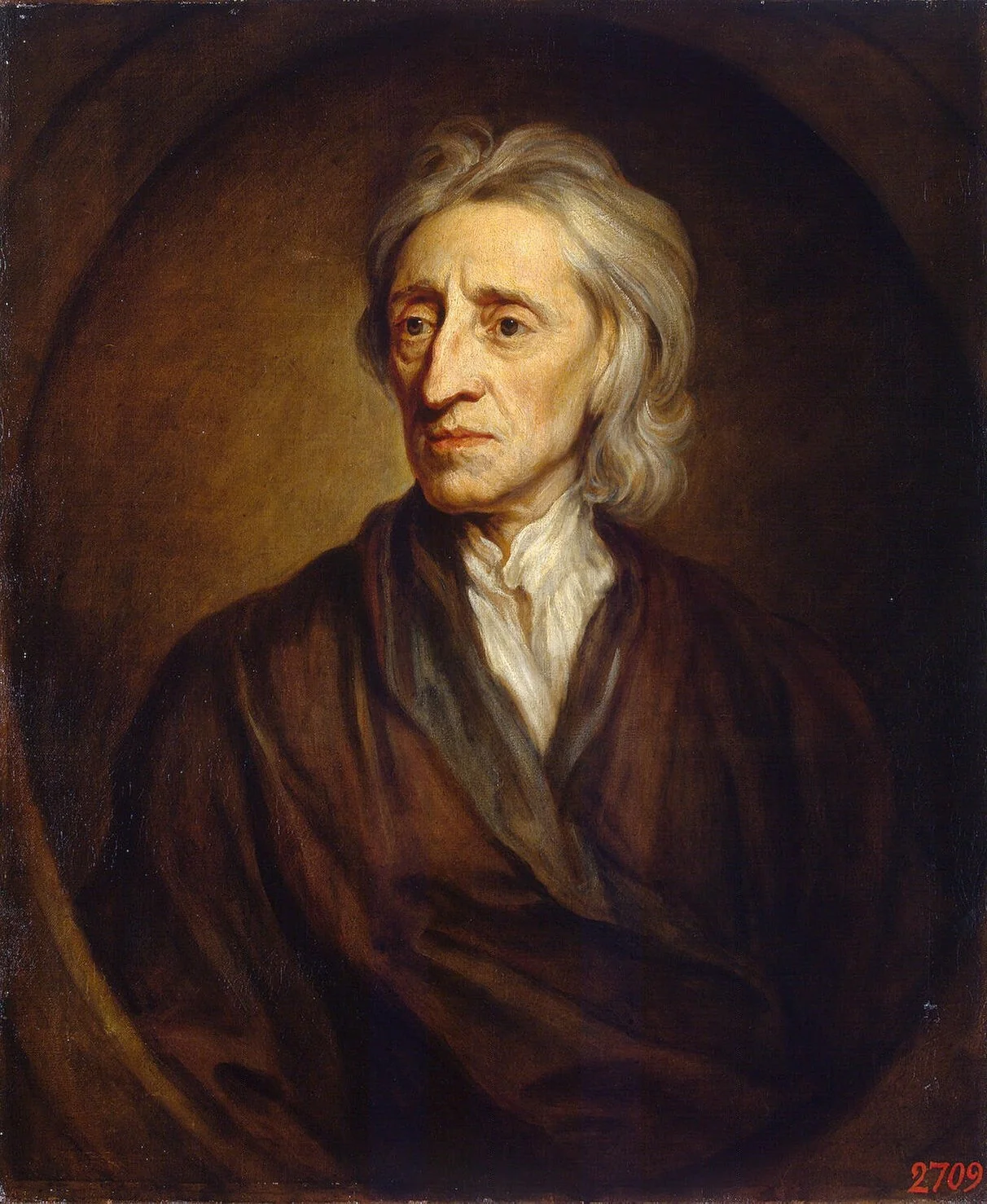
| 38 Quotes | |
| Occup. | Philosopher |
| From | England |
| Born | August 29, 1632 Wrington at Bristol in England |
| Died | October 28, 1704 Oates in Essex |
| Aged | 72 years |
| Cite | |
Citation Formats
APA Style (7th ed.)
John locke biography, facts and quotes. (2026, February 1). FixQuotes. https://fixquotes.com/authors/john-locke/
Chicago Style
"John Locke biography, facts and quotes." FixQuotes. February 1, 2026. https://fixquotes.com/authors/john-locke/.
MLA Style (9th ed.)
"John Locke biography, facts and quotes." FixQuotes, 1 Feb. 2026, https://fixquotes.com/authors/john-locke/. Accessed 6 Mar. 2026.
Early Life and Background
John Locke was born on August 29, 1632, in Somerset, England, in the first generation to come of age under mounting constitutional strain. His father, also named John Locke, served as a country lawyer and a captain for Parliament during the English Civil War, a fact that placed the household on the side of resistance to arbitrary monarchy. The boy grew up with the war and its aftershocks as lived experience, not abstraction - sermons, militias, and the constant question of who could command whom, and by what right.That early proximity to conflict shaped Locke's inward temperament: cautious, analytic, and distrustful of sweeping certainties. He learned to watch institutions the way a physician watches symptoms - for what they reveal about underlying causes - and to value moderation as a discipline rather than a slogan. The Restoration of 1660 did not erase the memory of civil breakdown; it intensified the need for a theory of authority that could prevent relapse into coercion or chaos.
Education and Formative Influences
Locke was educated at Westminster School and then at Christ Church, Oxford, where the scholastic curriculum felt increasingly stale beside the new experimental philosophy associated with Francis Bacon and, soon, the Royal Society. He studied medicine and cultivated friendships with scientists and physicians, absorbing habits of observation and skepticism about inherited dogma. The decisive formative relationship was with Anthony Ashley Cooper (later the first Earl of Shaftesbury), whom Locke met in the mid-1660s and served as adviser and household physician - an apprenticeship that pulled him from academic life into the machinery of patronage, policy, and statecraft.Career, Major Works, and Turning Points
Locke's career moved in and out of danger as England lurched through the Exclusion Crisis, fears of Catholic succession, and the tightening of royal power under Charles II and James II. As Shaftesbury's circle came under suspicion, Locke spent years in the Netherlands (1683-1689), a refuge that also exposed him to comparatively pluralistic religious life and commercial modernity. After the Glorious Revolution of 1688, he returned to England and published the works that made his name: "An Essay Concerning Human Understanding" (1690), a sustained argument that knowledge begins in experience; "A Letter Concerning Toleration" (1689), urging limits on coercive religion; and the "Two Treatises of Government" (published 1689/1690), defending government by consent and a right of resistance. In later years he served on the Board of Trade, wrote on education ("Some Thoughts Concerning Education", 1693) and on Christian reasonableness, and spent his final decade at Oates in Essex with Damaris Masham, where illness narrowed his world but sharpened his prose until his death on October 28, 1704.Philosophy, Style, and Themes
Locke's inner life was marked by a practical anxiety: the fear that unexamined words could become instruments of domination. His empiricism was not mere theory of sensation but a moral project to discipline certainty. The "Essay" repeatedly returns to the limits of human understanding as a civic virtue - an attempt to reduce persecution and faction by reducing the mental arrogance that feeds them. That is why he treats language, prejudice, and the education of attention as political issues, not just pedagogical ones: “What worries you, masters you”. For Locke, mastery begins inside the self, where unchecked passions and inherited slogans quietly recruit the mind.Politically, Locke fused a restrained view of human knowledge with a robust view of human rights. He argued that legitimate rule exists to protect life, liberty, and estate, and that law is not the enemy of freedom but its architecture: “The end of law is not to abolish or restrain, but to preserve and enlarge freedom. For in all the states of created beings capable of law, where there is no law, there is no freedom”. Yet he understood how hard new frameworks are to establish in a culture trained by custom and fear; his prose is famously patient, anticipating objections and walking readers through distinctions because he expected resistance: “New opinions are always suspected, and usually opposed, without anyother reason but because they are not already common”. Across his writings, the theme is consistent - liberty requires both institutions and habits of mind, and both can be corrupted when authority claims infallibility.
Legacy and Influence
Locke became a central architect of Enlightenment liberalism: empiricism in epistemology, toleration in religion, and consent in politics. His arguments about natural rights and government by trust traveled into eighteenth-century debates in Britain, North America, and France, helping to supply the vocabulary of constitutionalism and revolution, even when later readers simplified his careful conditions and caveats. In philosophy, he set problems that shaped Berkeley, Hume, and Kant, and he made the study of the mind respectable as a systematic inquiry. His enduring influence lies not only in specific doctrines - property, consent, and rights - but in a method: insist on clear terms, trace ideas to experience, and treat freedom as something preserved by accountable law and by disciplined self-government.Our collection contains 38 quotes written by John, under the main topics: Ethics & Morality - Wisdom - Truth - Justice - Love.
Other people related to John: Thomas Sydenham (Scientist), Joseph Butler (Clergyman), Robert Boyle (Philosopher), Anthony Collins (Philosopher), Thomas Day (Author), Katey Sagal (Athlete), Ralph Cudworth (Theologian), Abraham Tucker (Philosopher)
Frequently Asked Questions
- Why was John Locke important: He was important for laying the foundations of modern liberal democracy, influencing the Enlightenment, and inspiring the American and French revolutions.
- John Locke social contract: Locke's social contract theory argued that government is based on the consent of the governed and must protect natural rights.
- Where did John Locke live: He lived in England, with significant time spent in London, Oxford, and in exile in Holland.
- How did John Locke die: He died on October 28, 1704, likely due to health complications related to asthma and other longstanding health issues.
- John Locke family: He was born to Agnes Keene and John Locke Sr., a lawyer and small landowner.
- What is John Locke known for: He is known for his contributions to philosophy, particularly in the areas of empiricism and political theory.
- John Locke main ideas: Empiricism, natural rights, social contract, government's role is to protect life, liberty, and property.
- How old was John Locke? He became 72 years old
John Locke Famous Works
- 1695 The Reasonableness of Christianity (Book)
- 1693 Some Thoughts Concerning Education (Essay)
- 1690 An Essay Concerning Human Understanding (Book)
- 1689 Two Treatises of Government (Book)
- 1689 A Letter Concerning Toleration (Essay)
Source / external links