
John Lubbock Biography Quotes 13 Report mistakes
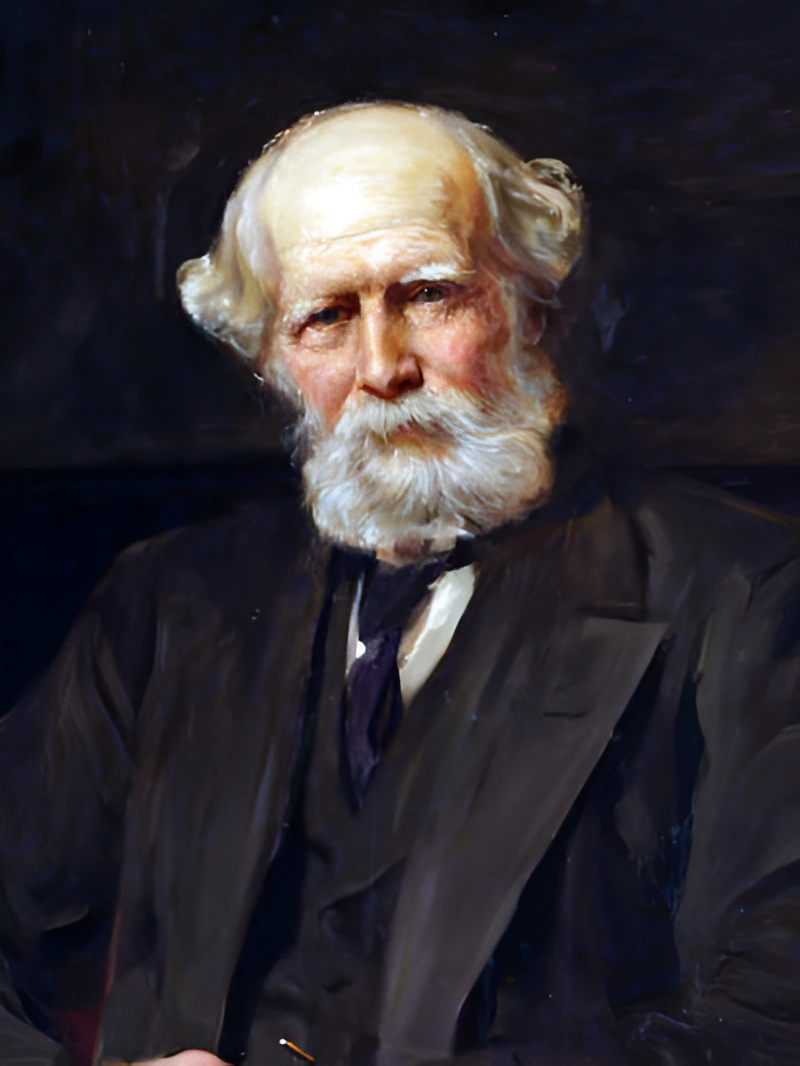
Attr: Art UK
| 13 Quotes | |
| Known as | John Lubbock, 1st Baron Avebury |
| Occup. | Statesman |
| From | United Kingdom |
| Born | April 30, 1834 London, England |
| Died | May 28, 1913 Kingsgate, Kent, England |
| Aged | 79 years |
| Cite | |
Citation Formats
APA Style (7th ed.)
John lubbock biography, facts and quotes. (2026, February 11). FixQuotes. https://fixquotes.com/authors/john-lubbock/
Chicago Style
"John Lubbock biography, facts and quotes." FixQuotes. February 11, 2026. https://fixquotes.com/authors/john-lubbock/.
MLA Style (9th ed.)
"John Lubbock biography, facts and quotes." FixQuotes, 11 Feb. 2026, https://fixquotes.com/authors/john-lubbock/. Accessed 27 Mar. 2026.
Early Life and Background
John Lubbock was born on April 30, 1834, at High Elms, the family estate at Downe in Kent, into a world where money, improvement, and public service braided together. His father, Sir John William Lubbock, was a wealthy banker, mathematician, and astronomer, and the household moved easily between London finance and the cultivated rural life of the Victorian gentry. That dual setting - countinghouse discipline and country observation - became the template of Lubbock's temperament: practical in method, expansive in curiosity.The neighborhood mattered. Down the lane lived Charles Darwin, newly settled at Down House, and the boy grew up in the wake of a scientific earthquake. Lubbock absorbed the Victorian confidence that society could be measured and bettered, yet he also saw, close-up, how large ideas were made - slowly, painstakingly, by accumulating evidence and arguing with friends. From early on he learned to treat nature not as scenery but as a field of inquiry, and to treat institutions - banks, Parliament, schools - as instruments that could be redesigned.
Education and Formative Influences
Lubbock was educated at Eton but did not follow the conventional path to Oxford or Cambridge; instead he entered the family bank, Lubbock and Co. (later part of what became Barclays), training his mind on risk, credit, and the habits of work. His more decisive education came from proximity to Darwin and to the intellectual networks of mid-Victorian London, where geology, archaeology, and political economy overlapped in the clubs and learned societies. The Darwin circle sharpened his sense that knowledge advanced through disciplined comparison and that public arguments should be grounded in demonstrable facts rather than inherited authority.Career, Major Works, and Turning Points
He balanced three careers that usually consumed separate lives: banker, scientist, and legislator. Elected Liberal MP for Maidstone in 1870 (later for the University of London), he made his name as a reforming statesman, most famously carrying the Bank Holidays Act of 1871, which standardized national holidays and quietly changed the cadence of working-class leisure. In science he helped found prehistoric archaeology as a public discipline: Pre-historic Times (1865) popularized the "Paleolithic" and "Neolithic" distinction; The Origin of Civilisation (1870) and later studies of ants, bees, and wasps extended his fascination with social behavior across species. A turning point came with his work for heritage protection, culminating in the Ancient Monuments Protection Act of 1882, an early framework for safeguarding sites like Avebury, which he later helped preserve directly. He was created a baronet in 1880 and raised to the peerage as Baron Avebury in 1900, a title that signaled how fully he had fused politics with an ethic of conservation.Philosophy, Style, and Themes
Lubbock's inner life reads as the Victorian settlement between wonder and administration: he wanted the world to be both intelligible and humane. His style - in speeches, committee work, and popular books - was calm, enumerative, and persuading rather than prophetic, built on the belief that steady reforms outlast charismatic storms. That stance was not merely rhetorical; it reflected a psychology that distrusted panic and moral melodrama, preferring habits, incentives, and education to coercion. He repeatedly framed public problems as questions of attention and method, insisting that perception itself is trained: “What we see depends mainly on what we look for”. In practice, that meant teaching citizens - and lawmakers - to look for evidence, to look for preventable suffering, and to look beyond custom.His reformism also had a restorative dimension. The Bank Holidays Act was not only an economic adjustment; it was a claim about the moral necessity of recovery and the civic value of leisure in an industrial age. He wrote against the Victorian cult of relentless toil, separating fatigue from fear: “A day of worry is more exhausting than a week of work”. Education, for him, was less about forcing knowledge than igniting appetite, the kind of long-term self-propulsion a modern democracy needed: “The important thing is not so much that every child should be taught, as that every child should be given the wish to learn”. Across his writings the recurring theme is self-government - of the mind through attention, of the body through rest, of society through enlightened law.
Legacy and Influence
When Lubbock died on May 28, 1913, he left a model of the scientifically literate statesman at a moment just before Europe fractured into total war. His legacy is diffuse but durable: bank holidays became a taken-for-granted feature of British life; the 1882 monuments legislation helped establish modern heritage protection; and his popular science, though of its era in anthropology, helped normalize deep time and prehistoric inquiry for a mass readership. As Lord Avebury he embodied a Victorian belief that evidence, education, and incremental law could civilize modernity without extinguishing wonder - a belief that continues to inform debates about public leisure, conservation, and what it means for policy to be guided by knowledge rather than noise.Our collection contains 13 quotes written by John, under the main topics: Wisdom - Nature - Learning - Live in the Moment - Reason & Logic.