
John McCain Biography Quotes 30 Report mistakes
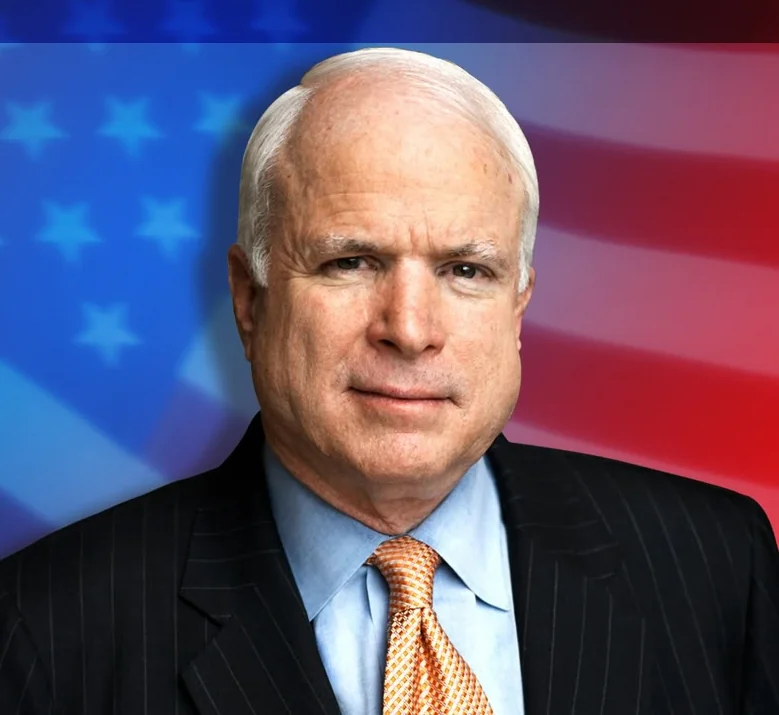
| 30 Quotes | |
| Born as | John Sidney McCain III |
| Occup. | Politician |
| From | USA |
| Born | August 29, 1936 Coco Solo Naval Air Station, Panama Canal Zone |
| Age | 89 years |
| Cite | |
Citation Formats
APA Style (7th ed.)
John mccain biography, facts and quotes. (2026, February 2). FixQuotes. https://fixquotes.com/authors/john-mccain/
Chicago Style
"John McCain biography, facts and quotes." FixQuotes. February 2, 2026. https://fixquotes.com/authors/john-mccain/.
MLA Style (9th ed.)
"John McCain biography, facts and quotes." FixQuotes, 2 Feb. 2026, https://fixquotes.com/authors/john-mccain/. Accessed 28 Mar. 2026.
Early Life and Background
John Sidney McCain III was born on August 29, 1936, at Coco Solo Naval Air Station in the Panama Canal Zone, into a family where duty and reputation were inherited as surely as eye color. His father, John S. McCain Jr., and grandfather, John S. McCain Sr., would both become four-star admirals, making the name McCain synonymous with the post-World War II U.S. Navy and the Cold War order it served. That lineage gave him a ready-made script of honor, but it also set a punishing standard: to fall short was to fail in public.Because the Navy moved, McCain grew up in a rolling geography of bases and temporary friendships, learning early the mixed blessing of belonging everywhere and nowhere. He developed a rebellious streak - humor as defense, risk as release - and a sometimes combustible relationship with authority. That temperament, later refined by catastrophe, was visible long before politics: a young man testing the limits of rules he nonetheless wanted to mean something.
Education and Formative Influences
McCain graduated from the U.S. Naval Academy in 1958, near the bottom of his class, a fact he never hid because it fit the story he preferred to tell about himself: imperfect, impulsive, but ultimately accountable. Flight training followed, then service in the Navy as a pilot in an era when the United States was shifting from Cold War confidence to the grinding ambiguity of Vietnam. The Academy and the cockpit fused two lasting influences - a belief in institutional service and a personal attraction to high-stakes decision-making - while Vietnam would later supply the moral vocabulary he used to judge both allies and opponents.Career, Major Works, and Turning Points
In October 1967, during Operation Rolling Thunder, McCain was shot down over Hanoi, severely injured, and held as a prisoner of war for more than five years, enduring torture and prolonged isolation. His refusal of early release - offered because of his father's rank - became the hinge of his public identity: suffering converted into a code. After returning in 1973, he remained in the Navy, then settled in Arizona, entered politics, and won election to the U.S. House in 1982 and the U.S. Senate in 1986. National prominence rose through defense and foreign-policy hawkishness, campaign finance reform (the Bipartisan Campaign Reform Act of 2002, with Russ Feingold), and a cultivated image as a maverick who could wound his own party to prove independence. He sought the presidency in 2000 and 2008; the latter, after securing the Republican nomination, ended in defeat to Barack Obama. In later years he became a defining Senate voice on the Iraq War, the fight against torture, and the norms of democratic governance, publishing memoirs that reinforced the narrative of endurance and public duty before his death in 2018.Philosophy, Style, and Themes
McCain's inner life was shaped by the paradox of the POW experience: it broke the illusion of control while hardening his conviction that character is a choice made under pressure. His politics therefore prized grit, sacrifice, and alliance loyalty, sometimes at the expense of patience for complexity at home. The mordant humor that helped him survive also functioned as a psychological release valve, a way to stare at dread without granting it mastery: “Remember the words of Chairman Mao: 'It's always darkest before it's totally black.'”. That line was not just a joke; it revealed a man who used wit to keep fear at arm's length and to signal toughness to others.His style mixed soldierly directness with a public moralism that could turn severe. He framed politics as an arena where attention and courage mattered as much as ideology, lamenting a legislative culture he saw as performative: “The problem... is that most members of Congress don't pay attention to what's going on”. Even when he criticized his own side, he spoke as a believer in a tradition larger than himself - a psychological need to anchor rebellion in belonging: "I am a Republican. I'm loyal to the party of Abraham Lincoln and Theodore Roosevelt. And I believe that my party, in some ways, has strayed from those principles, particularly on the issue of fiscal discipline" . Across war, reform, and rhetoric, the recurring theme was honor as a public practice - what one owes to comrades, to institutions, and to the country's self-image.
Legacy and Influence
McCain endures as a symbol of American civic mythology and its tensions: warrior and legislator, partisan and critic of partisanship, idealist and hard-liner. His influence is visible in the modern Senate's language of national-security seriousness, in the template for "maverick" branding, and in the continuing debates he helped define - campaign finance, torture, intervention, and the etiquette of democratic disagreement. More than his wins or losses, his biography offered a moral drama that many Americans recognized: a flawed man trying to live up to a severe code, insisting that public life still demands bravery, attention, and a conscience that can say no even to allies.Our collection contains 30 quotes written by John, under the main topics: Truth - Dark Humor - Justice - Sarcastic - Leadership.
Other people related to John: Jon Kyl (Politician), Mitt Romney (Politician), Edward Kennedy (Politician), Jack Reed (Politician), Charles Keating (Lawyer), Sam Brownback (Politician), Chris Matthews (Journalist), Joe Scarborough (Politician), Fred Thompson (Politician), David Axelrod (Public Servant)
Source / external links