
John Milton Biography Quotes 29 Report mistakes
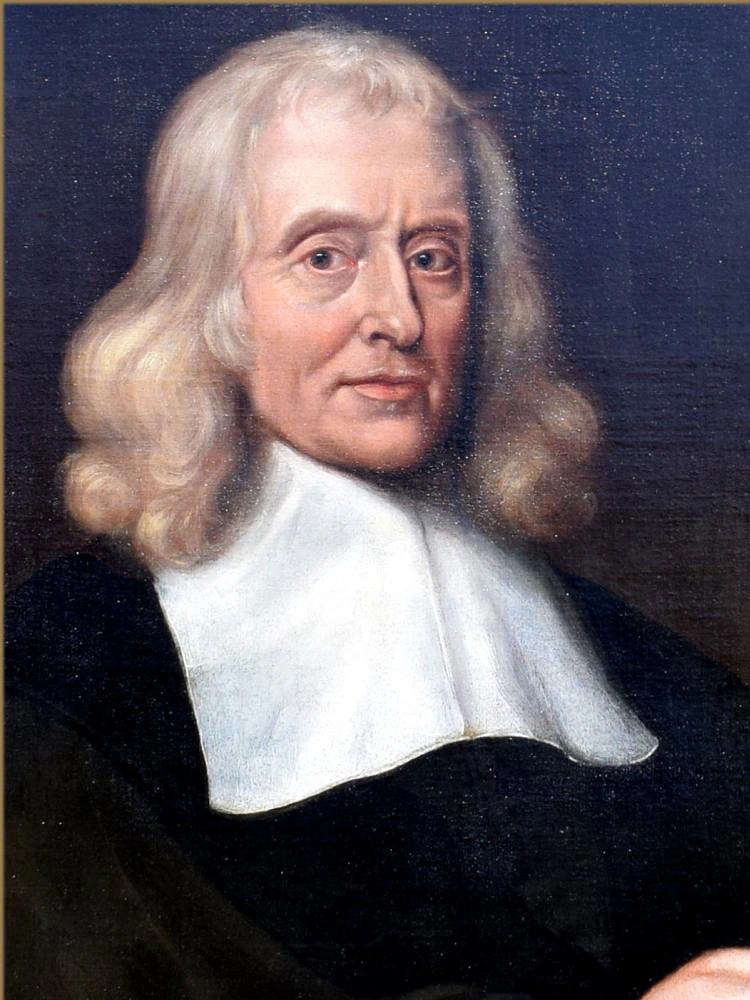
Attr: Artware Fine Art
| 29 Quotes | |
| Occup. | Poet |
| From | England |
| Born | December 9, 1608 London, England |
| Died | November 8, 1674 London, England |
| Aged | 65 years |
| Cite | |
Citation Formats
APA Style (7th ed.)
John milton biography, facts and quotes. (2026, February 11). FixQuotes. https://fixquotes.com/authors/john-milton/
Chicago Style
"John Milton biography, facts and quotes." FixQuotes. February 11, 2026. https://fixquotes.com/authors/john-milton/.
MLA Style (9th ed.)
"John Milton biography, facts and quotes." FixQuotes, 11 Feb. 2026, https://fixquotes.com/authors/john-milton/. Accessed 7 Mar. 2026.
Early Life and Background
John Milton was born on December 9, 1608, in Bread Street, London, into a household where money and music met scripture and controversy. His father, also John Milton, was a scrivener and a composer who had been disinherited for converting from Roman Catholicism to Protestantism - a domestic drama that left the son with an early sense that conscience could cost you everything. London in Milton's childhood was a city of sermons and commerce, plague fears and theatrical crowds, with the King James Bible shaping English cadences as strongly as any schoolmaster.The Miltons belonged to the prosperous, literate middle sort, ambitious for status yet uneasy with inherited authority. That mixture - comfort coupled with moral severity - formed the young poet's inner weather: he wanted excellence, but also purity of motive. Even in early poems he cultivated a public self, as if already preparing to answer to history, and he learned to treat language not as ornament but as a moral instrument capable of judgment, consolation, and attack.
Education and Formative Influences
Milton studied at St Paul's School under Alexander Gill, then entered Christ's College, Cambridge (1625), where he absorbed classical rhetoric, patristic theology, and the habits of disputation that later powered his polemical prose. He read widely in Latin, Greek, Hebrew, Italian, and theology; he admired Spenser and Shakespeare but also measured himself against Homer and Virgil. After taking his MA (1632), he withdrew to his family's homes at Hammersmith and Horton for an intense private apprenticeship, writing "L'Allegro", "Il Penseroso", "Comus" (1634), and "Lycidas" (1637) - works already marked by the tension between sensuous lyricism and a stern, self-appointed vocation.Career, Major Works, and Turning Points
In 1638-1639 Milton traveled in Italy, meeting scholars and hearing the living authority of Renaissance art, but he returned as England slid toward civil war, convinced his pen was needed at home. The 1640s made him a public intellectual: he wrote anti-episcopal tracts, married Mary Powell (1642) into a Royalist family, and, amid marital separation, produced controversial divorce pamphlets. In 1644 he published Areopagitica, his greatest prose argument for unlicensed printing, then served the Commonwealth after the regicide as Secretary for Foreign Tongues (1649), defending the new regime in Latin. By 1652 he was completely blind, yet he continued in office and in controversy, writing on education, church governance, and political liberty. After the Restoration (1660) he was briefly in danger, then lived quietly in London, dictating the poems that secured his immortality: Paradise Lost (1667), Paradise Regained (1671), and Samson Agonistes (1671), before his death on November 8, 1674.Philosophy, Style, and Themes
Milton's inner life was a long argument between aspiration and affliction. Blindness tested the identity he had built around learning and public service, and his poetry turns that deprivation into a discipline of attention: “They also serve who only stand and wait”. The line is not resignation so much as a redefinition of agency - a way of making obedience and endurance part of a larger concept of action when the body fails. In Paradise Lost, the same psychological realism appears in his portrait of Satan: consciousness is creative, but it can also be self-poisoning, and “The mind is its own place and in itself, can make a Heaven of Hell, a Hell of Heaven”. Milton is anatomizing how pride manufactures a private universe that feels like freedom while functioning as bondage.His political and religious writings share that same moral psychology: liberty is sacred only when tethered to virtue and truth-seeking. In Areopagitica he demands not comfort but risk - the right to wrestle with error and authority - insisting, “Give me the liberty to know, to utter, and to argue freely according to conscience, above all liberties”. Stylistically, Milton fused Latinate syntactic grandeur with English muscularity, building sentences that behave like legal briefs and hymns at once. His themes circle repeatedly: the cost of chosen obedience, the seductions of power, the education of desire, and the tragic gap between national ideals and political outcomes - all filtered through a poet who believed words could train the soul.
Legacy and Influence
Milton became a touchstone for later revolutions and for later poets who wanted a language equal to conscience. Paradise Lost shaped the English epic imagination and influenced writers from Blake and Wordsworth to Mary Shelley and beyond, while Areopagitica became a foundational text in arguments for free expression in Britain and America. Yet his legacy remains deliberately difficult: a radical who could sound austere, a defender of liberty who demanded moral seriousness, a Christian poet who dared to dramatize dissenting psychology with terrifying sympathy. He endures because he made inner conflict - not mere doctrine - the engine of grandeur, proving that national crisis, personal loss, and spiritual ambition can be forged into art that still interrogates how free people should think, speak, and govern themselves.Our collection contains 29 quotes written by John, under the main topics: Ethics & Morality - Wisdom - Truth - Art - Mortality.
Other people related to John: Mickey Rivers (Athlete), John Aubrey (Writer), John Philips (Poet), Stanley Fish (Writer), John Cleveland (Poet)
John Milton Famous Works
- 1671 Samson Agonistes (Play)
- 1671 Paradise Regained (Poetry)
- 1667 Paradise Lost (Poetry)
- 1660 The Ready and Easy Way to Establish a Free Commonwealth (Essay)
- 1654 Defensio Secunda (Non-fiction)
- 1651 Defensio pro Populo Anglicano (Defence of the People of England) (Non-fiction)
- 1649 The Tenure of Kings and Magistrates (Essay)
- 1649 Eikonoklastes (Essay)
- 1645 Poems (1645) (Collection)
- 1645 Il Penseroso (Poetry)
- 1645 L'Allegro (Poetry)
- 1644 Areopagitica (Essay)
- 1644 Of Education (Essay)
- 1643 The Doctrine and Discipline of Divorce (Essay)
- 1642 An Apology for Smectymnuus (Essay)
- 1637 Lycidas (Poetry)
- 1634 Comus (Play)