
John Morley Biography Quotes 15 Report mistakes
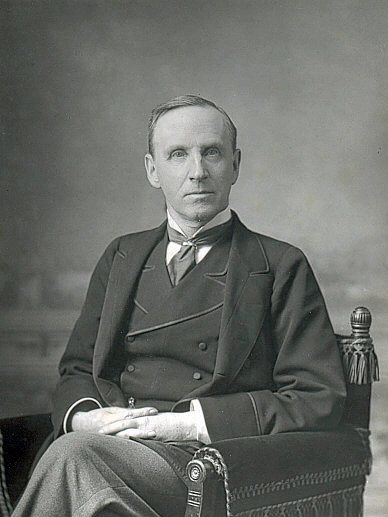
| 15 Quotes | |
| Occup. | Statesman |
| From | United Kingdom |
| Spouse | Rose Mary (d. 1923) |
| Born | December 24, 1838 Blackburn, Lancashire, England |
| Died | September 23, 1923 Wimbledon Park, London, England |
| Aged | 84 years |
| Cite | |
Citation Formats
APA Style (7th ed.)
John morley biography, facts and quotes. (2026, February 11). FixQuotes. https://fixquotes.com/authors/john-morley/
Chicago Style
"John Morley biography, facts and quotes." FixQuotes. February 11, 2026. https://fixquotes.com/authors/john-morley/.
MLA Style (9th ed.)
"John Morley biography, facts and quotes." FixQuotes, 11 Feb. 2026, https://fixquotes.com/authors/john-morley/. Accessed 3 Apr. 2026.
Early Life and Background
John Morley was born on December 24, 1838, in Blackburn, Lancashire, into the bracing world of mid-Victorian Nonconformity and industry. His father was a surgeon, and Morley grew up close to the texture of provincial professional life - disciplined, earnest, and surrounded by the moral seriousness that Dissent attached to reading, self-examination, and public duty. That atmosphere would harden into a lifelong suspicion of cant and a reluctance to treat politics as theater; even when he became a celebrated editor and cabinet minister, his prose retained the cadence of the chapel lecture - lucid, admonitory, allergic to mystique.
He came of age as Britain debated reform at home and rule abroad: the shadow of Chartism, the afterglow of the 1832 and 1867 Reform Acts, and the swelling controversies over Ireland and empire. Morley never became an optimist about human perfectibility, but he did become a moralist of limits - drawn to the question of how a liberal society could expand rights without sacrificing intellectual honesty. The tension between conscience and compromise, first felt in youth, became the central drama of his public life.
Education and Formative Influences
Morley was educated at Cheltenham College and then at Lincoln College, Oxford, where he encountered the high Victorian culture of ideas - utilitarian arguments about policy, the prestige of scientific method, and the emerging professionalization of criticism. Oxford also brought him into contact with debates about faith and doubt, and he moved steadily toward rationalism without losing the ethical intensity of his religious upbringing. In the 1860s, as he began to write for periodicals, he found his intellectual models in the tradition of liberal criticism and French political thought; the skeptical clarity of Voltaire and the moral energy of Rousseau appealed to a mind that wanted both reason and responsibility.
Career, Major Works, and Turning Points
Morley made his name first as a journalist and editor, rising through the London press world to become editor of the Fortnightly Review (1867-1882) and later Pall Mall Gazette (1880-1883), shaping forums where politics, literature, and science collided. His major books were biographies that doubled as arguments: Voltaire (1872), Rousseau (1873), Diderot and the Encyclopaedists (1878), and then the great Victorian set-pieces on English liberal conscience - Life of Richard Cobden (1881), Edmund Burke (1867), and most famously The Life of William Ewart Gladstone (1903). Entering Parliament as Liberal MP for Newcastle upon Tyne in 1883, he became a key Gladstonian voice, serving as Chief Secretary for Ireland (1886, 1892-1895) and later Secretary of State for India (1905-1910), then Lord President of the Council. His turning points were moral and imperial: the Irish question, where he tried to reconcile coercion with reform and became a pillar of Home Rule; and the drift to war in 1914, which he resisted so strongly that he resigned from the cabinet rather than endorse intervention, choosing coherence over career at the end.
Philosophy, Style, and Themes
Morley was a liberal of conscience more than of temperament: severe with himself, wary of crowd psychology, and distrustful of the intoxicating language of destiny. He treated public life as an arena of constrained choices, insisting that statesmanship meant accepting imperfection without surrendering the faculty of judgment. That inner posture appears in his bleakly practical aphorism, “In politics the choice is constantly between two evils”. The sentence is not cynicism so much as self-discipline - a reminder that moral purity in politics is often a form of irresponsibility, and that the decent person must choose, act, and bear residue.
As a critic and biographer, Morley fused moral analysis with a cool, unornamented style that aimed to make ideas answerable to conduct. He distrusted enforced piety and the weaponization of reverence, and his rationalist streak sharpened into a defense of inquiry against social taboo: “Where it is a duty to worship the sun it is pretty sure to be a crime to examine the laws of heat”. The line reveals his psychology - a man who experienced moral pressure as a threat to truth, and who believed that liberty begins in the right to ask embarrassing questions. Yet he was no mere iconoclast; he understood that character sets the ceiling of action, and he returned repeatedly to the limits of selfhood and will: “No man can climb out beyond the limitations of his own character”. In his hands, biography became a laboratory for this claim, examining how temper, habit, and moral courage determined what even the most gifted statesman could actually do.
Legacy and Influence
Morley died on September 23, 1923, having become Viscount Morley of Blackburn, but his lasting authority rests less in title than in the example of an intellectual who entered power without surrendering the right to dissent. For later liberals he offered a model of politics as applied ethics - skeptical of romantic nationalism, allergic to censorship of thought, and committed to treating Ireland and India as moral tests rather than administrative puzzles. His biographies helped define the Victorian genre in which a life was judged by public consequence and inward discipline, while his anti-war resignation in 1914 fixed his reputation as a statesman who prized coherence over applause. In an age that often rewarded certainty, Morley left behind a sterner inheritance: the insistence that modern government is made of trade-offs, and that the only reliable compass is a mind trained to question itself as ruthlessly as it questions authority.
Our collection contains 15 quotes written by John, under the main topics: Ethics & Morality - Wisdom - Writing - Freedom - Meaning of Life.
Other people related to John: William Minto (Writer)
Source / external links