
John Osborne Biography Quotes 14 Report mistakes
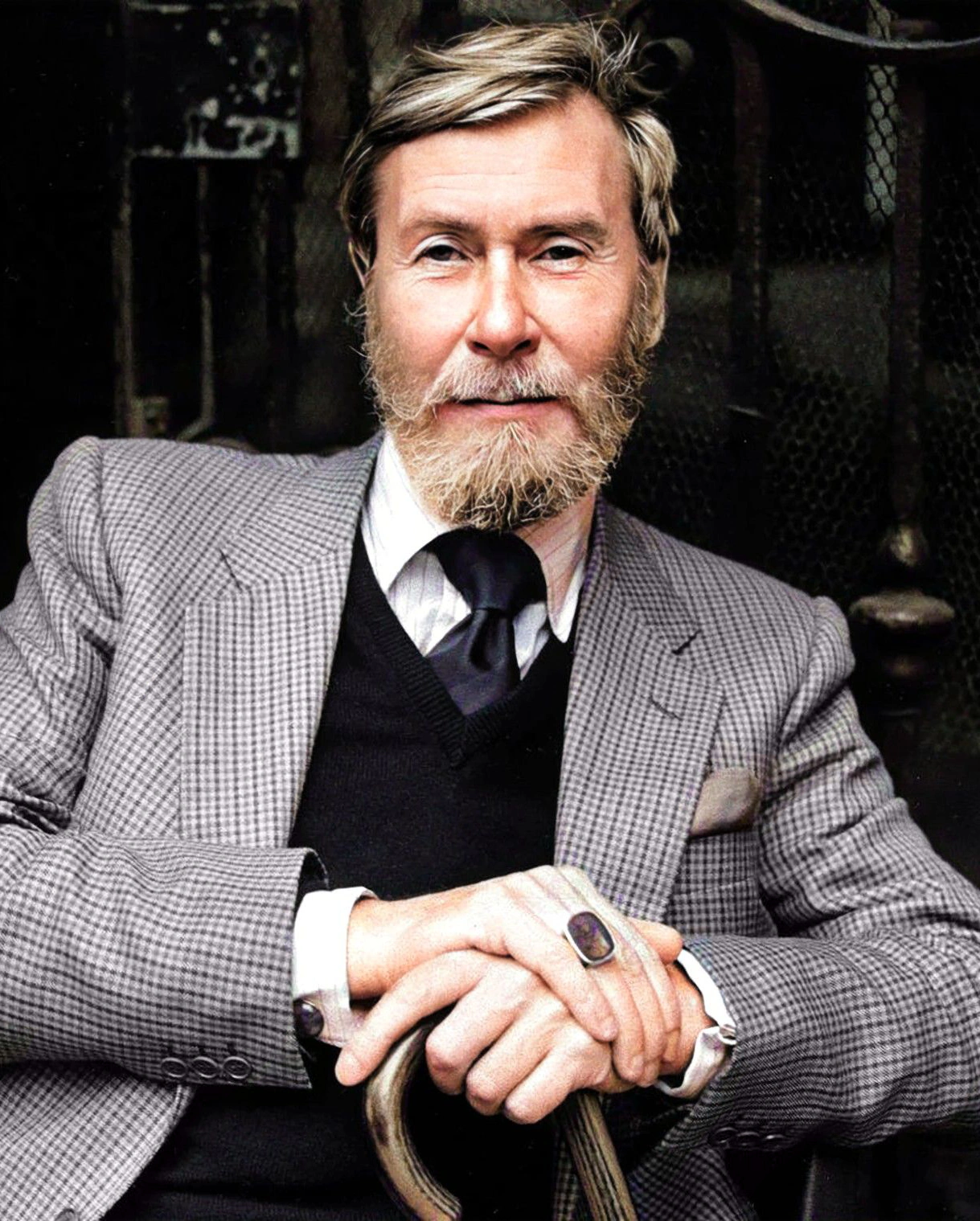
| 14 Quotes | |
| Born as | John James Osborne |
| Occup. | Playwright |
| From | England |
| Born | December 12, 1929 London, England |
| Died | December 24, 1994 Shropshire, England |
| Cause | Lung disease |
| Aged | 65 years |
| Cite | |
Citation Formats
APA Style (7th ed.)
John osborne biography, facts and quotes. (2026, February 11). FixQuotes. https://fixquotes.com/authors/john-osborne/
Chicago Style
"John Osborne biography, facts and quotes." FixQuotes. February 11, 2026. https://fixquotes.com/authors/john-osborne/.
MLA Style (9th ed.)
"John Osborne biography, facts and quotes." FixQuotes, 11 Feb. 2026, https://fixquotes.com/authors/john-osborne/. Accessed 4 Mar. 2026.
Early Life and Background
John James Osborne was born on December 12, 1929, in Fulham, London, into a household shaped by precarious money and sharp social distinctions. His father worked as a commercial artist and copywriter and suffered chronic illness; his mother, practical and often embittered, represented to him the austerity and proprieties of lower-middle-class England. The boy grew up alert to the daily humiliations that come with status anxiety - the sense of being inspected, corrected, and kept in one's place - emotions that later became the fuel of his most famous characters.The Second World War and the gray aftermath of rationing sharpened his eye for how public myths conceal private frustration. Britain emerged victorious yet weary, and for many young people the promise of a renewed nation curdled into boredom, limited mobility, and the dead language of deference. Osborne internalized that contradiction early: the desire to belong to a larger story, and the fury at the institutions that narrated it.
Education and Formative Influences
He attended Belmont School in Devon, where he clashed with authority and was expelled at sixteen after striking the headmaster, an episode that fixed his lifelong suspicion of respectable power. Leaving school meant leaving the conventional ladder; instead he educated himself in repertory theaters, backstage corridors, and boarding houses, absorbing the cadences of ordinary speech and the social comedy of class performance. In the late 1940s he took jobs as an actor and stage manager, learning the theater as a working craft rather than a gentleman's pastime, and discovering in performance the leverage of anger shaped into argument.Career, Major Works, and Turning Points
Osborne broke through in 1956 when the Royal Court Theatre staged Look Back in Anger, directed by Tony Richardson, with its anti-hero Jimmy Porter railing against postwar complacency and emotional anesthesia; the play helped define the era of the so-called "Angry Young Men" and signaled a new seriousness about working-class and lower-middle-class lives on the British stage. He followed with The Entertainer (1957), written for Laurence Olivier, using music-hall decay and a failing performer to mirror a nation losing imperial certainty during the Suez crisis, then expanded his reach with films and later plays including Luther (1961), Inadmissible Evidence (1964), A Patriot for Me (1965), and the autobiographical A Better Class of Person (1981) and Almost a Gentleman (1991). His career was marked by volatility - celebrity and backlash, commercial success and critical disappointment - yet even uneven later work carried the stamp of a writer who treated the stage as a moral battleground where personal wounds become public speech.Philosophy, Style, and Themes
Osborne wrote with the instincts of a performer and the ears of a streetwise satirist: colloquial, rhythmic, and weaponized. His characters do not so much converse as prosecute one another, turning intimacy into cross-examination. That style emerged from a worldview that distrusted consolation and resented the polite cover stories of class and nation. In his drama, English restraint often masks emotional illiteracy, and love becomes inseparable from power - who gets to judge, who gets forgiven, who is permitted to feel. When he skewered metropolitan hypocrisy, he sounded like a man who had watched reputations made from gossip and performance: “In London, love and scandal are considered the best sweeteners of tea”. The line is comic, but it also reveals his fear that society prefers theater to truth.Underneath the bravado ran a bleak, bracing existentialism: the sense that meaning is not granted from above but hammered out in conflict. His protagonists insist on authenticity yet repeatedly sabotage it, as if sincerity were both their hunger and their trap. “Here we are, we're alone in the universe, there's no God...We've only ourselves. Somehow, we've just got to make a go of it. We've only ourselves”. That loneliness explains the ferocity of his dialogue: if there is no ultimate arbiter, then every argument becomes a last argument, and every relationship a test of whether another human being can bear the truth. Even his portraits of self-destruction avoid sentimental excuses; he implies that vice is less a transformation than a disclosure: “It is not true that drink changes a man's character. It may reveal it more clearly”. That psychology - exposure rather than redemption - is central to his theater, where rage functions as a spotlight and tenderness, when it arrives, feels hard-won.
Legacy and Influence
Osborne helped reset British drama by making contemporary speech, contemporary frustration, and contemporary class conflict unavoidable subjects for major theaters, opening space for later playwrights from Harold Pinter and Arnold Wesker to more overtly political and working-class voices. Look Back in Anger remains his defining landmark because it captured the temperature of mid-1950s Britain - a society prosperous on paper yet emotionally stalled - and because it proved that the stage could be both intimate and insurgent. His life, often stormy in private and combative in public, became part of the legend: a writer who believed art should strip away false comfort, even at the cost of being disliked. The enduring influence is less a set of slogans than a permission he gave to British theater - to sound angrier, speak plainer, and treat the personal not as decoration but as evidence.Our collection contains 14 quotes written by John, under the main topics: Witty One-Liners - Never Give Up - Mortality - Writing - Meaning of Life.
Other people related to John: Kenneth Tynan (Critic), Karel Reisz (Director), Terence Rattigan (Dramatist), Alan Bates (Actor)
Frequently Asked Questions
- John Osborne famous Works: Look Back in Anger, The Entertainer, Luther, Inadmissible Evidence, A Patriot for Me, Déjàvu.
- How old was John Osborne? He became 65 years old
John Osborne Famous Works
- 1968 The Hotel in Amsterdam (Play)
- 1965 A Patriot for Me (Play)
- 1964 Inadmissible Evidence (Play)
- 1961 Luther (Play)
- 1957 The Entertainer (Play)
- 1956 Look Back in Anger (Play)
Source / external links