
John Paul Jones Biography Quotes 6 Report mistakes
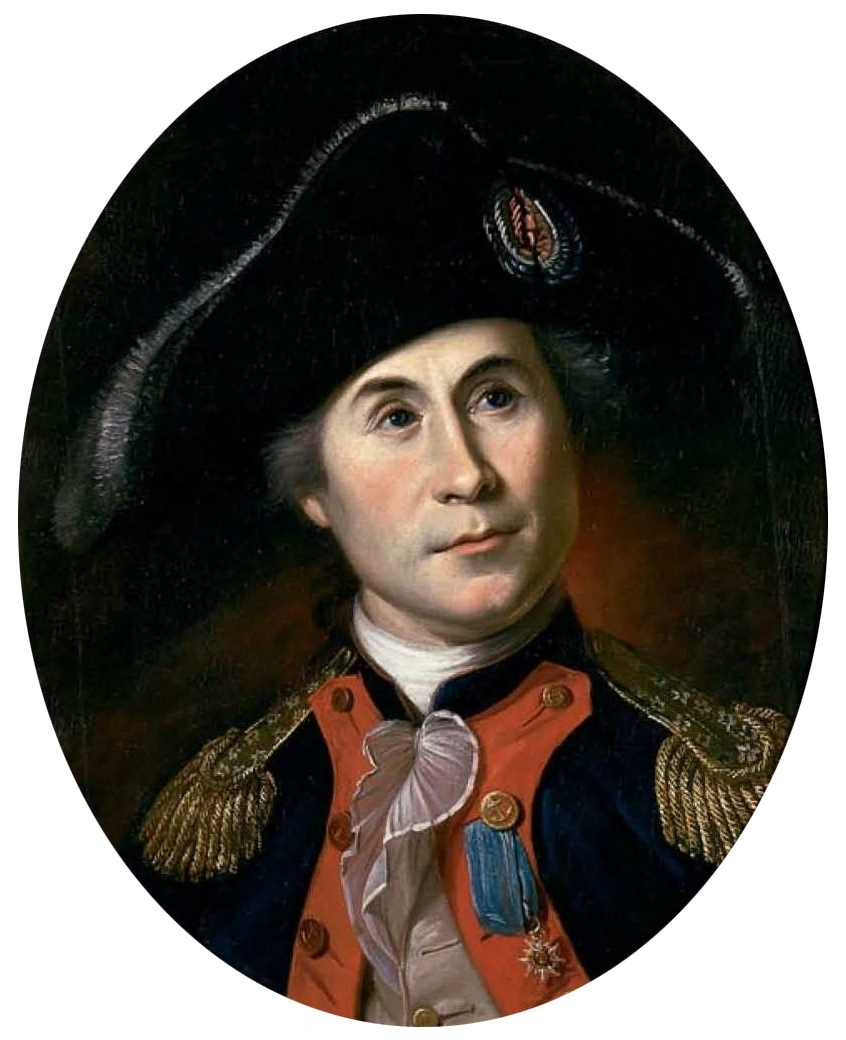
| 6 Quotes | |
| Occup. | Soldier |
| From | USA |
| Born | July 6, 1747 |
| Died | July 18, 1792 |
| Aged | 45 years |
| Cite | |
Citation Formats
APA Style (7th ed.)
John paul jones biography, facts and quotes. (2026, February 11). FixQuotes. https://fixquotes.com/authors/john-paul-jones/
Chicago Style
"John Paul Jones biography, facts and quotes." FixQuotes. February 11, 2026. https://fixquotes.com/authors/john-paul-jones/.
MLA Style (9th ed.)
"John Paul Jones biography, facts and quotes." FixQuotes, 11 Feb. 2026, https://fixquotes.com/authors/john-paul-jones/. Accessed 25 Mar. 2026.
Early Life and Background
John Paul Jones was born John Paul on July 6, 1747, at Arbigland near Kirkcudbright, in southwestern Scotland, the son of gardener and tenant farmer John Paul Sr. and Jean McDuff. Raised on the edge of the Solway Firth, he grew up with the sea in sight and commerce in earshot - a coastline where fishing boats, coastal traders, and Atlantic-bound ships suggested a life wider than the parish. He later added "Jones" after arriving in North America, a self-reinvention that fit an era when empire, migration, and war could reorder a young man's identity as quickly as a change of flag.At thirteen he went to sea as an apprentice, shipping out in 1760 on the Friendship for the Virginia tobacco trade. The Atlantic world he entered was harshly hierarchical: impressed sailors, brutal discipline, and a constant arithmetic of profit and risk. Jones learned seamanship the hard way, climbing from common sailor to officer on merchantmen. By his early twenties he had gained command experience, including in the Caribbean, where disease, slavery, and violence were everyday realities for maritime labor and where authority at sea could turn morally and legally perilous.
Education and Formative Influences
Jones had little formal schooling, but he built an education from navigation manuals, practical mathematics, and relentless observation of ships, weather, and men. He absorbed the professional culture of the mid-18th-century British maritime empire - its gunnery drills and convoy tactics, but also its obsession with speed, discipline, and reputation - and he internalized Enlightenment language about honor and merit that offered ambitious outsiders a grammar for self-justification. His early commands taught him the psychology of crews: fear spreads faster than rumor, yet courage can be trained like seamanship if a captain visibly shares danger.Career, Major Works, and Turning Points
After a crisis in the early 1770s - including the death of a crewman under his discipline and another violent incident that exposed him to legal jeopardy - Jones relocated to Virginia and soon bound his fate to the American rebellion. Commissioned in the Continental Navy in 1775, he first won notice in Ranger (1778) by raiding British shipping, capturing HMS Drake, and striking the British coast, including a daring if muddled landing at Whitehaven. His defining hour came in 1779 off Flamborough Head, commanding the battered Bonhomme Richard against HMS Serapis; refusing surrender amid fire and sinking decks, he forced the British ship to strike, a tactical victory with enormous propaganda value for a young republic desperate for maritime legend. Politics and patronage, however, shadowed him - disputes over prize money, rank, and credit followed him as closely as fame. In the 1780s, as the United States demobilized, he sought employment abroad, accepting service under Catherine II of Russia in the war against the Ottoman Empire (1788), where court intrigue and rival commanders blunted his impact. He died in Paris on July 18, 1792, far from the country that celebrated his name.Philosophy, Style, and Themes
Jones's inner life reads as a continuous argument between ideal and appetite: the yearning for honor and lawful recognition set against a hard-eyed readiness to use violence as a tool. He framed war not as bloodlust but as duty pursued with intensity and personal accountability, insisting, “An honorable Peace is and always was my first wish! I can take no delight in the effusion of human Blood; but, if this War should continue, I wish to have the most active part in it”. That sentence is not pacifism - it is a self-portrait of a man who needed war to prove worth, yet wanted his conscience on record. In an age when navies treated sailors as expendable, his emphasis on personal participation in danger also functioned as leadership technique: a captain who shares risk can demand more from exhausted men.His style as a commander was aggressive, improvisational, and theatrical in the best sense - he understood that morale and narrative could decide battles before broadsides did. The defiance remembered at Flamborough Head became a creed: “I have not yet begun to fight!” The line encapsulates his psychological strategy under pressure - to deny the enemy the moment of victory and to deny his own crew the permission to collapse. Jones also worshiped speed and initiative, believing that audacity could compensate for inferior resources, and he made risk a kind of rational faith: “It seems to be a law of nature, inflexible and inexorable, that those who will not risk cannot win”. In that worldview, reputations are won by going where hesitation will not - raids, close actions, night maneuvers - and by insisting that courage is not an impulse but a disciplined habit.
Legacy and Influence
Jones became the Continental Navy's most enduring combat icon because his victories translated the revolution's political gamble into a personal drama of endurance, nerve, and will. His career also exposed the early republic's contradictions: it celebrated maritime heroes yet struggled to pay them, to administer prizes fairly, and to separate military merit from faction. Later US naval culture drew from his example a template of the offensive spirit - the belief that inferior forces can win by initiative, audacity, and refusal to concede - while biographers have wrestled with the harder elements: ambition that shaded into grievance, a hunger for recognition that could not be satisfied, and a life lived at the intersection of idealized honor and the brutal mechanics of war at sea.Our collection contains 6 quotes written by John, under the main topics: Motivational - War - Faith - Peace - Vision & Strategy.
Other people related to John: Joshua Homme (Musician), Jimmy Page (Musician), John Bonham (Musician), Roy Harper (Musician), Jim Sullivan (Musician), Abraham Whipple (Soldier), Horace Porter (Soldier), Evan Thomas (Writer)
Source / external links