
John Perry Barlow Biography Quotes 20 Report mistakes
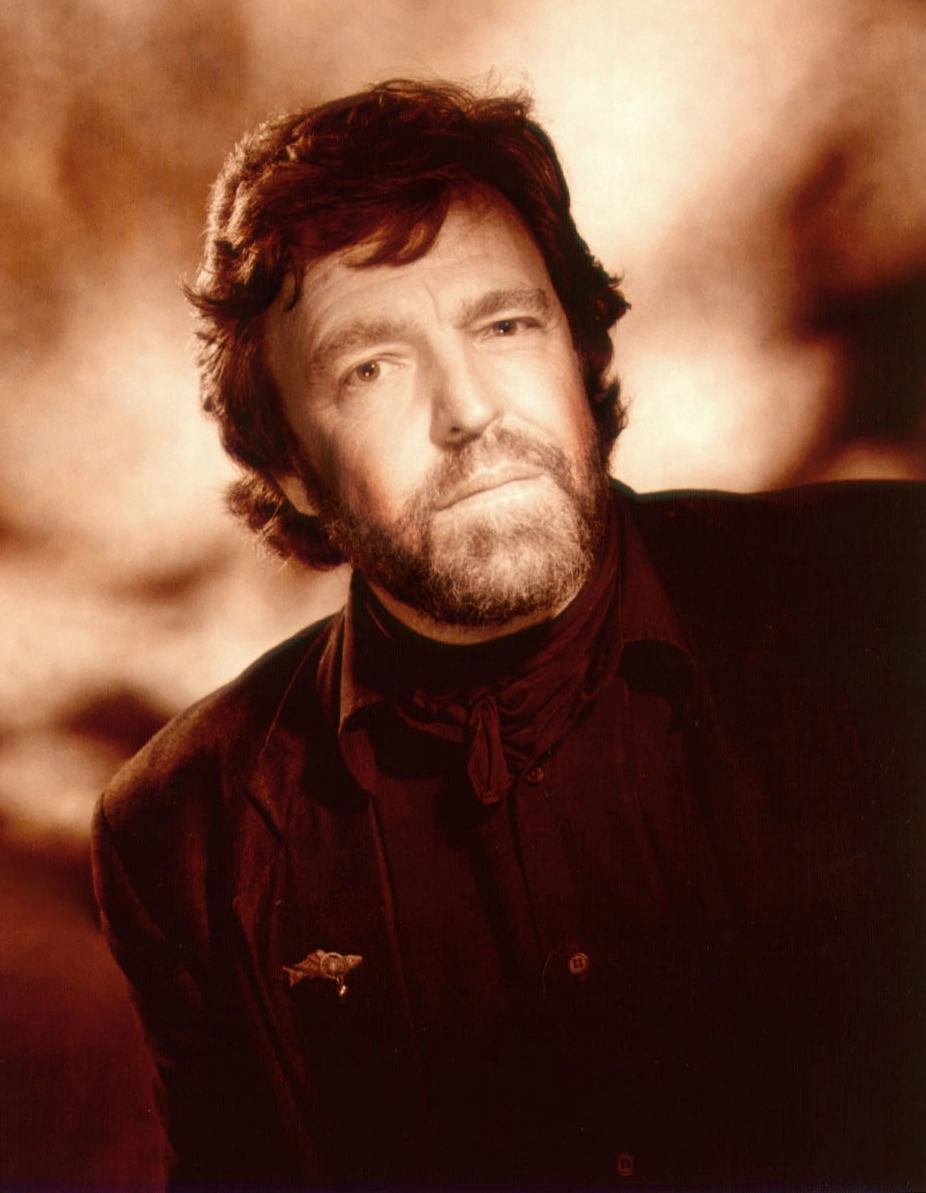
| 20 Quotes | |
| Occup. | Writer |
| From | USA |
| Born | October 3, 1947 |
| Age | 78 years |
| Cite | |
Citation Formats
APA Style (7th ed.)
John perry barlow biography, facts and quotes. (2026, February 11). FixQuotes. https://fixquotes.com/authors/john-perry-barlow/
Chicago Style
"John Perry Barlow biography, facts and quotes." FixQuotes. February 11, 2026. https://fixquotes.com/authors/john-perry-barlow/.
MLA Style (9th ed.)
"John Perry Barlow biography, facts and quotes." FixQuotes, 11 Feb. 2026, https://fixquotes.com/authors/john-perry-barlow/. Accessed 6 Mar. 2026.
Early Life and Background
John Perry Barlow was born on October 3, 1947, in Copley, Wyoming, and grew up on the family cattle ranch in the wide-open, anti-authoritarian culture of the American West. That landscape mattered: it trained his instincts toward self-reliance, a suspicion of distant power, and a belief that community is built less by rules than by mutual obligation. In later years, when digital networks became his frontier, he carried with him the rancher's sense that freedom is practical before it is philosophical.Barlow's early life also unfolded in the long afterglow of World War II and the tightening chill of the Cold War, when American institutions projected confidence and secrecy in equal measure. He watched national authority expand through surveillance and policing, even as the 1960s challenged the moral credibility of that authority. His adulthood would be shaped by that contradiction - a citizen who loved the American experiment yet bristled at its coercive habits - and he spent much of his life translating that tension into essays, speeches, and activism that made him one of the era's defining voices on digital liberty.
Education and Formative Influences
Barlow attended the progressive Fountain Valley School in Colorado, then studied at Brown University, where he absorbed both the libertarian edge of American letters and the era's countercultural distrust of orthodoxies. The campus atmosphere of the late 1960s - antiwar politics, new theories of consciousness, and experiments in communal living - met his Western individualism and produced a distinctive outlook: idealistic about human creativity, hard-eyed about bureaucratic incentives, and unusually willing to speak across cultural tribes. The writers he admired and the debates he lived through pushed him toward a lifelong conviction that language, imagination, and voluntary association were more durable engines of social change than legislation.Career, Major Works, and Turning Points
Barlow became nationally known first through music, writing lyrics for the Grateful Dead beginning in the early 1970s, including collaborations with Bob Weir on songs such as "Cassidy", "Mexicali Blues", and "Black-Throated Wind", where American myth, moral ambiguity, and open-road yearning braided into a modern folk idiom. His later pivot into technology writing and civil-liberties advocacy followed the internet's rise from research network to public commons; as a co-founder of the Electronic Frontier Foundation in 1990 (with Mitch Kapor and John Gilmore), he helped institutionalize the defense of free expression, privacy, and due process online. A major turning point came in 1996, when he wrote "A Declaration of the Independence of Cyberspace" amid early government attempts to regulate online speech, crystallizing his role as the internet's poet-lawyer - not an attorney, but a rhetorician who could turn technical stakes into moral language. In subsequent decades he wrote widely, spoke globally, and remained a public critic of overbroad copyright, mass surveillance, and censorship, while also reflecting on the limits and unintended consequences of the digital revolution he helped celebrate.Philosophy, Style, and Themes
Barlow's inner life was powered by two forces that can coexist uneasily: an ecstatic faith in human possibility and a relentless distrust of institutions that claim to manage that possibility. He framed the internet as a new kind of place - less territory than relationship - where speech could outmaneuver coercion. “The Internet treats censorship as a malfunction and routes around it”. That sentence captures his temperament: he thought of freedom not only as a right but as an emergent property of well-designed systems, and he often wrote as if networks were moral machines that could correct the failures of politics.At the same time, Barlow understood that states and corporations rarely surrender power voluntarily, so his prose returned again and again to the psychology of control: fear of disorder, hunger for ownership, and the pretense that safety can be purchased by surrendering autonomy. “Relying on the government to protect your privacy is like asking a peeping tom to install your window blinds”. The humor is barbed, but the deeper note is intimate - he felt privacy as a condition of personhood, not a consumer preference. His critique of intellectual property likewise revealed a mind preoccupied with how ideas actually move among people: “I personally think intellectual property is an oxymoron. Physical objects have a completely different natural economy than intellectual goods”. In his best essays and talks, the lyricist's ear met the activist's urgency: metaphors stayed vivid, arguments stayed concrete, and behind the bravado was a persistent, almost pastoral belief that freer exchange could produce not chaos but a more generous civic order.
Legacy and Influence
Barlow died in 2018, but his imprint remains embedded in how the internet talks about itself: as a space where rights must be argued for, not assumed, and where technical architecture can either amplify liberty or automate repression. His lyrics helped define the Grateful Dead's narrative voice, while his advocacy helped define a generation's vocabulary for digital rights - privacy, encryption, intermediary liability, and the dangers of treating speech as contraband. He also left a more complicated legacy: his cyber-utopian confidence inspired builders and reformers, yet later debates over platforms, disinformation, and algorithmic power exposed how fragile "routing around" can be when networks are centralized. Even so, Barlow endures as a rare public intellectual who could translate between ranch country, rock-and-roll America, and the emerging online world, insisting that freedom is not an abstract slogan but a daily practice of responsibility, dissent, and imaginative courage.Our collection contains 20 quotes written by John, under the main topics: Ethics & Morality - Justice - Love - Music - Sarcastic.
Other people related to John: Cory Doctorow (Journalist), Bill Kreutzmann (Musician)
John Perry Barlow Famous Works
- 1996 A Declaration of the Independence of Cyberspace (Essay)
- 1994 The Economy of Ideas (Essay)
Source / external links