
John Polkinghorne Biography Quotes 26 Report mistakes
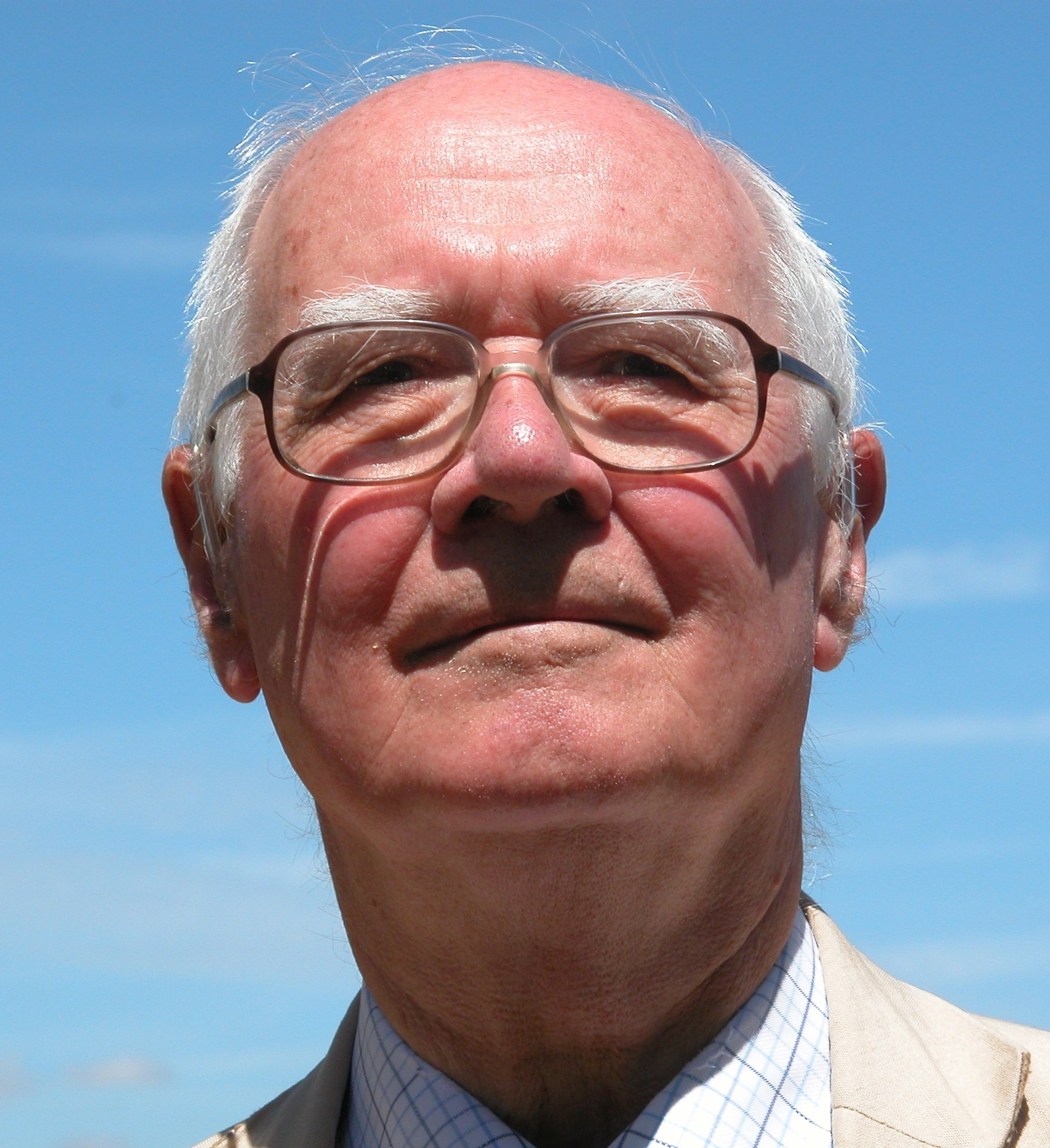
| 26 Quotes | |
| Born as | John Charlton Polkinghorne |
| Known as | Dr John Charlton Polkinghorne |
| Occup. | Physicist |
| From | United Kingdom |
| Born | October 16, 1930 Weston-super-Mare, England |
| Age | 95 years |
| Cite | |
Citation Formats
APA Style (7th ed.)
John polkinghorne biography, facts and quotes. (2026, February 11). FixQuotes. https://fixquotes.com/authors/john-polkinghorne/
Chicago Style
"John Polkinghorne biography, facts and quotes." FixQuotes. February 11, 2026. https://fixquotes.com/authors/john-polkinghorne/.
MLA Style (9th ed.)
"John Polkinghorne biography, facts and quotes." FixQuotes, 11 Feb. 2026, https://fixquotes.com/authors/john-polkinghorne/. Accessed 24 Mar. 2026.
Early Life and Background
John Charlton Polkinghorne was born on October 16, 1930, in the United Kingdom, into a century marked by war, reconstruction, and accelerating faith in scientific modernity. He grew up as Europe was redefining itself after World War II and as British public life still carried a strong, if contested, Christian imprint. That tension between inherited religious language and the postwar authority of physics would later become the signature pressure in his inner life: a mind trained to trust mathematical clarity yet unwilling to treat meaning, personhood, or worship as mere private sentiment.Family life included a close bond with his younger brother, Michael Polkinghorne, who became a professional actor. The pairing mattered: one brother pursued the disciplined abstraction of theoretical physics, the other the interpretive art of performance, and John never entirely left behind the sense that human beings are not only observers of reality but participants in it. That early intuition would reappear in his mature reflections on knowledge, where he tried to honor both the hard edges of the physical world and the irreducible depth of experience.
Education and Formative Influences
Polkinghorne studied mathematics at Trinity College, Cambridge, where he became Senior Wrangler in 1952, then completed doctoral work in theoretical physics. Cambridge in the 1950s and 1960s was a crucible: quantum theory had already broken Victorian intuitions, particle physics was expanding rapidly, and the culture of the Cavendish and the mathematical tripos rewarded austerity, rigor, and intellectual courage. He absorbed a style of thought that treated truth as something discovered, not invented, while the postwar British academy also exposed him to frank secularism - sharpening his later determination to speak of God without surrendering intellectual seriousness.Career, Major Works, and Turning Points
As a physicist, Polkinghorne worked in quantum field theory and particle physics and became a leading Cambridge figure, eventually serving as Professor of Mathematical Physics. In 1979, at the height of an enviable scientific career and with institutional prestige secured, he took the startling step of training for Anglican ordination; he was ordained in 1982 and later returned to Cambridge as Dean of Trinity Hall. That biographical pivot was not an escape from science but a wager that the same disciplined realism driving good physics could also inform honest theology. Over subsequent decades he became one of the best-known scientist-priests in public life, publishing widely across science-and-religion debates in works such as Science and Creation (1988), Reason and Reality (1991), The Faith of a Physicist (1994), Belief in God in an Age of Science (1998), and Science and Providence (1989), as well as later syntheses like The God of Hope and the End of the World (2002).Philosophy, Style, and Themes
Polkinghorne wrote with the temper of a working theorist: careful definitions, controlled speculation, and a preference for cumulative argument over rhetorical flourish. He resisted both the "God of the gaps" and the flattening reductionism that treats physics as the only language of truth. One of his recurring psychological commitments was a kind of chastened realism - the conviction that we meet a world not of our making, yet only partially seen. That is why quantum theory mattered to his theology not as a proof-text but as a parable of limits and disclosure: “Quantum theory also tells us that the world is not simply objective; somehow it's something more subtle than that. In some sense it is veiled from us, but it has a structure that we can understand”. The phrase "veiled" captures his inner stance: humility without surrender, wonder without irrationalism.His theology kept the classic Christian architecture while insisting it must breathe the air of contemporary cosmology. He defended divine transcendence against metaphysical schemes that blur God into process or nature, and he said plainly, “I think it's very important to maintain the classical Christian distinction between the Creator and creation”. Yet he also refused a theology that ignores deep time and evolution, arguing that intellectual responsibility runs both ways: “Science cannot tell theology how to construct a doctrine of creation, but you can't construct a doctrine of creation without taking account of the age of the universe and the evolutionary character of cosmic history”. This tension - between a Creator who is not the world and a creation disclosed through long, contingent history - shaped his approach to providence, prayer, and hope, and it fueled his persistent effort to show that belief can be rational without pretending to be a laboratory conclusion.
Legacy and Influence
Polkinghorne became a central architect of late-20th-century science-and-religion discourse in the English-speaking world, offering a model of intellectual integrity for readers uneasy with culture-war binaries. His influence lies less in a single doctrine than in a posture: treat physics as a serious, truth-tracking enterprise, treat theology as answerable to reality, and accept that the deepest questions are not abolished by technical success. In a period when many public debates alternated between scientism and anti-intellectual piety, he helped make it respectable to be both scientifically exacting and theologically orthodox, leaving behind a body of work that continues to shape clergy, philosophers of religion, and scientists looking for a language of meaning that does not betray evidence.Our collection contains 26 quotes written by John, under the main topics: Truth - Knowledge - Reason & Logic - Faith - Science.
John Polkinghorne Famous Works
- 2009 Theology in the Context of Science (Book)
- 2006 Science and Creation: The Search for Understanding (Book)
- 2005 Quantum Physics and Theology: An Unexpected Kinship (Book)
- 2004 The Quantum World: Quantum Physics for Everyone (Book)
- 2000 Faith, Science and Understanding (Book)
- 1998 Belief in God in an Age of Science (Book)
- 1984 The Quantum World (Book)
Source / external links