
John Ruskin Biography Quotes 93 Report mistakes
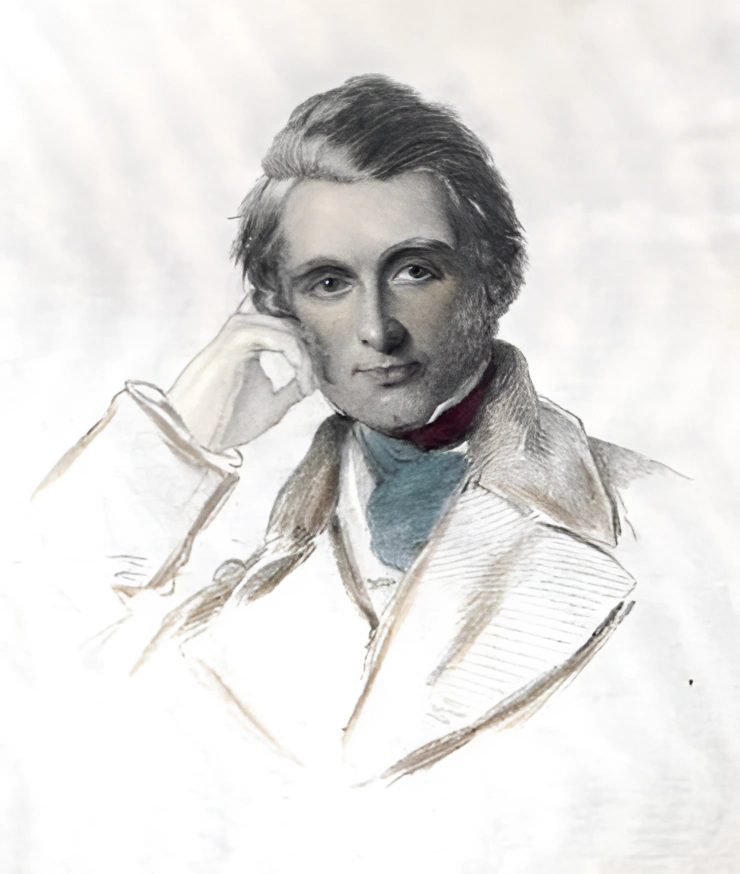
| 93 Quotes | |
| Occup. | Writer |
| From | England |
| Born | February 8, 1819 |
| Died | January 20, 1900 |
| Aged | 80 years |
| Cite | |
Citation Formats
APA Style (7th ed.)
John ruskin biography, facts and quotes. (2026, February 11). FixQuotes. https://fixquotes.com/authors/john-ruskin/
Chicago Style
"John Ruskin biography, facts and quotes." FixQuotes. February 11, 2026. https://fixquotes.com/authors/john-ruskin/.
MLA Style (9th ed.)
"John Ruskin biography, facts and quotes." FixQuotes, 11 Feb. 2026, https://fixquotes.com/authors/john-ruskin/. Accessed 24 Mar. 2026.
Early Life and Background
John Ruskin was born on 8 February 1819 in London, the only child of John James Ruskin, a prosperous sherry importer, and Margaret Cox Ruskin, a severe Evangelical who organized his days around Scripture, recitation, and moral scrutiny. The family soon settled in south London, and the boy grew up in a household that was both materially comfortable and inwardly anxious about righteousness. From early on he learned to treat language as duty and pleasure at once - a discipline that later made his prose alternately ecstatic and prosecutorial.His father took him on long coaching tours through England, Scotland, and the Continent, embedding in him a map of cathedrals, mountains, and painting collections before he had a settled identity of his own. Those journeys formed an emotional triangulation that never quite resolved: the security of commerce (his father's trade), the strictness of conscience (his mother's faith), and the intoxication of beauty (landscape, architecture, art). Ruskin's later life reads as the adult attempt to reconcile these forces without losing any of them.
Education and Formative Influences
Ruskin was educated largely at home, then attended Christ Church, Oxford, where he won the Newdigate Prize for poetry in 1839 and absorbed both classical rhetoric and the new prestige of geology and natural history; he later took his degree in 1843. His sensibility was sharpened by Romantic literature - especially Wordsworth - and by the moral earnestness of Thomas Carlyle, while his deepest aesthetic allegiance became J.M.W. Turner, whose radiance and weather he treated as evidence that perception itself could be ethical. The Oxford world gave him a public voice, but his true schooling was the combination of close looking, religious fear, and the authority to judge that he had practiced since childhood.Career, Major Works, and Turning Points
Ruskin burst into Victorian cultural life with Modern Painters (vol. I, 1843), written partly to defend Turner, and expanded the project across five volumes into a vast argument about truth to nature, imagination, and the duties of the spectator. He followed with The Seven Lamps of Architecture (1849) and The Stones of Venice (1851-1853), transforming Gothic architecture into a moral history of labor and freedom, and later championed the Pre-Raphaelite Brotherhood when they were still derided. A central private rupture was his marriage to Effie Gray (1848), annulled in 1854; the scandal exposed the brittleness beneath his public authority and pushed him toward social criticism, most famously in Unto This Last (1860), the letters of Fors Clavigera (1871-1884), and the educational experiment of the Guild of St George. By the 1880s recurrent mental collapse and withdrawal to Brantwood on Coniston Water narrowed his public life, though not the aftershock of his ideas.Philosophy, Style, and Themes
Ruskin's writing is a moral instrument: he praises beauty as a training of attention, and he condemns ugliness as an index of injustice. The famous precision of his descriptions - stone, cloud, wave, pigment - was never mere connoisseurship; it was a way to bind sensation to responsibility. He insisted that craft is a human unity, not a mechanical output: “Fine art is that in which the hand, the head, and the heart of man go together”. That sentence is also a self-portrait: he feared the Victorian split between thinking, making, and feeling, and he fought it with prose that moves from microscopic detail to prophetic warning in a single paragraph.Under industrial capitalism, Ruskin saw abundance curdle into fatigue and spiritual thinning, hence his suspicion that accumulation is not neutral: “Every increased possession loads us with a new weariness”. Against the era's faith in productivity, he reframed work as character formation rather than profit, a view that clarifies both his tenderness toward artisans and his severity toward financiers: “The highest reward for a person's toil is not what they get for it, but what they become by it”. Psychologically, this is Ruskin's lifelong wager - that the self can be saved by right seeing and right making - and also his torment, because he could not tolerate the compromise, hurry, and soot of modern life without reading them as personal and national sin.
Legacy and Influence
Ruskin helped remake the nineteenth century's vocabulary of art, architecture, and social conscience: he elevated Turner, gave intellectual scaffolding to the Gothic Revival, and provided a bridge from Romantic nature-worship to modern environmental attention. His attacks on industrial degradation fed later reform movements, influencing figures as different as William Morris, the Arts and Crafts movement, and social critics who sought an economics with a soul. Even where his judgments feel absolutist, his enduring gift is methodological - an insistence that close observation must answer to moral consequence, and that culture is not decoration but the record of what a society loves and permits.Our collection contains 93 quotes written by John, under the main topics: Motivational - Ethics & Morality - Truth - Wisdom - Art.
Other people related to John: Oscar Wilde (Dramatist), Mahatma Gandhi (Leader), Marcel Proust (Author), James Whistler (Artist), Robin G. Collingwood (Philosopher), Ralph A. Cram (Architect), Walter Crane (Artist), Coventry Patmore (Poet), Kate Greenaway (Writer)
John Ruskin Famous Works
- 1871 Fors Clavigera (Book)
- 1866 The Crown of Wild Olive (Book)
- 1865 Sesame and Lilies (Book)
- 1860 Unto This Last (Book)
- 1851 The Stones of Venice (Book)
- 1849 The Seven Lamps of Architecture (Book)
- 1843 Modern Painters (Book)
Source / external links