
John Steinbeck Biography Quotes 40 Report mistakes
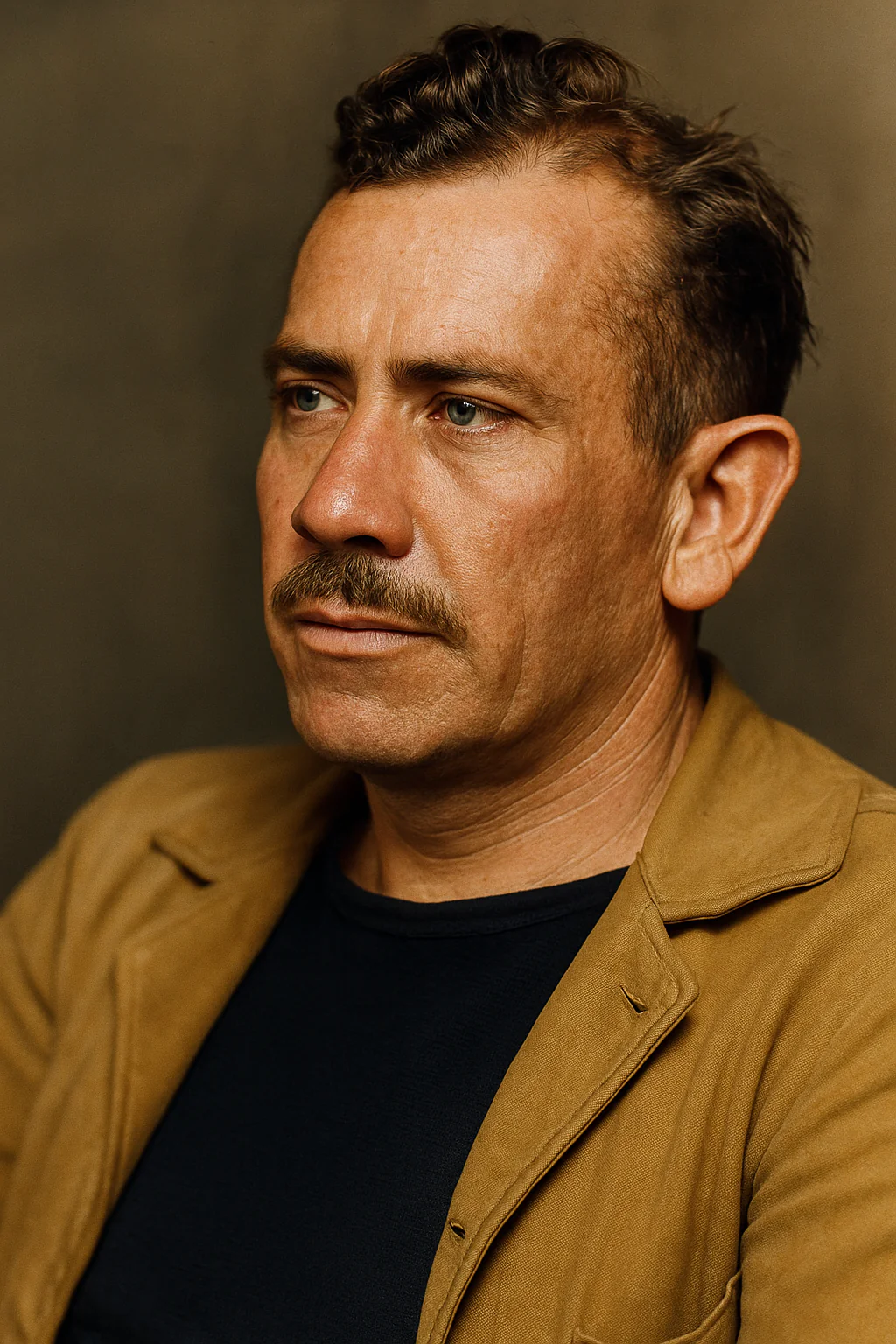
Attr: McFadden Publications, Inc.
| 40 Quotes | |
| Born as | John Ernst Steinbeck III |
| Known as | John Ernst Steinbeck |
| Occup. | Author |
| From | USA |
| Born | February 27, 1902 Salinas, California, USA |
| Died | December 20, 1968 New York City, USA |
| Aged | 66 years |
| Cite | |
Citation Formats
APA Style (7th ed.)
John steinbeck biography, facts and quotes. (2026, February 11). FixQuotes. https://fixquotes.com/authors/john-steinbeck/
Chicago Style
"John Steinbeck biography, facts and quotes." FixQuotes. February 11, 2026. https://fixquotes.com/authors/john-steinbeck/.
MLA Style (9th ed.)
"John Steinbeck biography, facts and quotes." FixQuotes, 11 Feb. 2026, https://fixquotes.com/authors/john-steinbeck/. Accessed 27 Mar. 2026.
Early Life and Background
John Ernst Steinbeck III was born on February 27, 1902, in Salinas, California, a farm-and-ranch town where agribusiness wealth sat beside seasonal labor and hard luck. His father, John Ernst Steinbeck, worked in county government; his mother, Olive Hamilton Steinbeck, had been a schoolteacher and fed her son a sense that books were not ornament but equipment. The Salinas Valley gave him two lifelong anchors: the physical truth of work with soil, animals, and weather, and the social truth that prosperity in the American West rested on invisible hands.Steinbeck grew up watching the migratory circuits of field laborers and the small, repeating humiliations of the poor, impressions that later hardened into a moral radar for exploitation. He also absorbed the region's mixed languages and codes - Mexican American communities, Okie arrivals later on, ranch owners, shopkeepers, drifters - and learned how talk reveals class as surely as clothes. The landscape was not background in his imagination but an active force, indifferent and intimate, shaping desire and defeat.
Education and Formative Influences
He graduated from Salinas High School in 1919 and moved in and out of Stanford University between 1919 and 1925, never taking a degree and never pretending the institution was his real education. He read widely, tried journalism and laboratory work, and took jobs that put him close to the people he would later render with unsettling clarity. In the 1920s he drifted through California and to New York, learning the humiliations of rent, hunger, and failed ambition; those years trained his ear for vernacular speech and his suspicion of genteel literary poses.Career, Major Works, and Turning Points
After early struggles, he began publishing fiction rooted in California: "Cup of Gold" (1929) was followed by the breakthrough "Tortilla Flat" (1935), which proved he could fuse comic warmth with social edge. The late 1930s brought his defining surge: "In Dubious Battle" (1936) and "Of Mice and Men" (1937) confronted labor conflict and shattered dreams, and "The Grapes of Wrath" (1939) turned Dust Bowl migration into a national moral argument, earning the Pulitzer Prize amid political controversy and bans. War reporting expanded his range, while "Cannery Row" (1945) and "The Pearl" (1947) returned to parable and community portraiture. In midlife he pursued allegory and experiment in "East of Eden" (1952), his large-scale reckoning with family and freedom, and later traveled and reflected in "Travels with Charley" (1962). The Nobel Prize in Literature came in 1962, by which time his celebrity, criticism, and private self-doubt had become inseparable.Philosophy, Style, and Themes
Steinbeck's inner life ran on a tension between tenderness and severity. He wrote as a moral realist, convinced that systems grind people down but also that people cooperate in their own undoing, sometimes through pride, sometimes through the hunger to belong. His fiction returns to the fragile machinery of fellowship - the protective pact between two ranch hands, the improvised family on the road, the outcasts who build a town within a town. Yet he never romanticized suffering; the poor are capable of cruelty and the comfortable of sudden mercy, and the line between them can be crossed in one bad season.His style looks plain until you notice its exacting control: biblical cadence without sermon, documentary detail without coldness, and dialogue that carries entire social histories. He understood the psychological necessity of belief for an artist, even when belief is partly staged: “The writer must believe that what he is doing is the most important thing in the world. And he must hold to this illusion even when he knows it is not true”. That disciplined self-mythmaking let him attempt empathy at scale, and it sharpened his anger at self-defeating human patterns: “Man is the only kind of varmint sets his own trap, baits it, then steps in it”. Still, his ethics were not abstract; they were grounded in the emergency economy of need, the instinct to turn toward those with least to lose: “If you're in trouble, or hurt or need - go to the poor people. They're the only ones that'll help - the only ones”. The recurring Steinbeck question is not whether people are good, but whether they can stay human under pressure.
Legacy and Influence
Steinbeck died on December 20, 1968, in New York City, leaving a body of work that remains a central imaginative record of Depression-era America and the West's unfinished promises. His influence persists in social-realist fiction, documentary storytelling, and screenwriting that refuses to separate character from economy or ecology; writers and filmmakers return to his methods for rendering work, hunger, land, and loyalty without condescension. Debates over his politics and sentimentality have never dislodged the fact that his best books continue to supply readers with a vocabulary for dignity under dispossession - and a warning about what happens when a nation treats laboring lives as expendable.Our collection contains 40 quotes written by John, under the main topics: Witty One-Liners - Ethics & Morality - Wisdom - Justice - Mortality.
Other people related to John: Sherwood Anderson (Writer), Jane Darwell (Actress), Gary Sinise (Actor), Broderick Crawford (Actor)
Frequently Asked Questions
- John Steinbeck died: December 20, 1968, New York City
- John Steinbeck spouse: Carol Henning; Gwyndolyn Conger; Elaine Anderson Steinbeck
- John Steinbeck education: Stanford University (attended, no degree)
- John Steinbeck IV: His son; a journalist and author (1946–1991)
- John Steinbeck title of breakout work: Tortilla Flat
- John Steinbeck books: The Grapes of Wrath; Of Mice and Men; East of Eden; Tortilla Flat; Cannery Row
- How old was John Steinbeck? He became 66 years old
John Steinbeck Famous Works
- 1954 Sweet Thursday (Novel)
- 1952 East of Eden (Novel)
- 1947 The Pearl (Novella)
- 1945 Cannery Row (Novel)
- 1939 The Grapes of Wrath (Novel)
- 1937 Of Mice and Men (Novella)
- 1936 In Dubious Battle (Novel)
- 1935 Tortilla Flat (Novel)
- 1933 The Red Pony (Novella)
Source / external links