
John Sterling Biography Quotes 8 Report mistakes
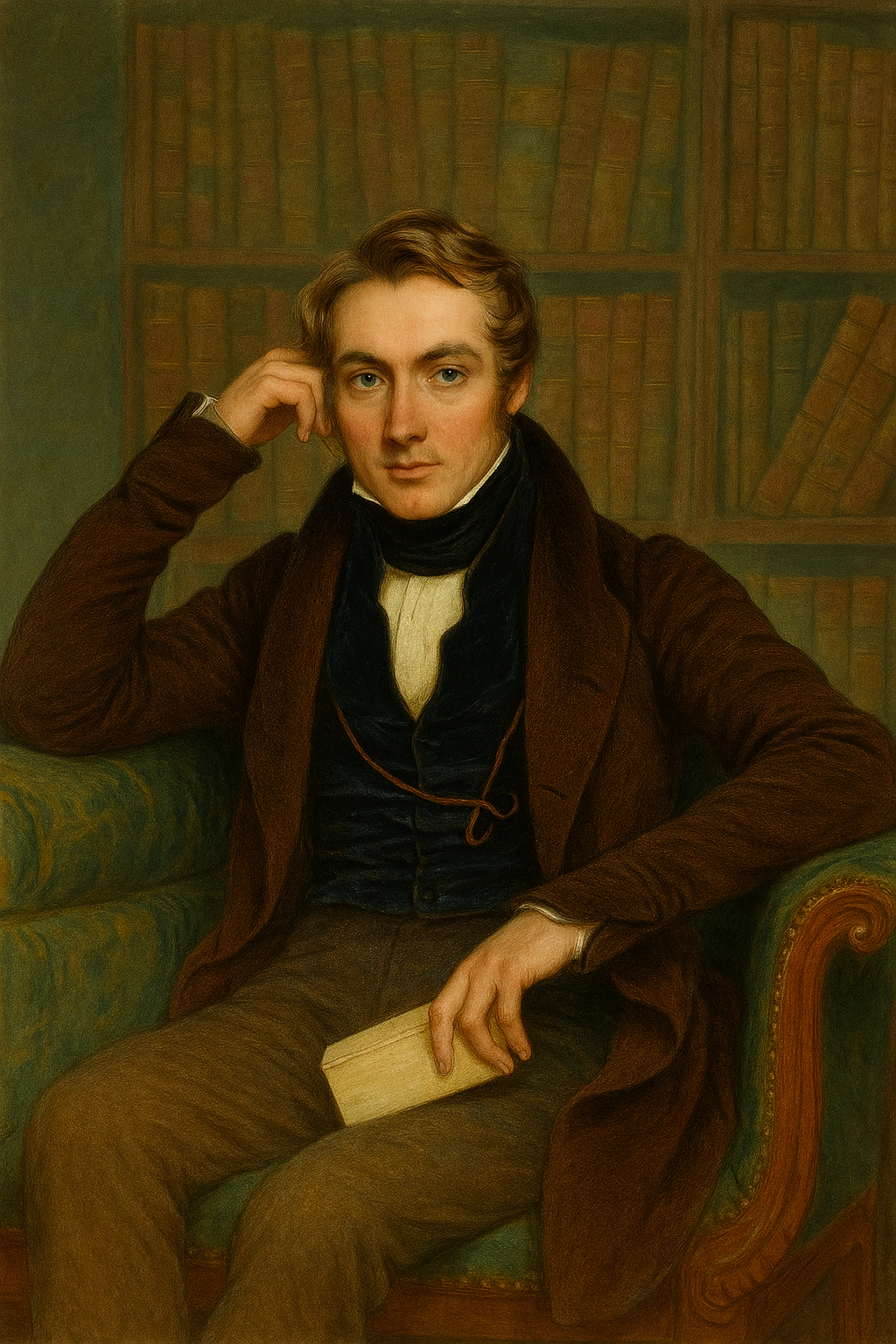
| 8 Quotes | |
| Occup. | Author |
| From | United Kingdom |
| Born | July 20, 1806 Kames, Isle of Bute, Scotland, United Kingdom |
| Died | September 18, 1844 Ventnor, Isle of Wight, England, United Kingdom |
| Cause | Tuberculosis |
| Aged | 38 years |
| Cite | |
Citation Formats
APA Style (7th ed.)
John sterling biography, facts and quotes. (2026, March 18). FixQuotes. https://fixquotes.com/authors/john-sterling/
Chicago Style
"John Sterling biography, facts and quotes." FixQuotes. March 18, 2026. https://fixquotes.com/authors/john-sterling/.
MLA Style (9th ed.)
"John Sterling biography, facts and quotes." FixQuotes, 18 Mar. 2026, https://fixquotes.com/authors/john-sterling/. Accessed 24 Mar. 2026.
Early Life and Background
John Sterling was born on 20 July 1806 in Kames Castle on the Isle of Bute, the son of Edward Sterling and Anne Christian. His father, a forceful Scottish journalist who became one of the most influential political writers attached to The Times, gave the family both ambition and instability: they moved into the charged world of London opinion, reform, and newspaper power while John was still young. Sterling grew up at the intersection of Scottish seriousness and metropolitan argument, in a Britain remade by war, evangelical revival, utilitarian critique, and the first shocks of industrial modernity. He belonged by birth to no settled literary school, yet from the beginning he absorbed controversy as a native climate.
That atmosphere shaped both his gifts and his difficulties. Friends and later biographers saw in him a brilliant conversationalist, magnetic, ardent, and perpetually in search of a form equal to his moral restlessness. He was physically delicate for much of his adult life, and the sense of limited time sharpened an already intense inward life. Sterling was never merely a man of letters in the narrow sense; he was drawn toward religion, politics, poetry, and philosophical speculation at once, as if no single vocation could contain him. This breadth made him attractive to some of the strongest minds of his generation, but it also left behind an impression of incompletion - a life rich in promise, cut across by doubt, illness, and too many beginnings.
Education and Formative Influences
Sterling was educated first in private settings and then at Glasgow, where he came under the influence of liberal and intellectual currents stronger than those of conventional Anglican upbringing. He later entered Trinity College, Cambridge, and became associated with the circle later called the Cambridge Apostles, a milieu that prized candor, moral intensity, and speculative reach. There he formed important friendships, including with Julius Hare and, through the wider intellectual world, with men such as F. D. Maurice and Thomas Carlyle. For a period he was attracted to the thought and social hopes of Samuel Taylor Coleridge, whose attempt to reunite Christianity, imagination, and philosophy spoke directly to Sterling's divided nature. He also traveled to Germany, encountering continental theology and criticism at a moment when English religious belief was being tested by historical consciousness. These experiences widened him, but they also unsettled inherited certainties and prepared the inward drama that would define his adult life.
Career, Major Works, and Turning Points
Sterling tried on several callings without fully inhabiting any one of them. In the early 1830s he moved toward the ministry and was ordained in the Church of England, serving briefly as curate at Hurstmonceux in Sussex; yet clerical discipline and doctrinal fixity sat uneasily on a mind drawn to inquiry, and ill health soon forced retreat. Tuberculosis, or a related wasting pulmonary illness, became the governing fact of his mature years. He turned increasingly to writing - essays, criticism, poetry, prose sketches, and contributions to periodicals, including Blackwood's Magazine and the Athenaeum. His novel Arthur Coningsby appeared in 1833, and his poems and reflective prose revealed intelligence more searching than architectonic. Sterling's life acquired posthumous shape through two famous memoirs: Julius Hare's affectionate but pious account and Thomas Carlyle's 1851 Life of John Sterling, one of the great Victorian biographies, which transformed him into a symbol of the modern seeker - gifted, spiritually homeless, and tested by an age in which old beliefs no longer held with unquestioned force. He died on 18 September 1844 at Ventnor, Isle of Wight, only thirty-eight.
Philosophy, Style, and Themes
Sterling's surviving writings and sayings show a mind fascinated by the unstable border between moral will and metaphysical uncertainty. He distrusted passive reverie and sentimental self-indulgence. “Toil, feel, think, hope; you will be sure to dream enough before you die, without arranging for it”. The sentence carries his characteristic impatience with luxurious vagueness: life must be exerted, not merely imagined. Yet his seriousness was never crudely activist. He wanted inward discipline because he sensed how readily consciousness turns evasive. “The worst education which teaches self-denial is better than the best which teaches everything else, and not that”. Here Sterling reveals a stern psychological insight - that character, not accumulation, is the decisive human formation. His moral imagination sought not repression for its own sake but a schooling of desire that might rescue personality from dissipation.
At the same time he remained haunted by the limits of certainty and the opacity of the self. “Man is a substance clad in shadows”. That aphorism condenses the spiritual weather of his age and his own inner life: he believed in depth, essence, and destiny, but experienced them through obscurity, mediation, and broken glimpses. This tension helps explain both the beauty and the frustration of his style. He wrote in quick illuminations rather than in systems, preferring suggestive turns of thought, moral pressure, and imagistic compression. Across his essays and poems run recurring concerns - freedom and necessity, the discipline of suffering, the relation between thought and action, and the search for a faith large enough to survive criticism. Even his incompleteness is revealing. Sterling became a witness to what it felt like to be intellectually awake in early Victorian Britain while standing amid the ruins of simpler convictions.
Legacy and Influence
Sterling's direct corpus is modest, and by conventional measures his achievement falls short of the grand Victorian masters around him. Yet his importance lies in the kind of figure he became: not a monumental author, but an exemplary consciousness. Through Carlyle especially, he entered literary history as one of the era's most vivid cases of cultivated modern doubt joined to undiminished moral hunger. He mattered to contemporaries because he dramatized a transition - from inherited orthodoxy to searching, provisional belief; from career to vocation; from public ambition to inward authenticity under the sentence of illness. Later readers have returned to him less for completed masterpieces than for the intensity of the fragments, the distinction of the aphorisms, and the biographical pathos of a brilliant life abbreviated before full ripening. In that sense Sterling endures as both author and emblem: a minor writer in scale, a major witness in spirit.
Our collection contains 8 quotes written by John, under the main topics: Truth - Wisdom - Art - Love - Deep.
Source / external links