
John Tillotson Biography Quotes 9 Report mistakes
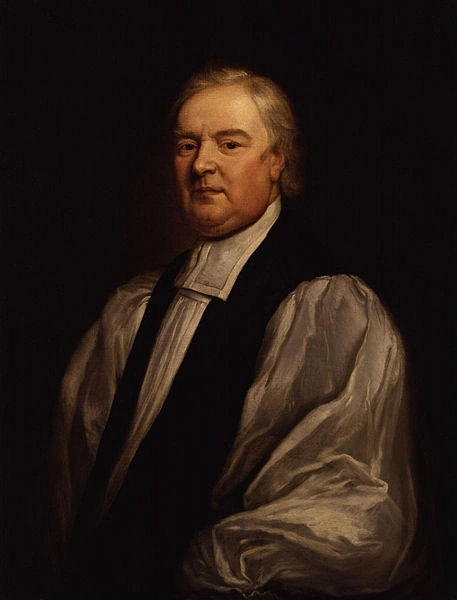
| 9 Quotes | |
| Occup. | Theologian |
| From | United Kingdom |
| Born | October 1, 1630 |
| Died | November 22, 1694 |
| Aged | 64 years |
| Cite | |
Citation Formats
APA Style (7th ed.)
John tillotson biography, facts and quotes. (2026, February 11). FixQuotes. https://fixquotes.com/authors/john-tillotson/
Chicago Style
"John Tillotson biography, facts and quotes." FixQuotes. February 11, 2026. https://fixquotes.com/authors/john-tillotson/.
MLA Style (9th ed.)
"John Tillotson biography, facts and quotes." FixQuotes, 11 Feb. 2026, https://fixquotes.com/authors/john-tillotson/. Accessed 8 Mar. 2026.
Early Life and Background
John Tillotson was born on October 1, 1630, at Sowerby in the West Riding of Yorkshire, the son of Robert Tillotson, a clothier whose earnest Puritanism set the emotional climate of the household. The north of England in Tillotson's youth was a place where sermons were public events and conscience was a social force; religion was not merely doctrine but a lens for judging neighbors, magistrates, and oneself.His adolescence unfolded against the slow slide into the English Civil Wars and the shattering of old certainties about king, church, and law. That political-religious turmoil trained in him a lifelong suspicion of extremes. Even when he later rose to national prominence, he retained something of the provincial moral seriousness of Yorkshire nonconformity - a temper that sought steadiness over spectacle and persuasion over coercion.
Education and Formative Influences
Tillotson studied at Clare Hall, Cambridge, entering in 1647 and taking his BA in 1650 and MA in 1654, remaining for a time as a fellow. Cambridge in the Interregnum was a laboratory of competing Protestant futures, and Tillotson learned to navigate them with a distinctly "latitudinarian" cast: a commitment to Christian fundamentals, a preference for reasoned argument, and a reluctance to treat disputed ceremonies as tests of salvation. Early friendships and clerical networks formed there later helped him bridge the worlds of former Puritans and restored Anglicanism, shaping a preacher who could speak to a divided nation without inflaming its wounds.Career, Major Works, and Turning Points
Ordained in the Church of England after the Restoration, Tillotson became a leading London preacher, serving at St Lawrence Jewry and later as preacher at Lincoln's Inn, where his lucid, morally practical sermons matched the habits of lawyers and administrators. He married Elizabeth French, niece of Oliver Cromwell, a union that quietly symbolized his ability to live across political fault lines without theatrical renunciation. His influence grew through the 1670s and 1680s as a voice for moderation during the Popish Plot hysteria and the Exclusion Crisis. After the Glorious Revolution of 1688, he accepted the new settlement, was made Dean of St Paul's, and in 1691 succeeded William Sancroft as Archbishop of Canterbury when the nonjuring crisis split the episcopate. The appointment crowned him and burdened him: he had to secure a fragile church under William and Mary, defend oaths and legitimacy, and keep space for conscience while resisting both Roman Catholic resurgence and Protestant fanaticism. He died on November 22, 1694, in London, leaving his reputation largely to the printed afterlife of his sermons.Philosophy, Style, and Themes
Tillotson's inner life was governed by a moral psychology that distrusted heat and prized clarity. His preaching assumed that most people are not conquered by exotic heresies but by ordinary mental failures - laziness, passion, self-justifying habits. That is why he could sound like a physician of the will: “Ignorance and inconsideration are the two great causes of the ruin of mankind”. The line is not merely admonition; it reveals his conviction that sin often begins as inattention, and that pastoral work is the patient training of attention - to consequences, to neighbor, to God.His style rejected baroque ingenuity for transparent reasoning and a steady ethical cadence. The sermons move by plain divisions, careful definitions, and appeals to common experience, a rhetoric designed to make virtue feel practicable rather than heroic. “Of all parts of wisdom the practice is the best”. That sentence is the key to his public theology: Christianity as a discipline of life, not an arena for winning debates. It also explains his impatience with factional performances of piety. “Zeal is fit for wise men, but flourishes chiefly among fools”. The psychological target is the person who uses religious intensity to avoid moral labor; Tillotson repeatedly treats such zeal as a substitute for repentance, charity, and self-command.
Legacy and Influence
Tillotson became, for a generation, the emblem of post-Revolution Anglican reasonableness - admired for making the pulpit sound like moral common sense without surrendering Christian seriousness. His collected sermons circulated widely, shaping the "polite" religious prose of the late seventeenth and early eighteenth centuries and influencing Anglican divines who sought to reconcile faith with emerging habits of rational inquiry. Critics have faulted him for coolness, yet his enduring influence lies in a different achievement: he helped normalize a national religious language in which persuasion outranked persecution, ethics carried the weight of doctrine, and the church could present itself as the guardian of public reason as well as public worship.Our collection contains 9 quotes written by John, under the main topics: Ethics & Morality - Wisdom - Freedom - Kindness - Forgiveness.
Source / external links