
John Tukey Biography Quotes 3 Report mistakes
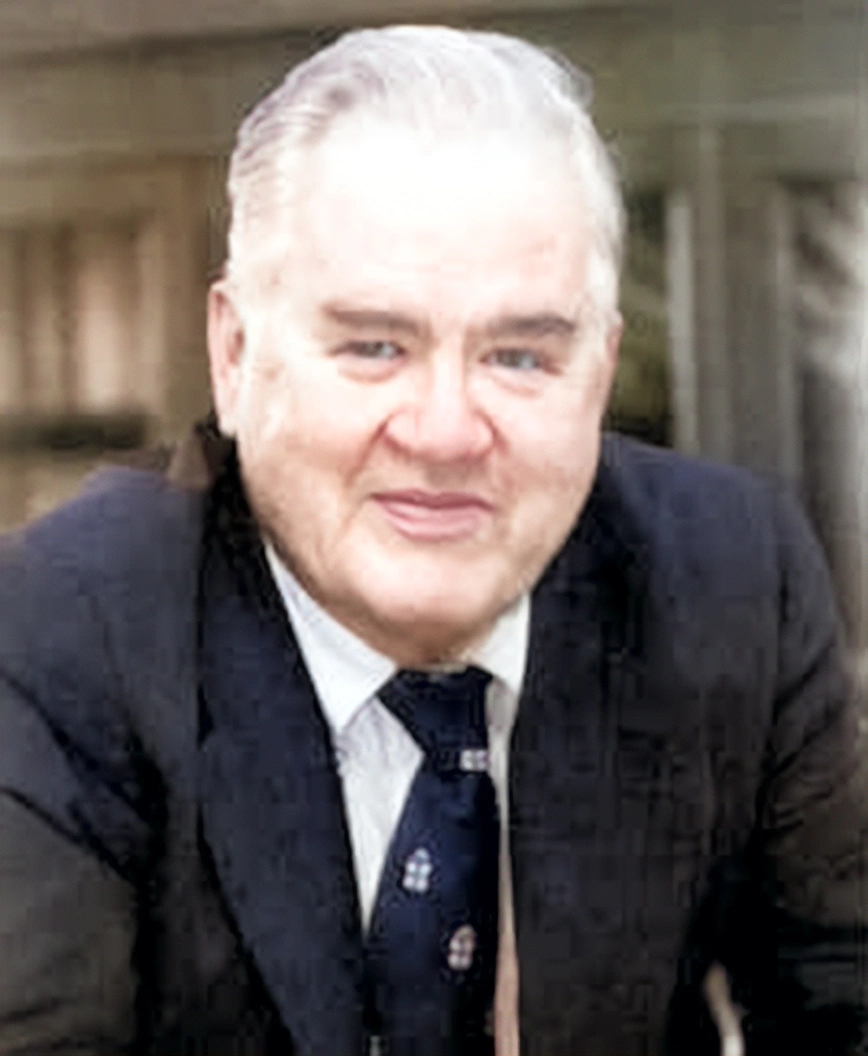
| 3 Quotes | |
| Born as | John Wilder Tukey |
| Occup. | Scientist |
| From | USA |
| Born | June 16, 1915 New Bedford, Massachusetts, USA |
| Died | July 26, 2000 New Brunswick, New Jersey, USA |
| Cause | Heart attack |
| Aged | 85 years |
| Cite | |
Citation Formats
APA Style (7th ed.)
John tukey biography, facts and quotes. (2026, February 11). FixQuotes. https://fixquotes.com/authors/john-tukey/
Chicago Style
"John Tukey biography, facts and quotes." FixQuotes. February 11, 2026. https://fixquotes.com/authors/john-tukey/.
MLA Style (9th ed.)
"John Tukey biography, facts and quotes." FixQuotes, 11 Feb. 2026, https://fixquotes.com/authors/john-tukey/. Accessed 26 Mar. 2026.
Early Life and Background
John Wilder Tukey was born on June 16, 1915, in New Bedford, Massachusetts, into a household that treated learning as a daily practice rather than a school requirement. His father, Ralph H. Tukey, taught Latin, and his mother, Elizabeth H. Tukey, taught English; both were educators who shaped their only child with disciplined reading, precision of language, and an insistence on clarity. The First World War and its aftermath framed his earliest years, but his upbringing was not defined by crisis so much as by the quieter pressure of intellectual self-reliance.A childhood accident left him with lasting hearing loss, a constraint that helped channel him toward solitary work, careful observation, and written argument. That partial isolation did not make him timid; it strengthened a habit of independent judgment that later colleagues recognized as both rigorous and contrarian. From early on, he was drawn to the question beneath the question - a sensibility that later made him unusually alert to the ways institutions, data, and even well-meaning researchers can mislead themselves.
Education and Formative Influences
Tukey studied chemistry at Brown University (AB, 1936), then moved into mathematics at Princeton University, earning an MA in 1937 and a PhD in 1939; he remained closely tied to Princeton for decades as a professor and intellectual anchor. Princeton in the late 1930s offered him both formal mathematical training and exposure to an emerging style of applied thinking that treated probability and computation as tools for urgent real-world problems. He learned to move fluently between abstract reasoning and the messy demands of measurement, an elasticity that would become his signature as statistics accelerated during wartime and the early Cold War.Career, Major Works, and Turning Points
During World War II and after, Tukey helped shape the US statistical capacity that linked universities, industry, and government, working at Princeton while also spending much of his career at Bell Telephone Laboratories, where complex engineering systems forced data analysis to become practical, not ceremonial. He consulted widely for federal agencies and helped design and interpret studies central to national security, including advisory work connected to nuclear test detection and later arms-control verification. In academic statistics he pushed beyond narrow inference to invention: he named and popularized ideas that became standard tools, including exploratory data analysis, the box-and-whisker plot, the jackknife, and the fast Fourier transform (FFT, developed with James W. Cooley and publicized in 1965), which transformed signal processing and computational science. A key turning point came as computers moved from rare machines to institutional infrastructure; Tukey grasped earlier than most that computation would change what questions could be asked, and he redesigned statistics accordingly.Philosophy, Style, and Themes
Tukey distrusted the ritual of exactness when it was disconnected from purpose, and his work repeatedly tried to rescue scientists from answering the wrong question perfectly. “Far better an approximate answer to the right question, which is often vague, than the exact answer to the wrong question, which can always be made precise”. For Tukey this was not a slogan but a psychological discipline: admit vagueness, model it honestly, and use methods that are robust to the many ways reality refuses to cooperate. His preference for approximate-but-relevant answers was also an ethical stance against institutional self-deception, especially in high-stakes settings where a precise number can become a shield for weak assumptions.His style was inventive, sometimes idiosyncratic in language, and relentlessly tool-making. He treated graphics as a way to think, not a way to decorate results, and argued that surprise is often the point of analysis: “Numerical quantities focus on expected values, graphical summaries on unexpected values”. This emphasis on the unexpected fueled exploratory data analysis - a framework for letting data challenge the analyst before the analyst forces the data into a model. Underneath was a deep respect for fallibility: the scientist is biased, instruments drift, samples are imperfect, and the world changes mid-study. The remedy, for Tukey, was not cynicism but more intelligent work habits: visualize, iterate, check sensitivity, and keep the question in view. As he put it, “An approximate answer to the right problem is worth a good deal more than an exact answer to an approximate problem”.
Legacy and Influence
Tukey died on July 26, 2000, in New Brunswick, New Jersey, but his influence only expanded as data became ubiquitous. Modern data science inherits his two great bequests: a toolbox (FFT, jackknife, robust summaries, box plots, and a culture of computation) and a temperament (skeptical of brittle assumptions, hungry for discovery, and oriented toward usefulness). He helped shift statistics from a gatekeeping discipline of formal tests to a broader practice of learning from data, and his imprint is visible wherever analysts explore first, model second, and refuse to confuse precision with truth.Our collection contains 3 quotes written by John, under the main topics: Reason & Logic - Science - Decision-Making.
Frequently Asked Questions
- Exploratory data analysis by John W Tukey: Exploratory Data Analysis by John W. Tukey introduced new statistical techniques and visual methods for data analysis to uncover underlying patterns.
- John Tukey fun facts: John Tukey coined the terms 'bit' for binary digit and 'software' in the context of computer programming.
- John Tukey Exploratory data analysis: John Tukey pioneered the field of Exploratory Data Analysis (EDA) to analyze data sets and summarize their main characteristics using visual methods.
- John Tukey Fast Fourier Transform: John Tukey co-developed the Fast Fourier Transform (FFT), a key algorithm for computing discrete Fourier transforms efficiently, in 1965.
- John Tukey family: John Tukey was born to Ralph and Adah Tukey and grew up in New Bedford, Massachusetts.
- John Tukey contribution to statistics: John Tukey significantly contributed to statistics by developing the Fast Fourier Transform and promoting Exploratory Data Analysis.
- How old was John Tukey? He became 85 years old
John Tukey Famous Works
- 1985 The Collected Works of John W. Tukey: Time Series, 1965-1984 (Book)
- 1977 Exploratory Data Analysis (Book)
Source / external links