
John W. Gardner Biography Quotes 27 Report mistakes
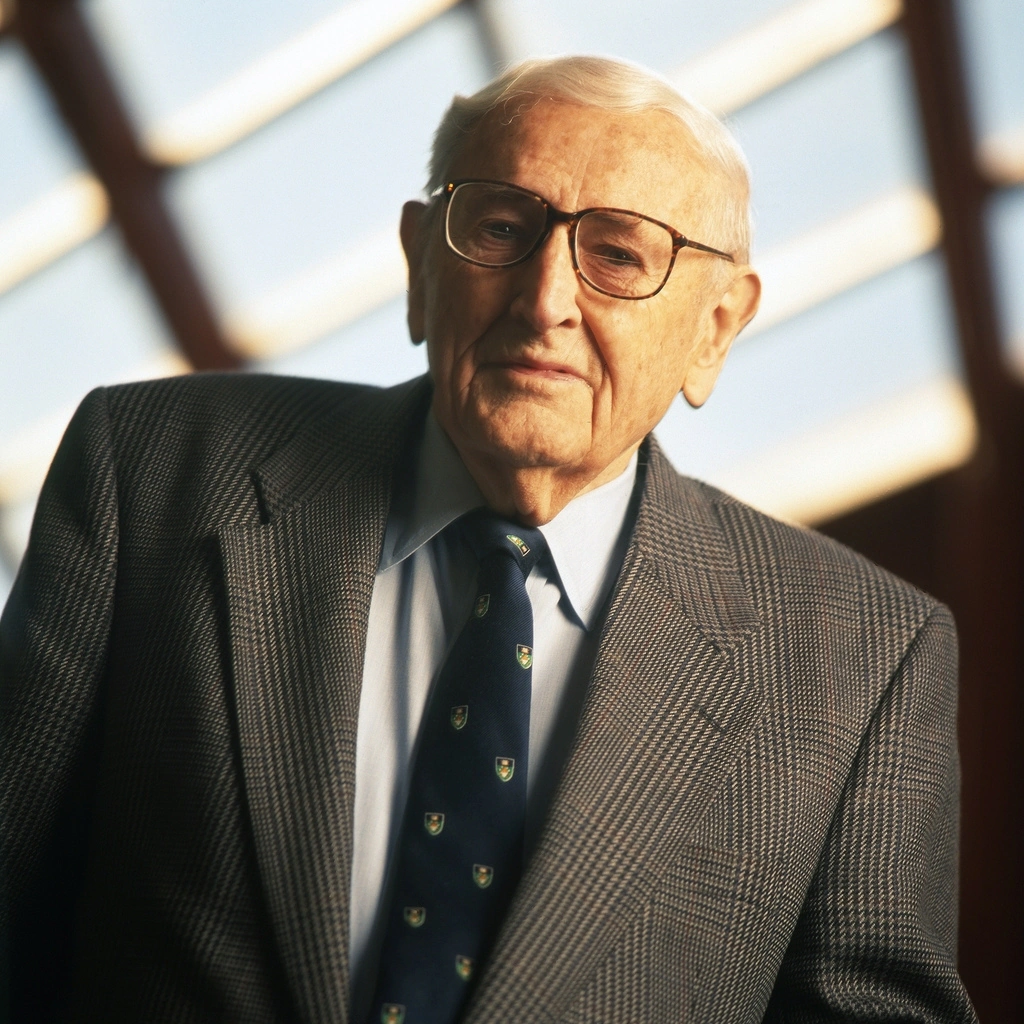
| 27 Quotes | |
| Occup. | Educator |
| From | USA |
| Born | October 8, 1912 |
| Died | February 16, 2002 |
| Aged | 89 years |
| Cite | |
Citation Formats
APA Style (7th ed.)
John w. gardner biography, facts and quotes. (2026, February 11). FixQuotes. https://fixquotes.com/authors/john-w-gardner/
Chicago Style
"John W. Gardner biography, facts and quotes." FixQuotes. February 11, 2026. https://fixquotes.com/authors/john-w-gardner/.
MLA Style (9th ed.)
"John W. Gardner biography, facts and quotes." FixQuotes, 11 Feb. 2026, https://fixquotes.com/authors/john-w-gardner/. Accessed 5 Mar. 2026.
Early Life and Background
John William Gardner was born on October 8, 1912, in Los Angeles, California, and grew up largely in California and Oregon in a nation that would soon be remade by depression, global war, and an expanding federal state. Coming of age between the Progressive Era's civic idealism and the hard lessons of the 1930s, he absorbed an American faith in self-improvement while watching institutions strain under economic collapse and mass migration.Those early decades shaped a temperament that combined moral seriousness with practical problem-solving. Gardner was not drawn to public life as performance; he was drawn to it as repair work. The civic atmosphere of the West, with its boosterism, voluntary associations, and impatience with inherited hierarchy, helped form a lifelong conviction that leadership was a set of learnable responsibilities, not a birthright.
Education and Formative Influences
Gardner studied at Stanford University, then deepened his outlook at the University of California, Berkeley, before completing doctoral work in psychology at the University of California, Berkeley in the mid-1930s. Trained in the behavioral and social-scientific currents of the period, he learned to treat character as something shaped by environments and incentives as much as by private will - a perspective that later let him speak to both educators and policymakers without romanticizing either individual virtue or institutional power.Career, Major Works, and Turning Points
After early academic and wartime-related work that sharpened his interest in human performance and training, Gardner emerged nationally through philanthropy and public service. At the Carnegie Corporation of New York he became a leading voice on education and civic capacity, then served as U.S. Secretary of Health, Education, and Welfare (1965-1968) under President Lyndon B. Johnson, navigating Great Society ambitions amid Vietnam-era distrust. He left Washington disillusioned by polarizing politics but not by public purpose, returning to the long game of institution-building: he chaired or helped launch initiatives aimed at strengthening democratic leadership, and he founded Common Cause in 1970 to press for cleaner government and accountable representation. Across books such as Excellence (1961), Self-Renewal (1964), and On Leadership (1990), he treated the health of a society as a problem of renewal - personal, organizational, and civic - and made that argument legible to classrooms, boardrooms, and legislatures.Philosophy, Style, and Themes
Gardner wrote in a plain, supervisory American prose - the tone of a demanding teacher rather than a charismatic prophet. His central theme was renewal: the idea that individuals and institutions decay without habits of learning, honest feedback, and shared standards. In a century that alternated between technocratic confidence and cultural cynicism, he insisted on competence as a moral category. “Excellence is doing ordinary things extraordinarily well”. The line is often repeated as a slogan, but in Gardner it points to a psychology: he believed dignity is built through disciplined attention, and that democratic societies survive not on inspiration alone but on the quiet reliability of work.He was also wary of the status games that separate "high" from "low" callings, because such contempt corrodes both craft and thought. "The society which scorns excellence in plumbing as a humble activity and tolerates shoddiness in philosophy because it is an exalted activity will have neither good plumbing nor good philosophy: neither
Our collection contains 27 quotes written by John, under the main topics: Motivational - Ethics & Morality - Justice - Leadership - Freedom.
Source / external links