
John Webster Biography Quotes 19 Report mistakes
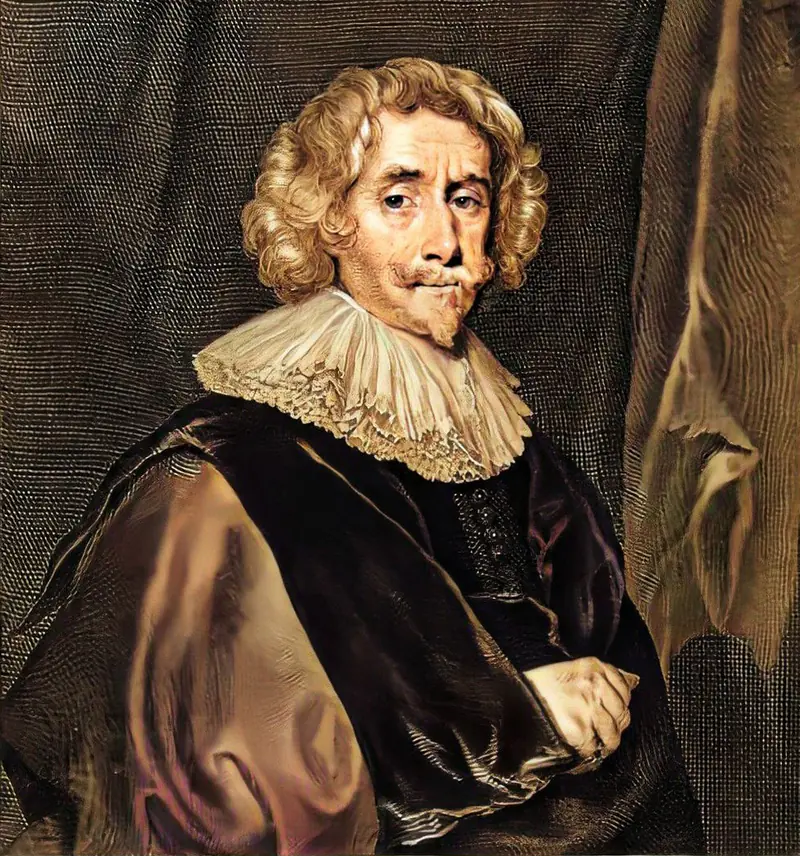
| 19 Quotes | |
| Occup. | Playwright |
| From | England |
| Born | 1578 AC England |
| Died | 1634 AC England |
John Webster (born c. 1578, died c. 1634) stands among the most distinctive dramatists of the English Renaissance. Evidence suggests he was London-born, the son of a prosperous coachmaker also named John Webster, whose ties to the Merchant Taylors Company placed the family within the fabric of the citys artisanal and civic life. Little about Websters schooling can be stated with certainty, though his writing shows a command of rhetoric and law that hints at a solid humanist education and familiarity with the Inns of Court. Archival traces link him to parishes around the legal quarter, an environment that later supplied him with the legal intricacies and forensic confrontations that mark his mature plays.
Apprenticeship to the Stage
Webster emerges on the theatrical scene in the first decade of the seventeenth century, when London drama flourished under the patronage of King James I and Queen Anne. His earliest known successes were collaborations in bustling city comedy, especially with Thomas Dekker, a prolific playwright whose humane, streetwise sensibility complemented Websters sharpened irony. Together they wrote Westward Ho (1604) and Northward Ho (1605), satires of London manners and mercantile ambition. A related partnership produced The Famous History of Sir Thomas Wyatt, a chronicle drama recounting Tudor rebellion. These ventures placed Webster in close professional orbit with playwrights such as Thomas Heywood and Thomas Middleton and in the ambit of companies like Queen Annes Men, for whom city audiences at the Red Bull Theatre prized topicality and energy.
Tragedies and Major Works
From this lively beginning Webster moved into tragedy, where his reputation now chiefly rests. The White Devil, staged around 1612, dramatizes the fall of Vittoria Corombona amid intrigue in an Italian court. Although its first run for Queen Annes Men at the Red Bull appears to have met a cool reception, the plays taut design, acid wit, and fearless moral probing have since made it a touchstone of Jacobean tragedy. Its villains and victims share the same corrupt air; power is relentless; justice, when it comes, feels indistinguishable from revenge.
The Duchess of Malfi, likely performed by the Kings Men around 1613-1614 and later printed in the 1620s, established Websters enduring status. Set again in Italy, it centers on a widowed Duchess who remarries for love against the wishes of her brothers, a worldly Cardinal and the violently unstable Ferdinand. In shaping a heroine at once politically vulnerable and morally steadfast, Webster crafted one of the period's most compelling female protagonists. The plays blend of intimate emotion, political critique, and startling stage images proved especially suited to the indoor Blackfriars Theatre, where the Kings Men (the company associated with William Shakespeare) could exploit candlelit effects and a refined audience.
Webster continued to explore law, conscience, and social power in The Devils Law-Case (early 1620s), a play whose courtroom maneuvers showcase his fascination with procedure and proof. He also worked in collaboration beyond tragedy: A Cure for a Cuckold, generally assigned to Webster and William Rowley, belongs to the same decade and reveals his versatility with comic and domestic materials. Civic pageantry was another strand of his career; he contributed to Lord Mayors Day shows, including the pageant Monuments of Honor (1624), aligning his pen with the ceremonial life of the City.
Collaborators, Companies, and Theatres
The world around Webster was teeming with rivals, allies, and models. Thomas Dekker was the most consequential early collaborator, helping Webster find a public voice attuned to Londoners tastes. William Rowley later provided a complementary partner in mixed-mode drama. Thomas Middleton and Thomas Heywood worked nearby in the same playhouses and genres, their presence shaping expectations against which Webster defined his darker aesthetic. Though there is no evidence of direct collaboration with Ben Jonson or Shakespeare, Websters career unfolded alongside theirs: Jonsons classical rigor and satiric temper offered one standard of excellence, while the Kings Mens patronage, stagecraft, and repertory (Shakespeares included) offered another. The Red Bull, the Globe, and the Blackfriars theatres formed the physical triangle in which his plays were mounted, revised, and revived, matching scripts to audiences ranging from boisterous open-air crowds to discriminating indoor patrons.
Style and Themes
Websters hallmark is a tragic idiom dense with imagery and intellectual pressure. He excels at unveiling the private costs of public power, mapping how fear, desire, and corruption circulate through families and courts. His women, notably the Duchess, are drawn with sympathy and complexity, standing against coercion with a dignity that exposes the brutality of their world. He favors morally ambiguous agents whose eloquence can dazzle even as they deceive. Stage pictures of skulls, echoing chambers, and night scenes have given rise to the long-standing sense that Webster is a poet of mortality; yet his plays also display structural intelligence, legal argument, and ethical debate that complicate that reputation. Compared with Middleton's urban cynicism or Jonson's satiric classicism, Webster's tragic universe appears more intimate and psychologically fraught, its horrors sharpened by pity.
Reception and Reputation
Contemporary responses were mixed. The White Devil, first received coolly, struggled in a venue better suited to spectacle than to the close rhetoric and complex plotting Webster preferred. The Duchess of Malfi, however, found fertile ground with the Kings Men and earned admiration that has never wholly faded. After the theatres closed in the mid-seventeenth century, his name dimmed, but the nineteenth century renewed his standing: Charles Lamb and William Hazlitt singled him out for his tragic intensity, and later readers echoed T. S. Eliots famous sense that Webster was possessed by death. Twentieth-century scholarship and performance recovered the political and theatrical intelligence of his work, while modern directors have embraced his blend of psychological subtlety and visual bravura.
Personal Life
Beyond the playhouse, records offer a partial portrait. Parish documents indicate that Webster married Sara Peniall in 1606 and that the couple had children baptized in a London parish linked to the legal quarter. Occasional references suggest he remained connected to the civic world through family trade and pageantry. These glimpses, scant but concrete, reinforce the impression of a writer who kept one foot in the citys everyday life even as he imagined courts, prisons, and chambers of state.
Later Years and Death
After the early 1620s, references to new dramatic work taper. The civic pageant of 1624 is among the last firm dates, and his death is generally placed in the early 1630s, with c. 1634 often cited. The uncertainties surrounding his final years mirror the fragmentary documentation of his beginnings. What survives in full are the plays, whose power has repeatedly pulled his biography back into view.
Legacy
Websters legacy is that of a tragedian who fused rhetorical brilliance with moral fearlessness. He left a small canon illuminated by two masterpieces that continue to challenge actors, directors, and readers. Through collaborations with figures like Thomas Dekker and William Rowley, proximity to contemporaries such as Thomas Middleton, Thomas Heywood, Ben Jonson, and the company associated with Shakespeare, and through his own indelible tragic voice, he helped define the range of the Jacobean stage. His work endures in repertory and classroom alike, a testament to the lasting force of his imagination and the precision of his craft.
Our collection contains 19 quotes who is written by John, under the main topics: Witty One-Liners - Ethics & Morality - Wisdom - Justice - Friendship.
Other people realated to John: John Ford (Dramatist)
John Webster Famous Works
- 1654 Appius and Virginia (Play)
- 1625 A Cure for a Cuckold (Play)
- 1623 The Devil's Law-Case (Play)
- 1614 The Duchess of Malfi (Play)
- 1612 The White Devil (Play)
Source / external links